Wild Boar Hunting In The Ardeche
I’m at home in Cornwall when a message from Hanna comes through; 'do you want to come on a boar hunt with me in France?’ - it’s not the usual sort of holiday invitation, but one I didn’t hesitate to reply yes to.
We’re on a mission to explore some of the more long-established practices to counteract the frenetic and at times overwhelming modern world that we experience. As we both work within the food industry, we have a vested interest in where food comes from, the traditional practices being used, and how we can show these things to others, and this is why we ended up on a boar hunt in Ardeche.
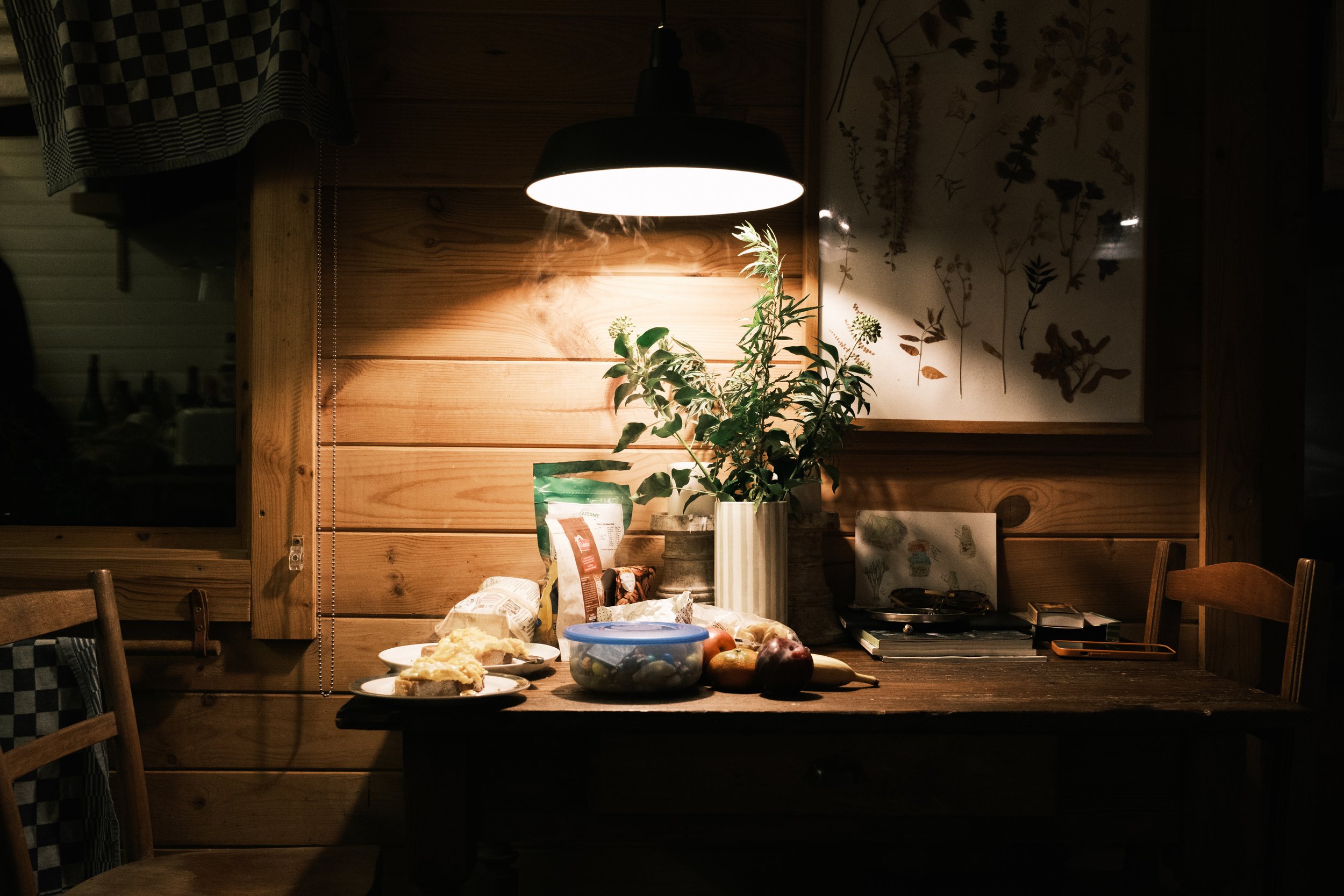
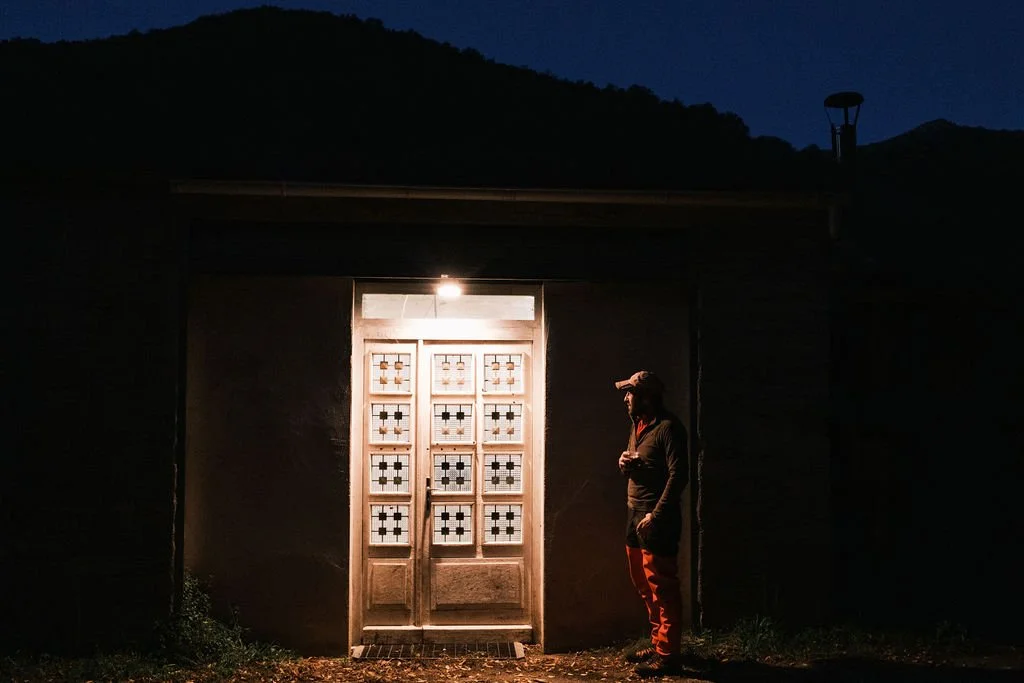
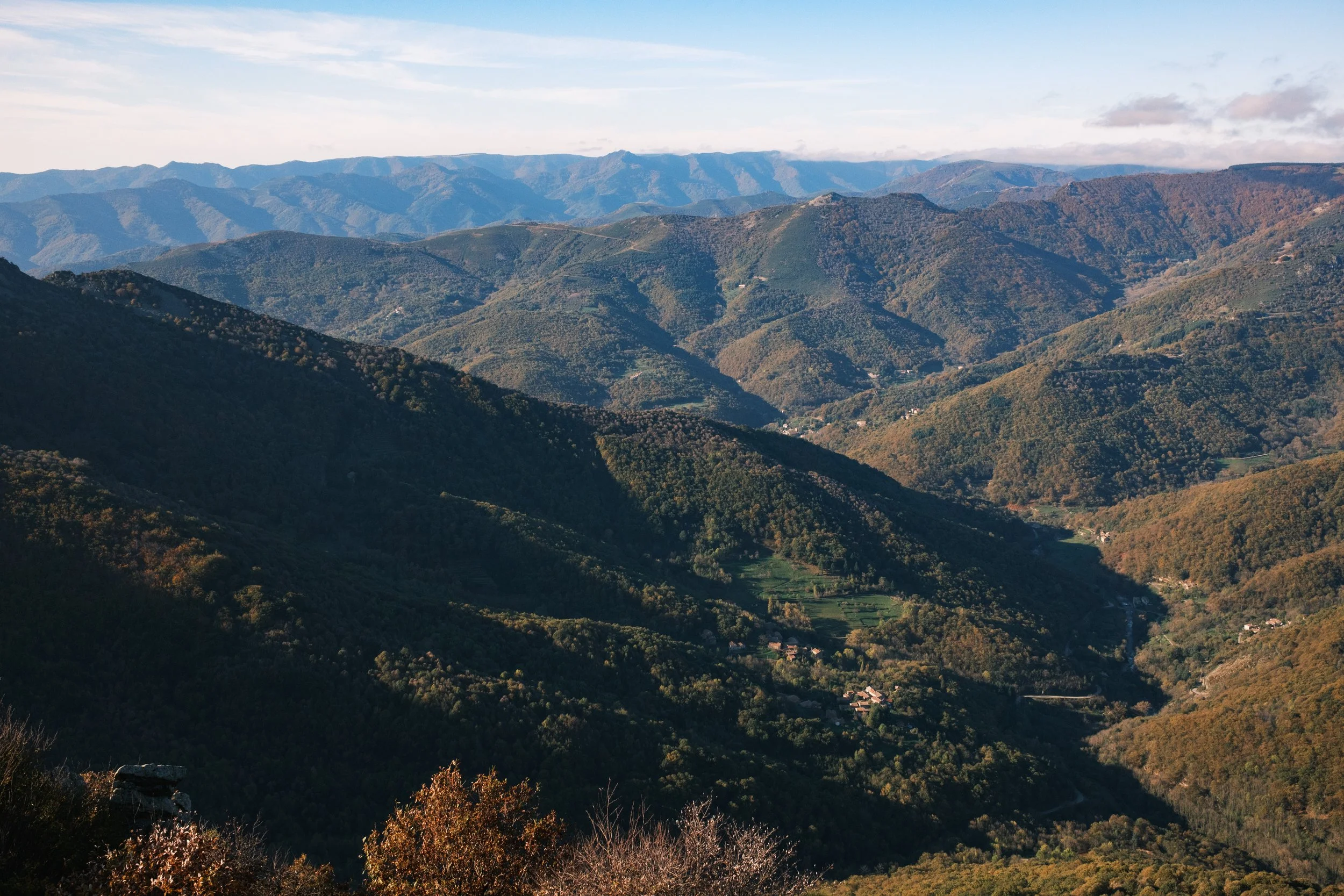
The Ardèche region is located in Southeast France, a two hour drive from Lyon. We stayed at Margot’s Retreat, a bed and breakfast tucked away in the forest. The owners Lottie and Jean Marc convinced a local hunting group to take us out and show us the ropes, and explained to us that it’s very rare for them to let strangers join, particularly two women. Female relatives and friends will occasionally go on the hunt and observe, but it is mostly the same group of male hunters that go up into the mountains.
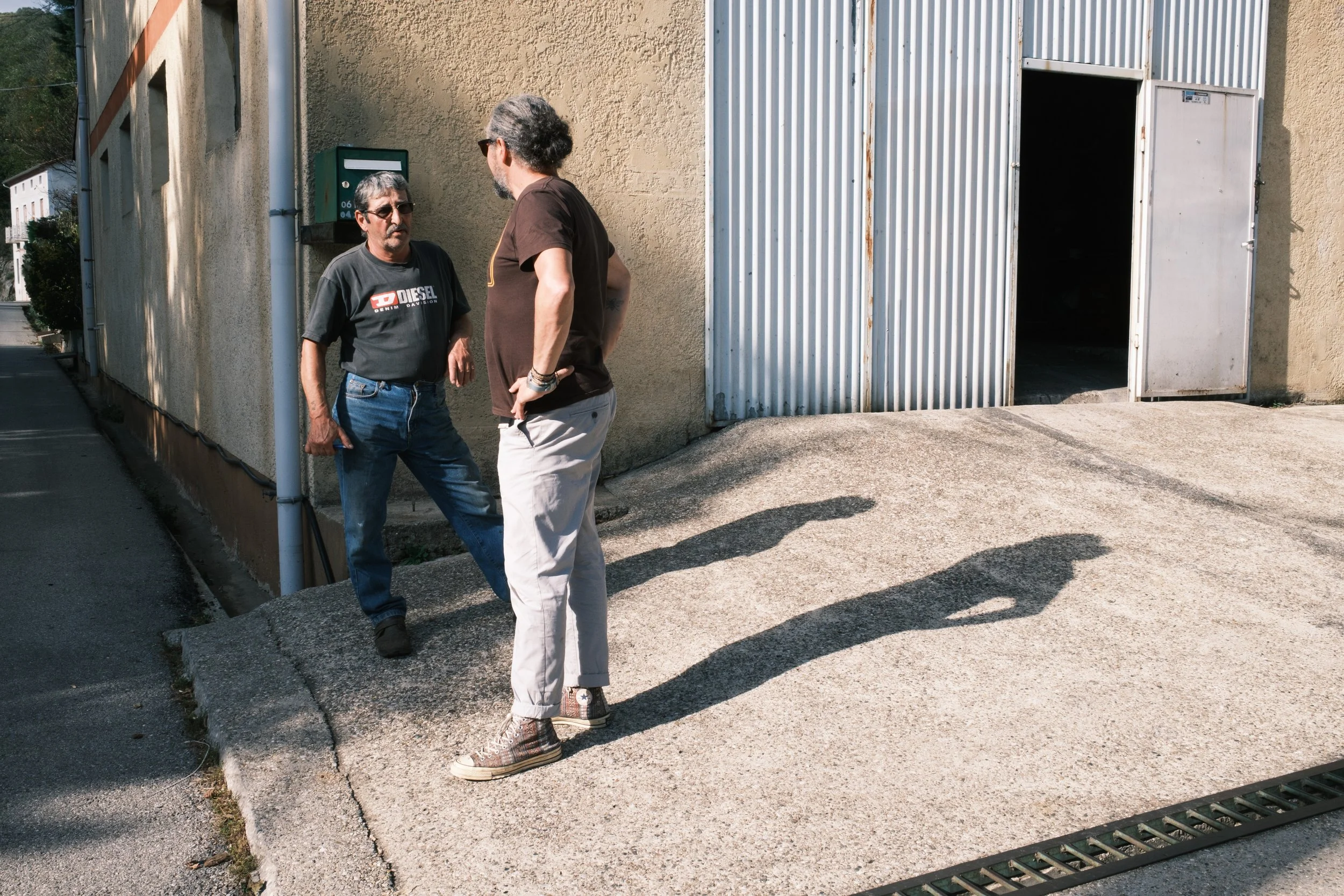
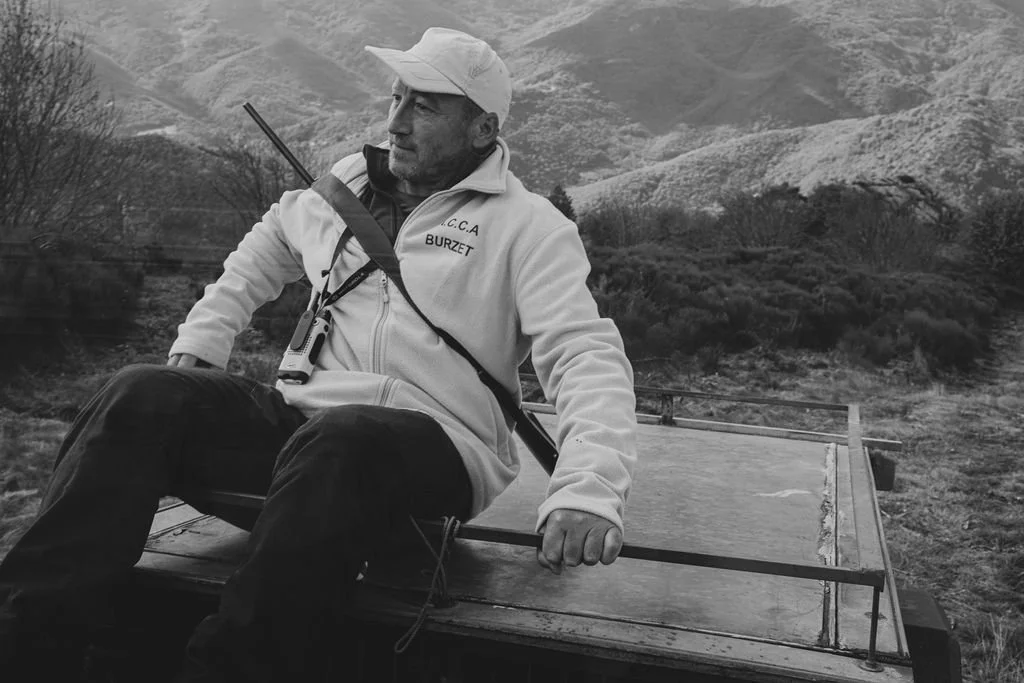
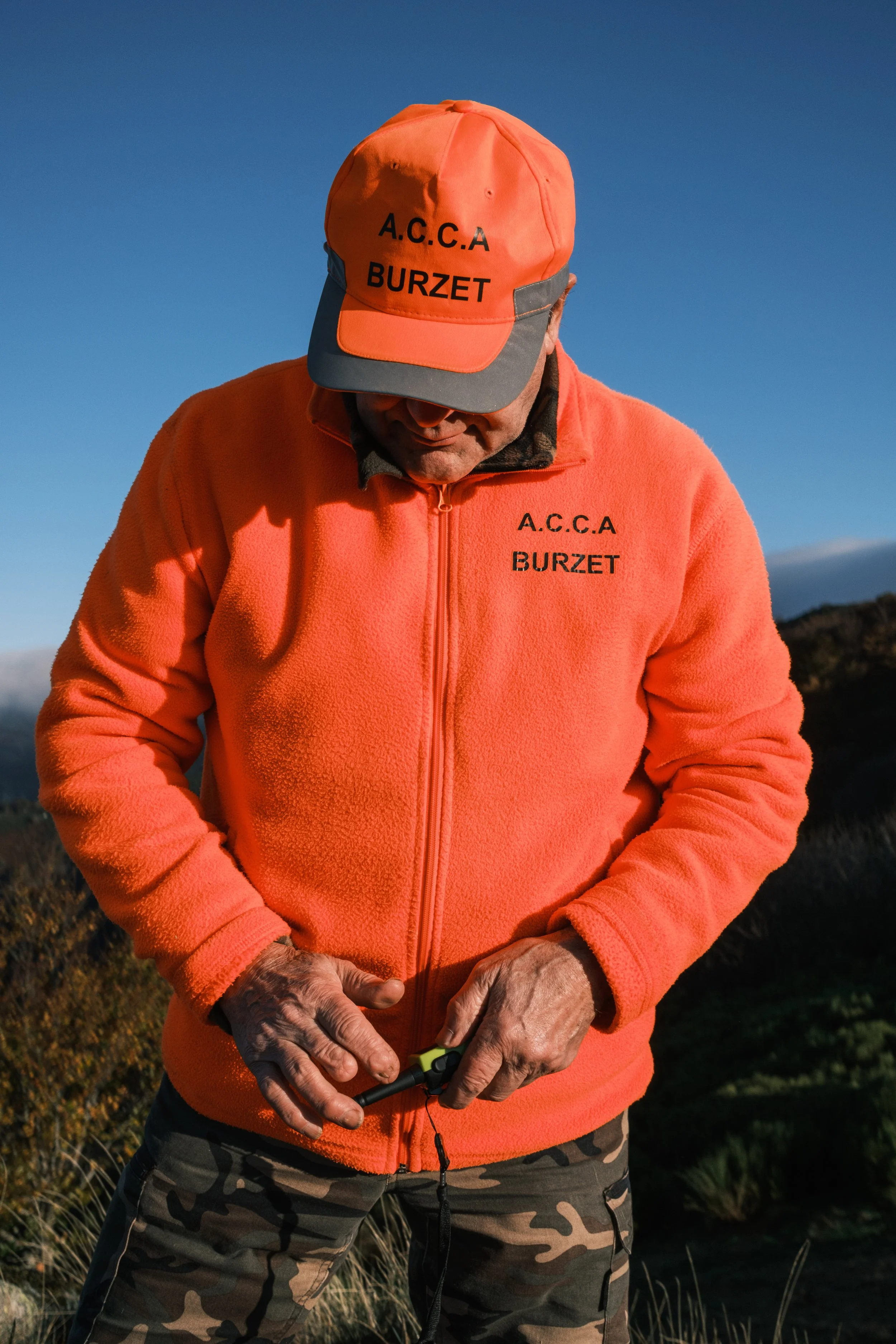
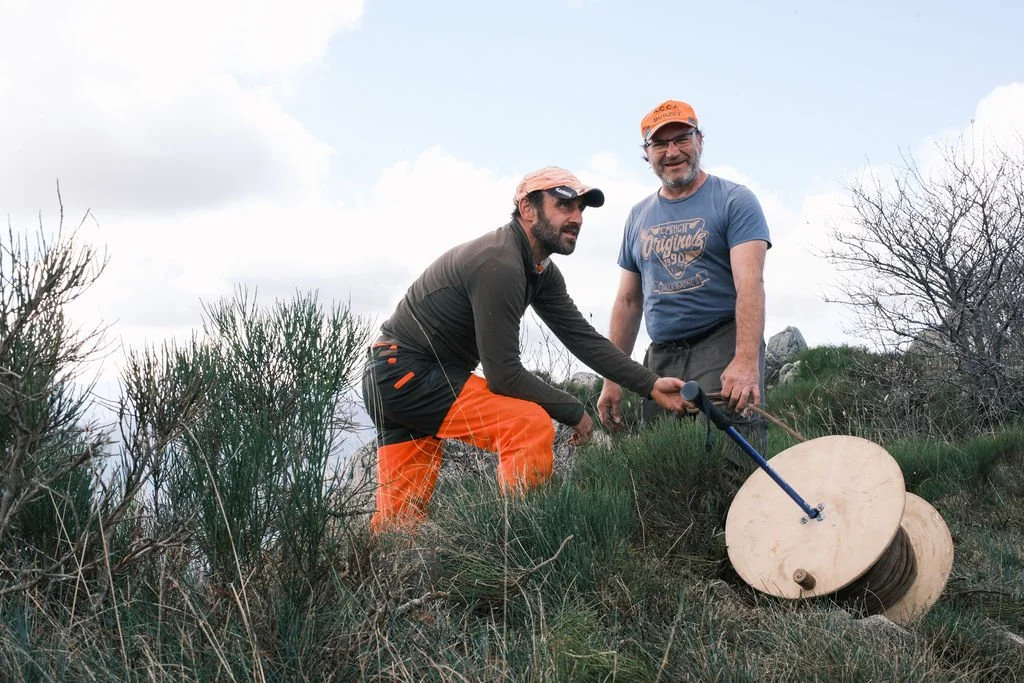
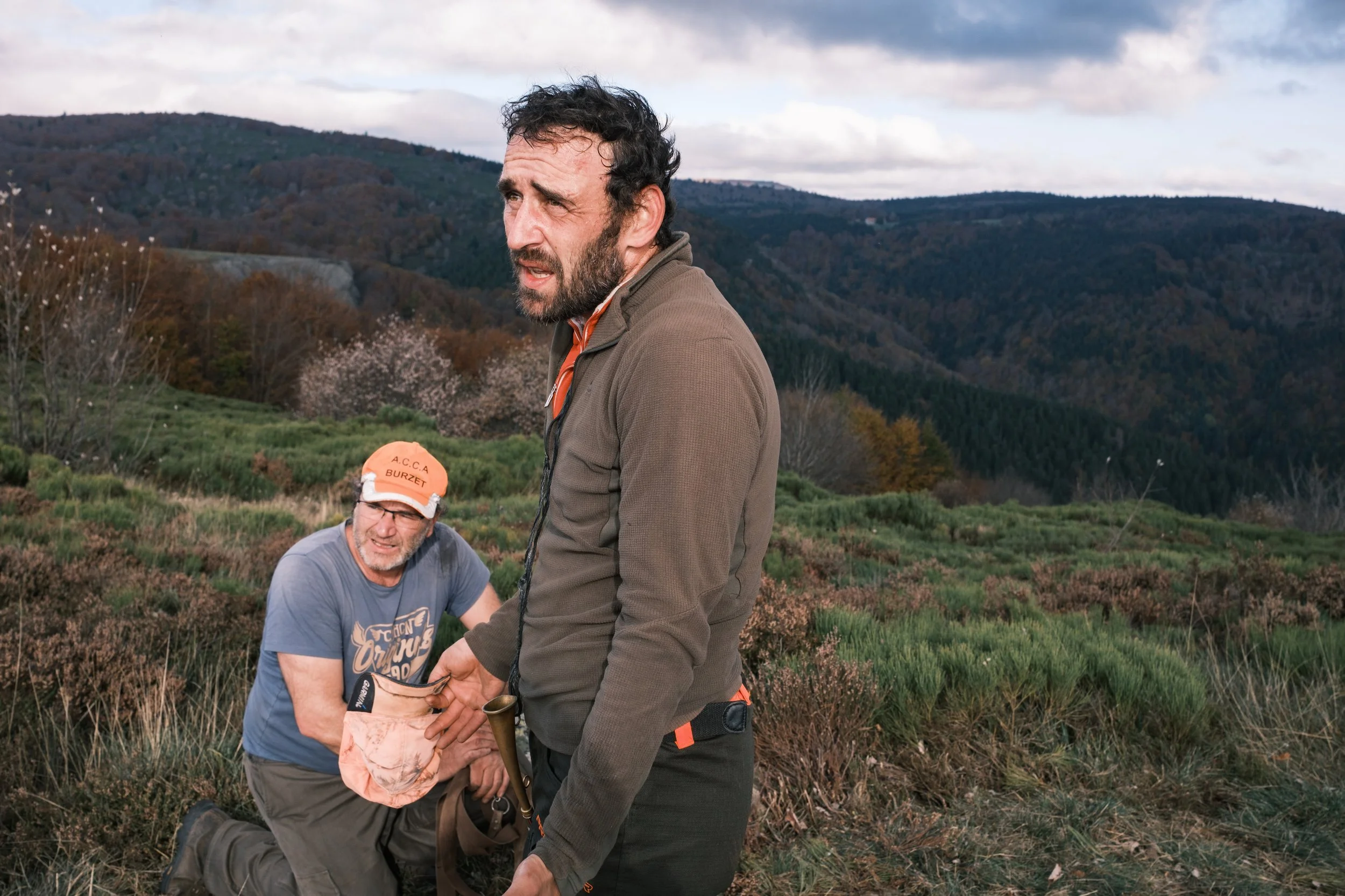
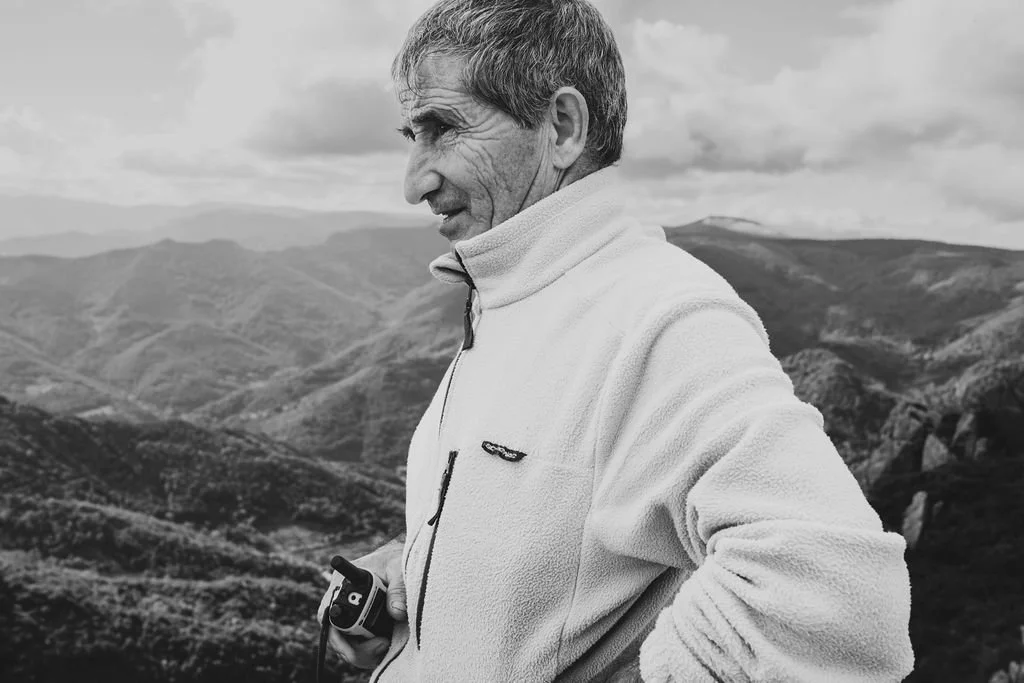
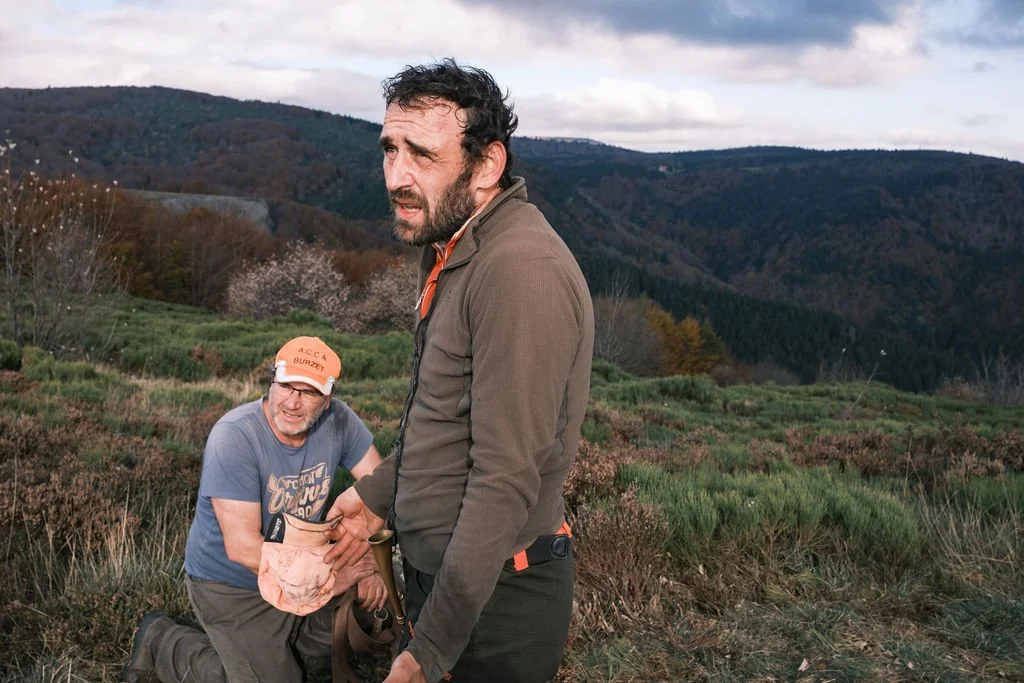
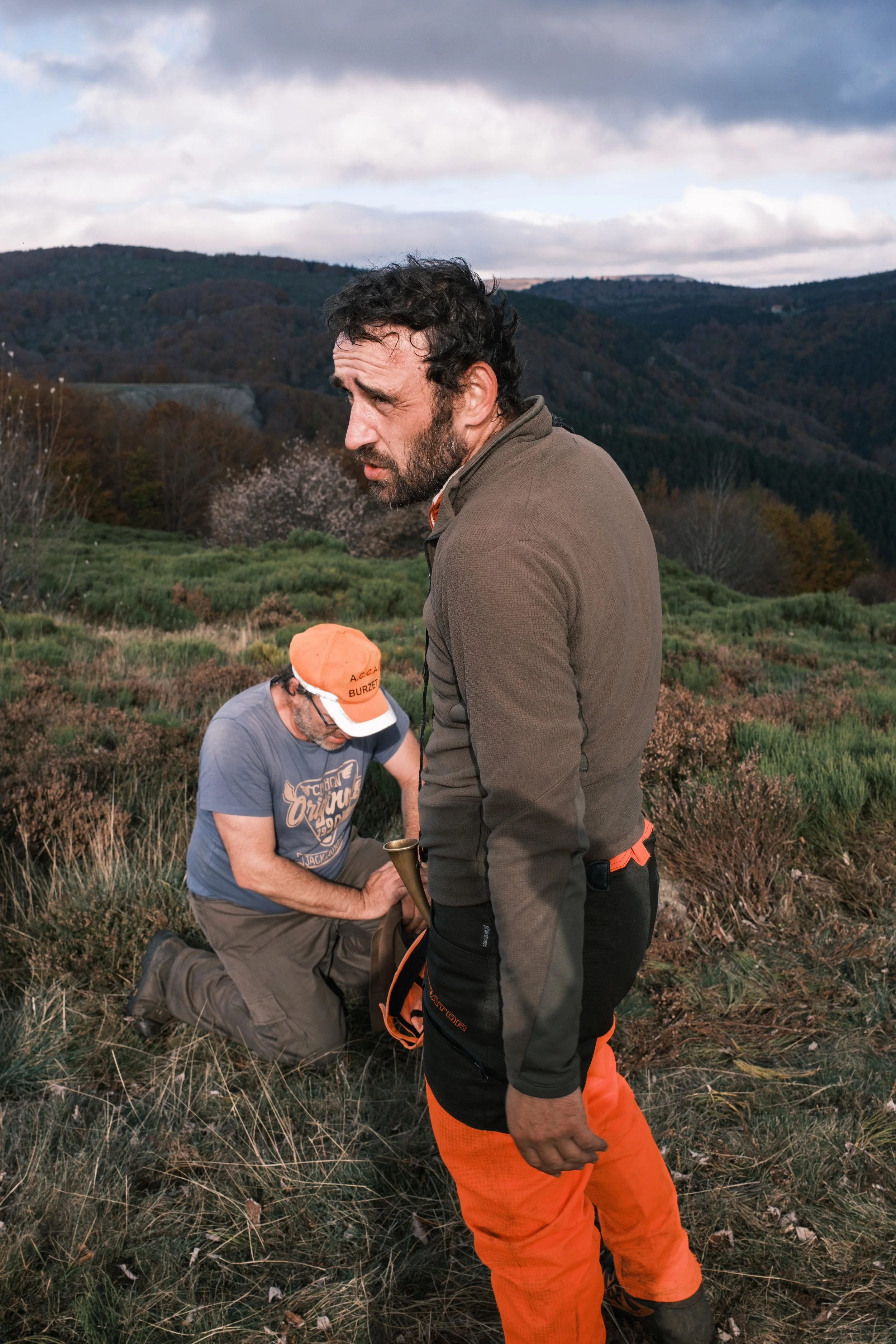
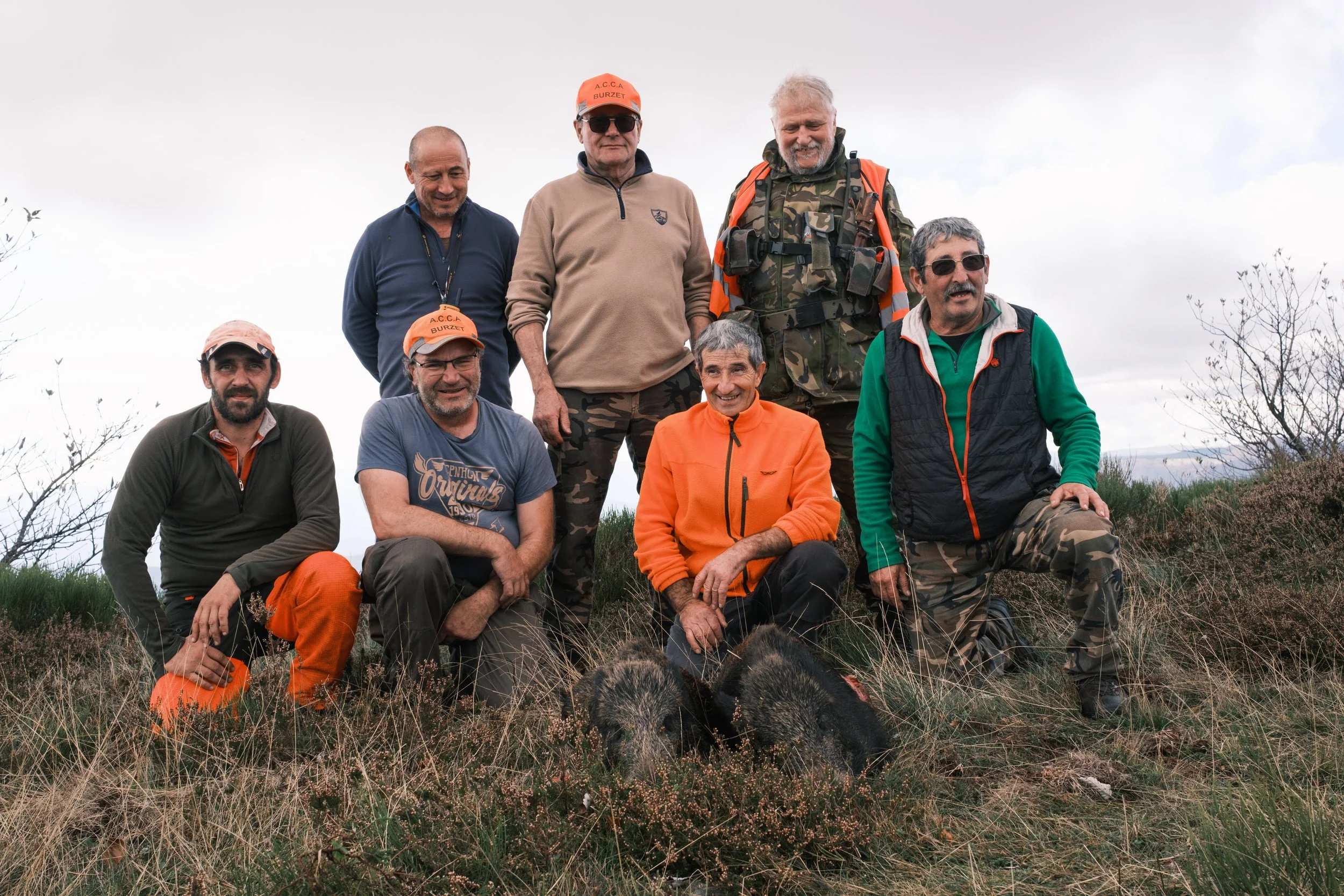
We met Andre, the head hunter, a couple of days before the next planned hunt. For years he was a car mechanic, and we pulled up to find him looking underneath the bonnet of his car in front of his old garage. Now retired, he leads the hunt from the village of Burzet into the surrounding woodlands and mountains three days a week. The group he leads includes his son, his brother, and other men from the local community.
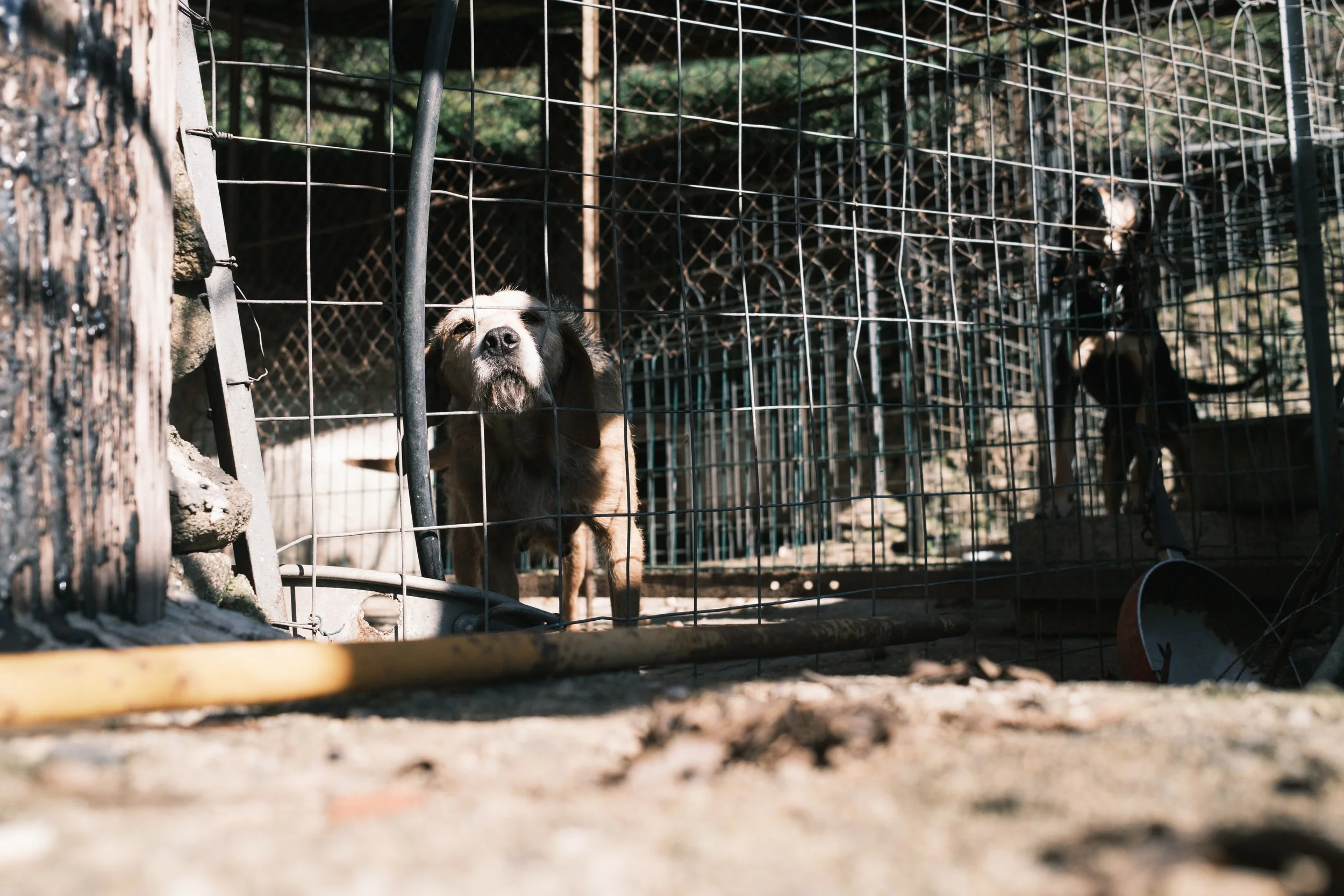
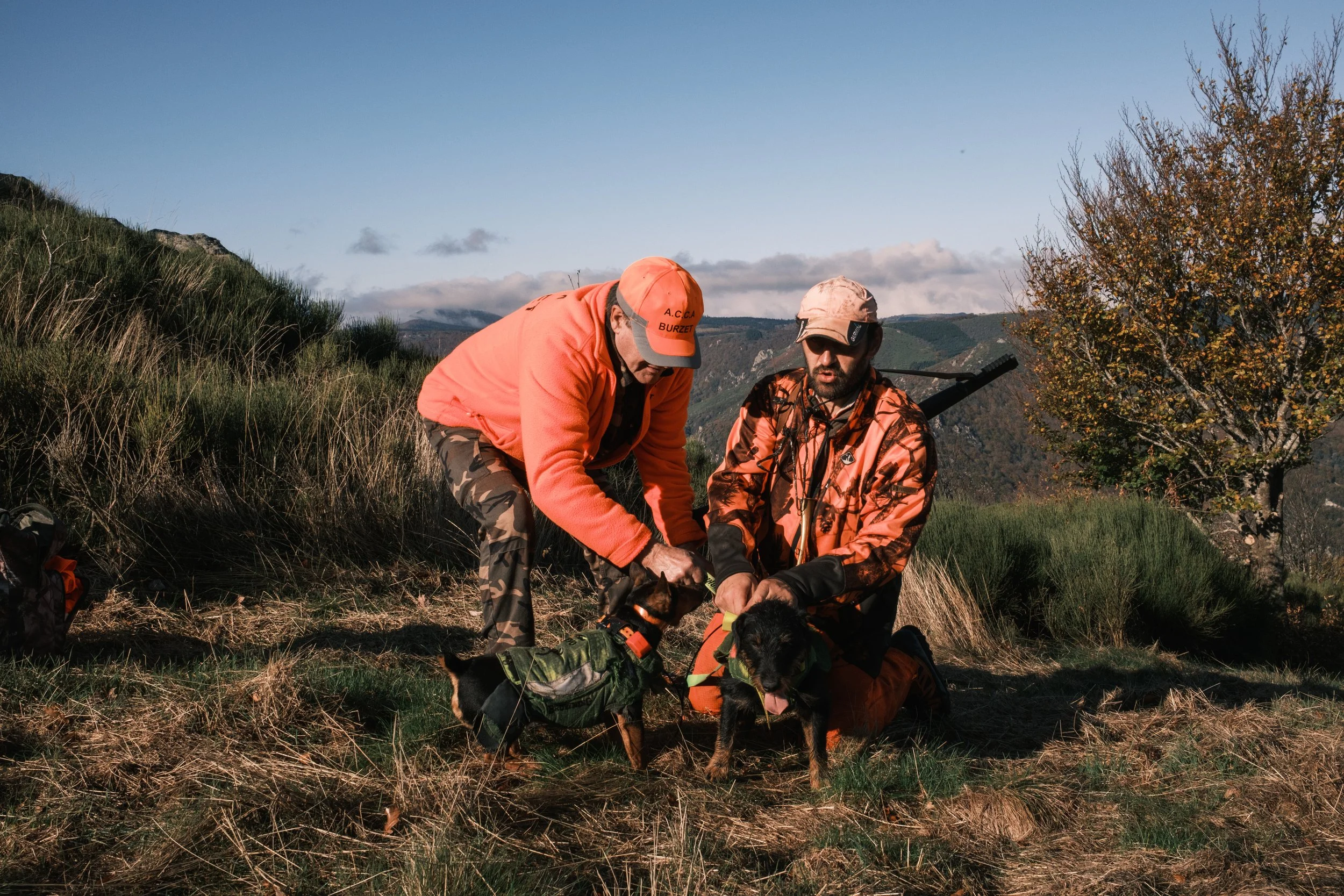
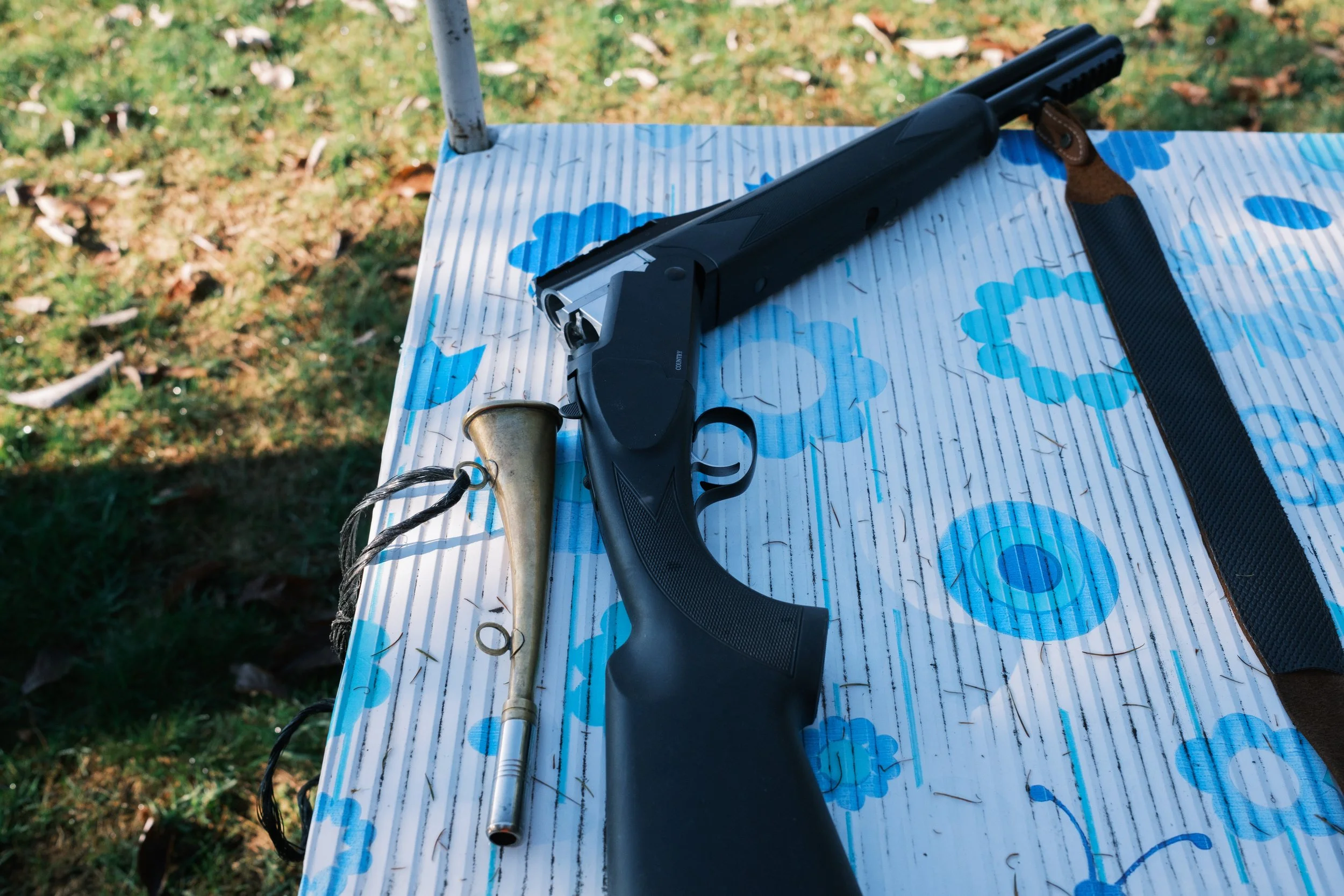
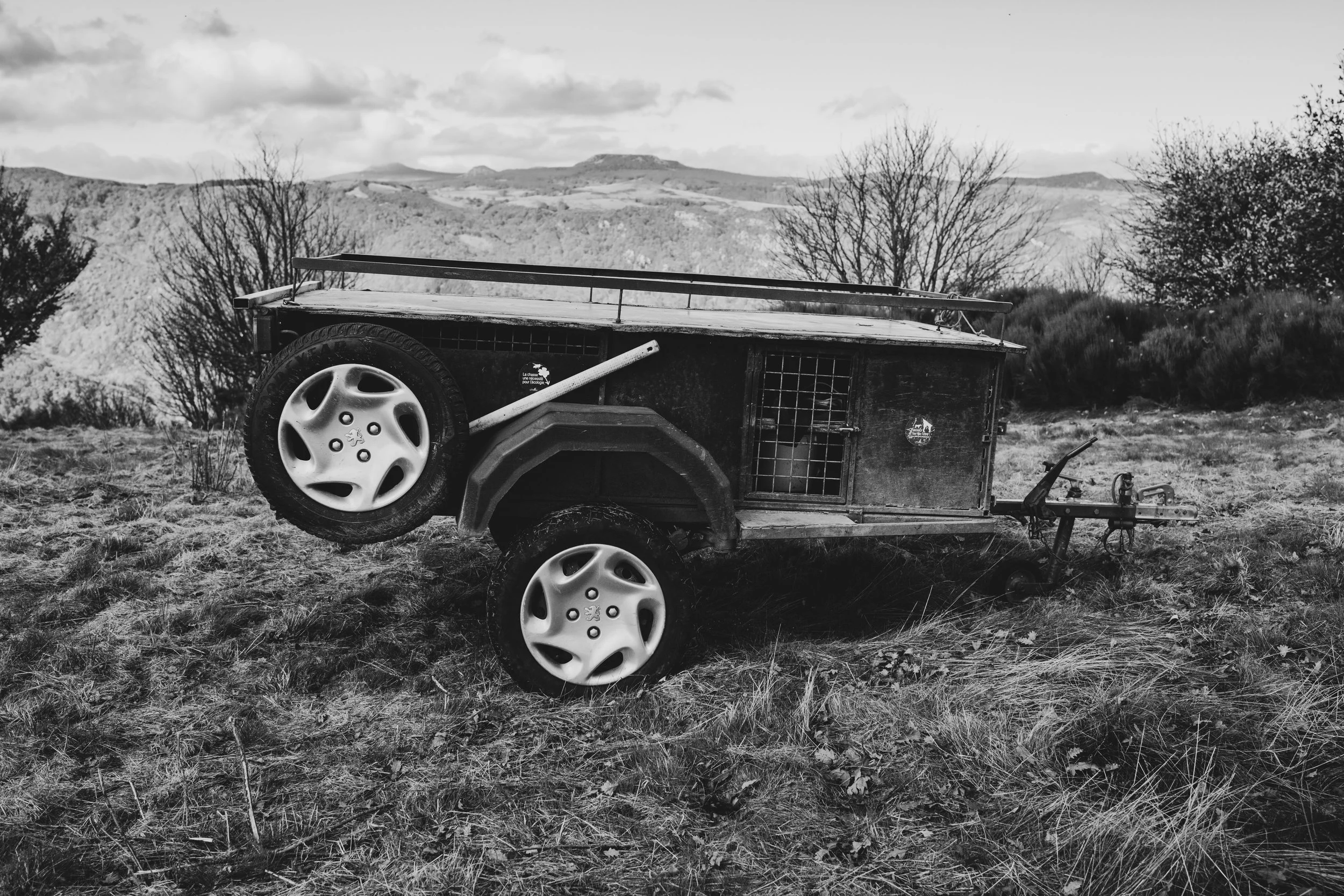
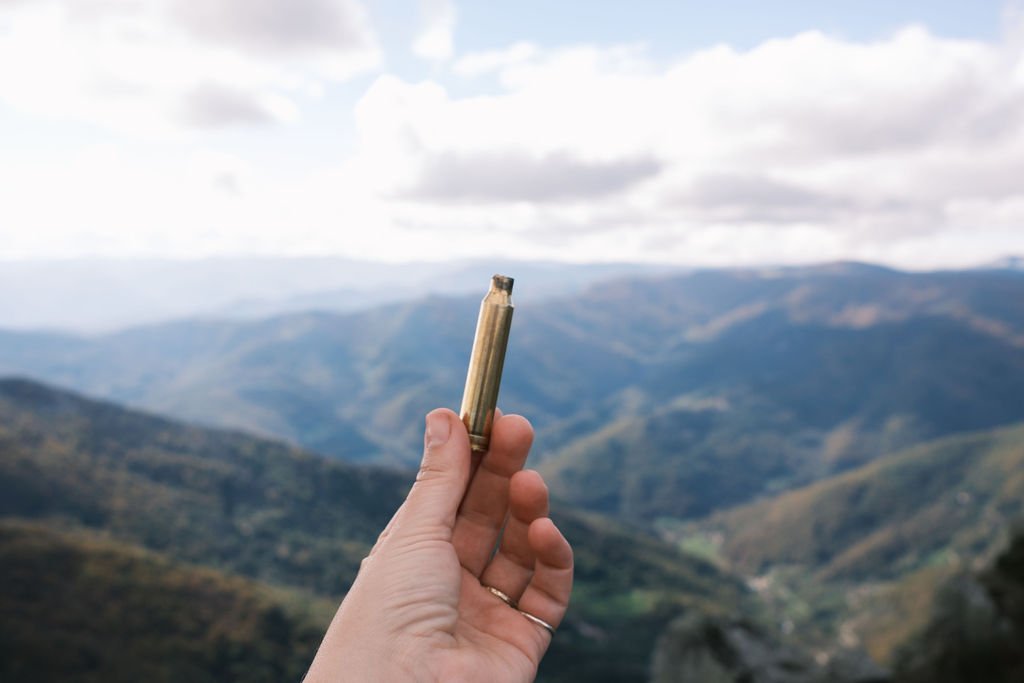
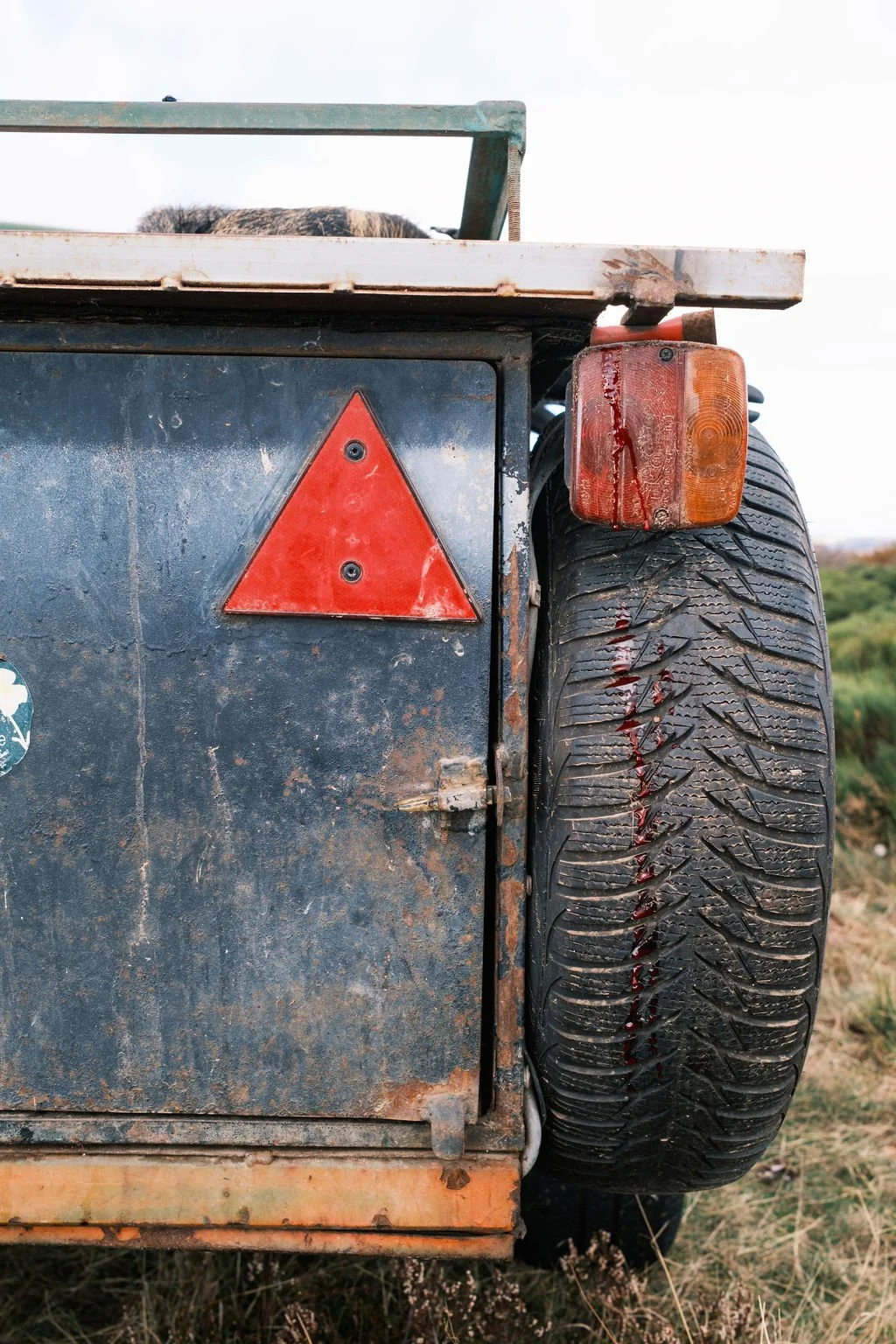
We were shown the dogs and told about vet bills (if a male wild boar charges at the dogs, the sharp tusks can tear open the dogs). There’s also the specialist 4-wheeled drives, the trailers, guns and bullets. A small subsidy is paid to the hunters by the government. “It’s a commitment and a passion,” Andre told us, adding that it’s worth the expense.
For these men, this role provides them with a purpose and connection to each other and the land.
Due to the wild boar population being deemed as excessive in France, normal hunting restrictions were lifted during 2024. Hunters are free to hunt outside of their usual geographical boundaries, and can hunt for a longer amount of time throughout the year. Different theories as to why the population has risen so much include climate change (a reduction in mortality rates from warmer winters), and a break in hunting due to the Coronavirus pandemic.
We were told to rendezvous at 7:30am on Wednesday at their hunting cabin. We left our initial meeting with the head hunter trepidatious about the realities of what might lie ahead for both us and the wild boar, but reassured by Andre’s approachable demeanour.
Tuesday night we headed to the local bar with Lottie and Jean Marc, partly to take our minds off the next day, but also to gain a bit more of an insight into how the village feels about hunting. Boar hunting is a contentious issue in Ardeche, with what feels like an even split of some of the locals understanding the need for this traditional practice, and others finding it hard to face the reality of it.
We had promised ourselves a dry day to be sharp for the hunt, but were instantly poured large glasses of Pastis, bought for us by Andre’s nephew. We were told that a couple of weeks previously, 38 dogs from various hunting groups were taken into the local vet on one day after being out on the hunt. Gilles, another local, told us that 25,900 wild boar were caught in the Ardèche region in 2023, and that Burzet is the 15th biggest hunting territory out of 28 in the Ardèche.
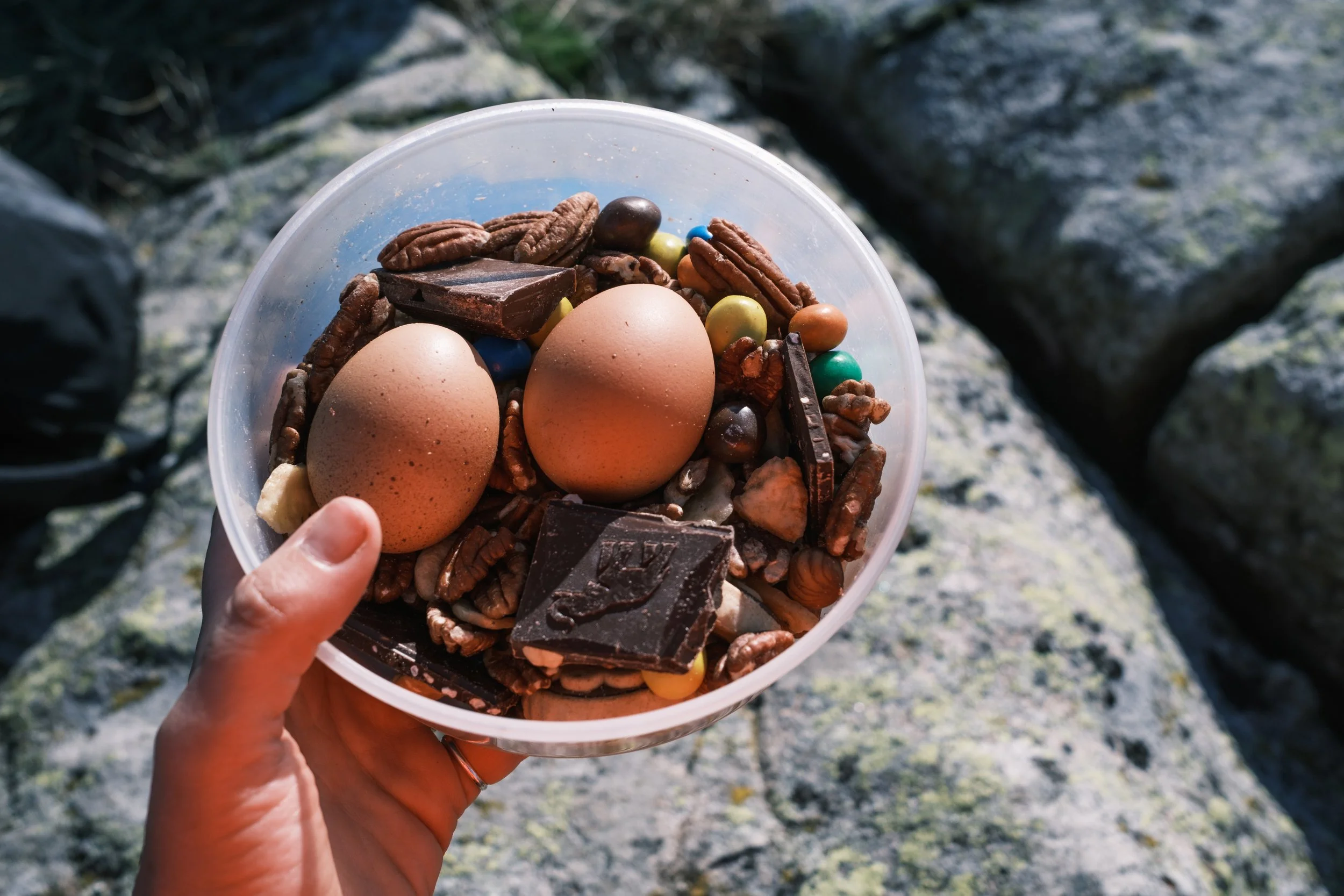
On Wednesday morning, we rose early, ate scrambled eggs on toast, and went over final details. We discussed how we’d both lay awake all night worrying about the boar. We shared a look of reassurance and knew that we’d come this far, and it would be foolish not to take up the opportunity that we’d been presented with. We set off into the still-dark morning with homemade trail mix, hard boiled eggs, and a whole lot of courage.
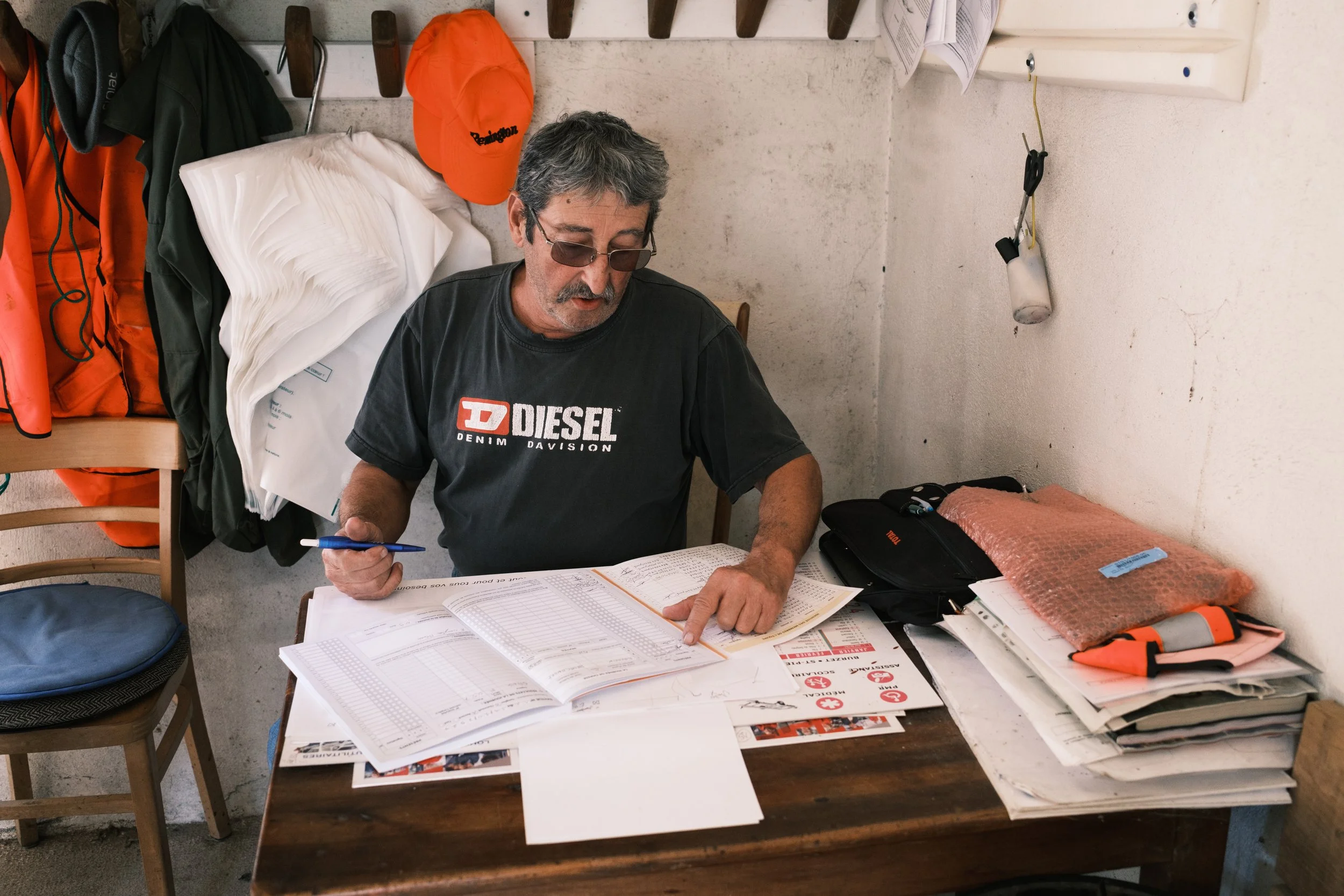
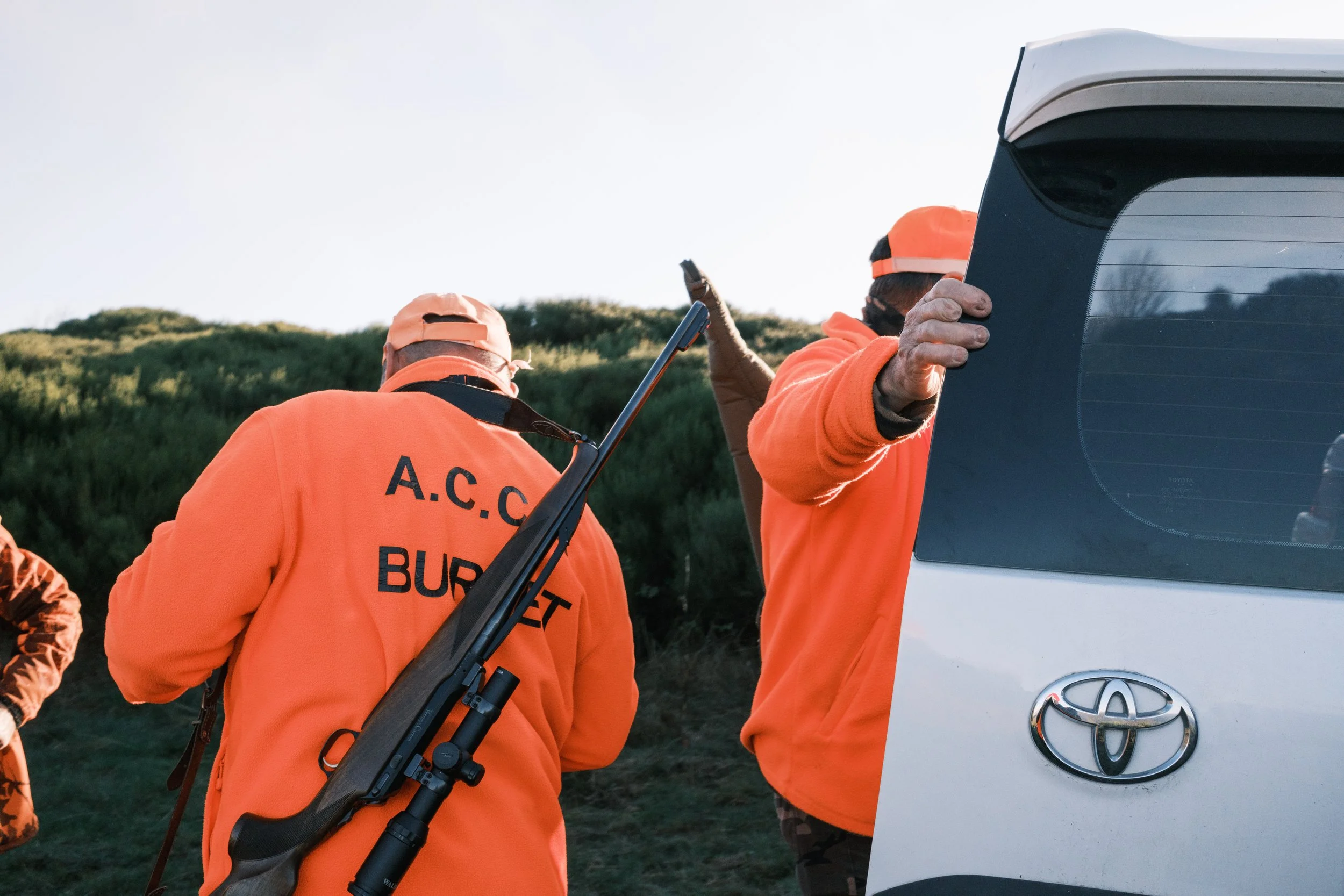
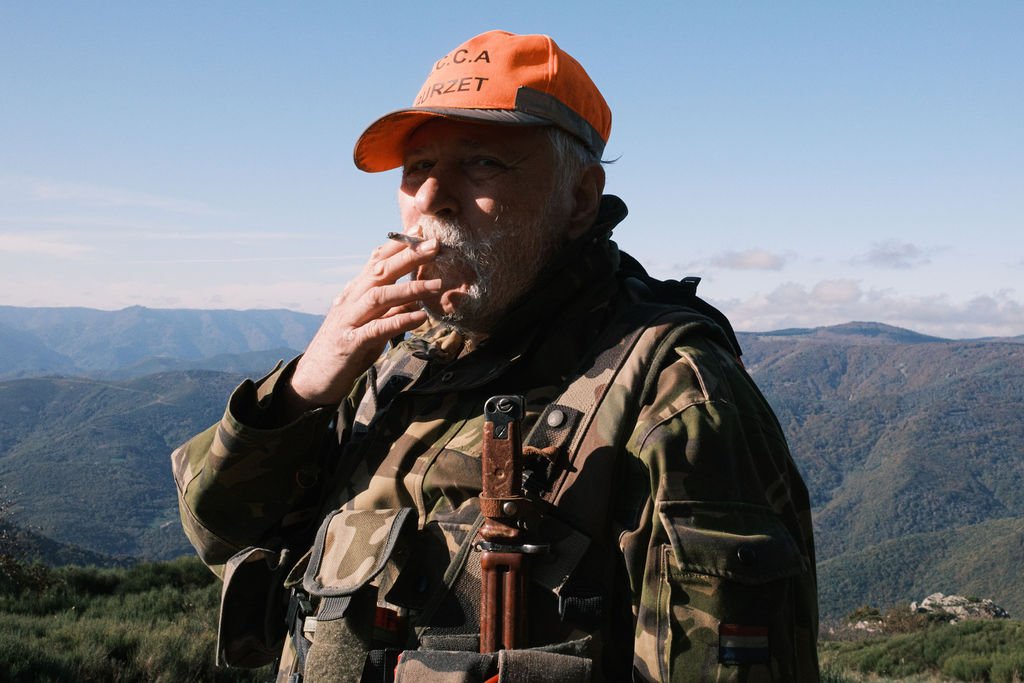
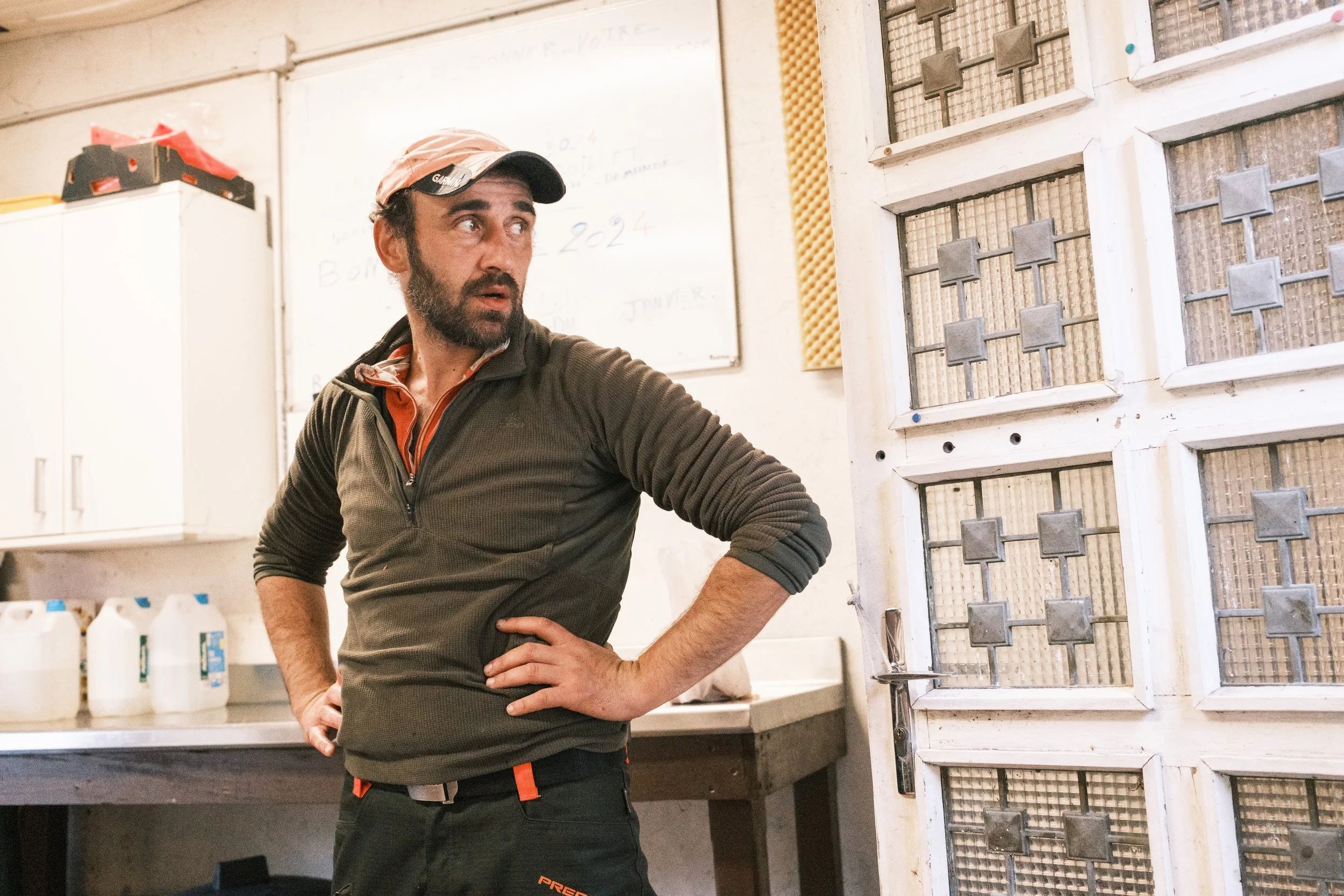
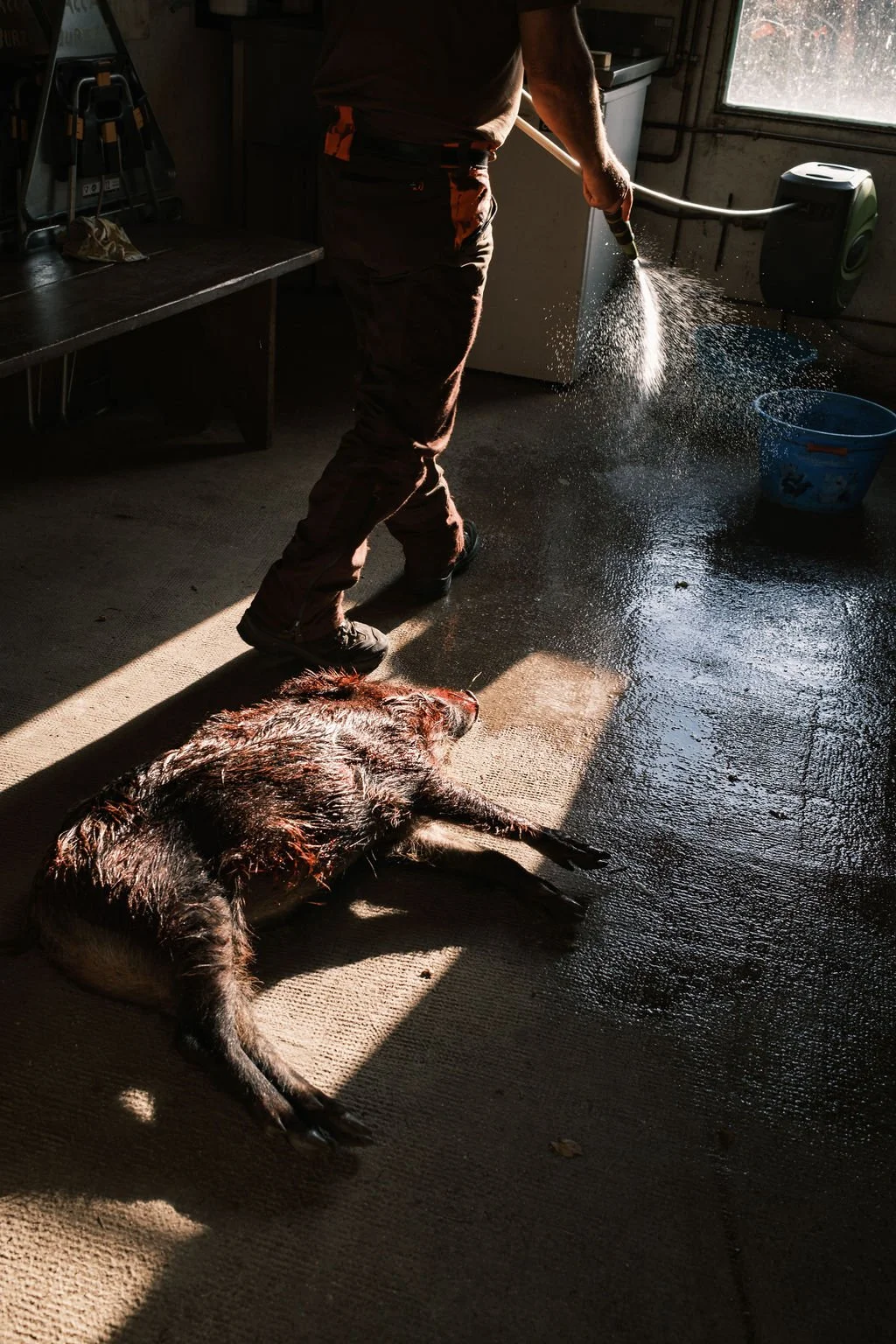
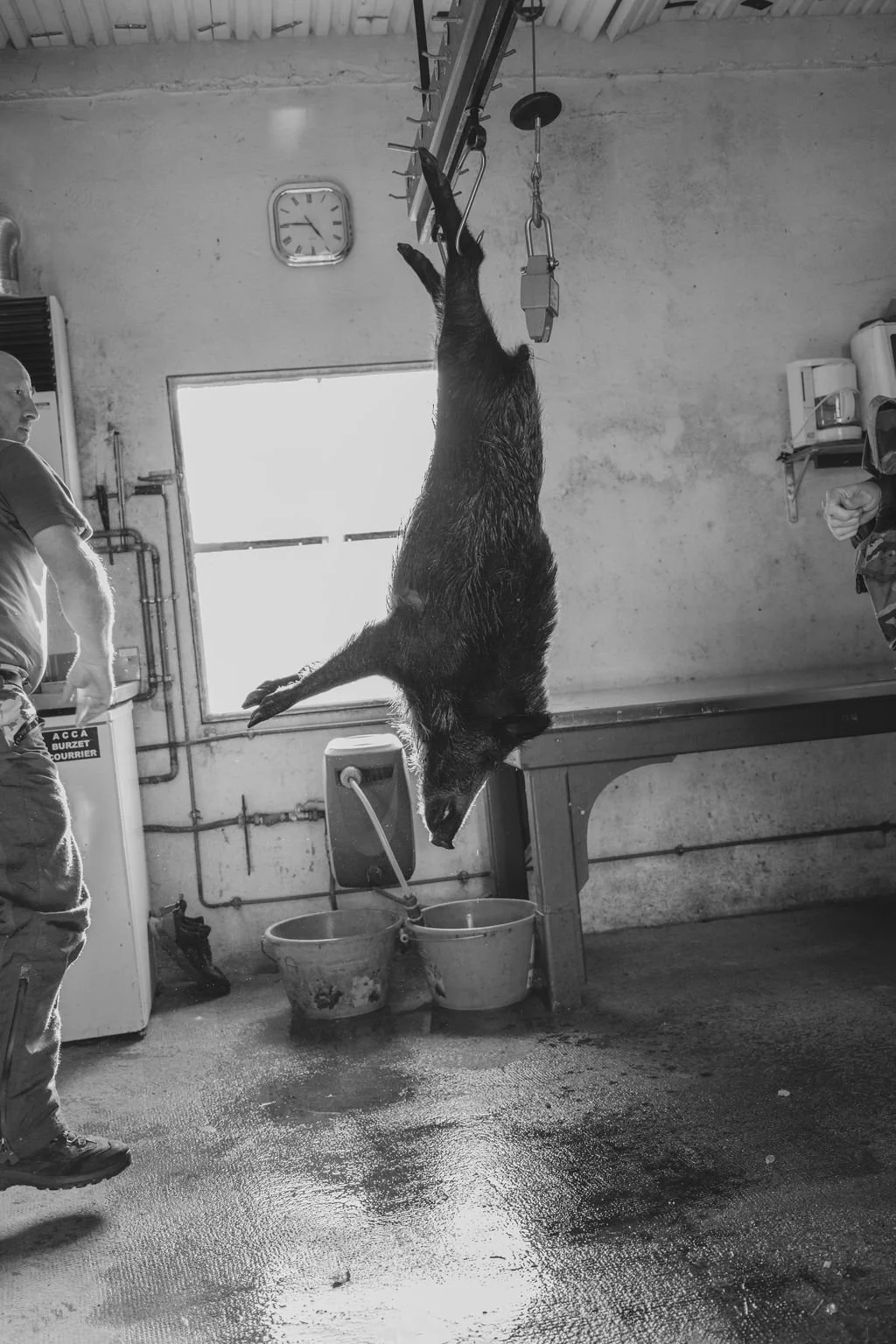
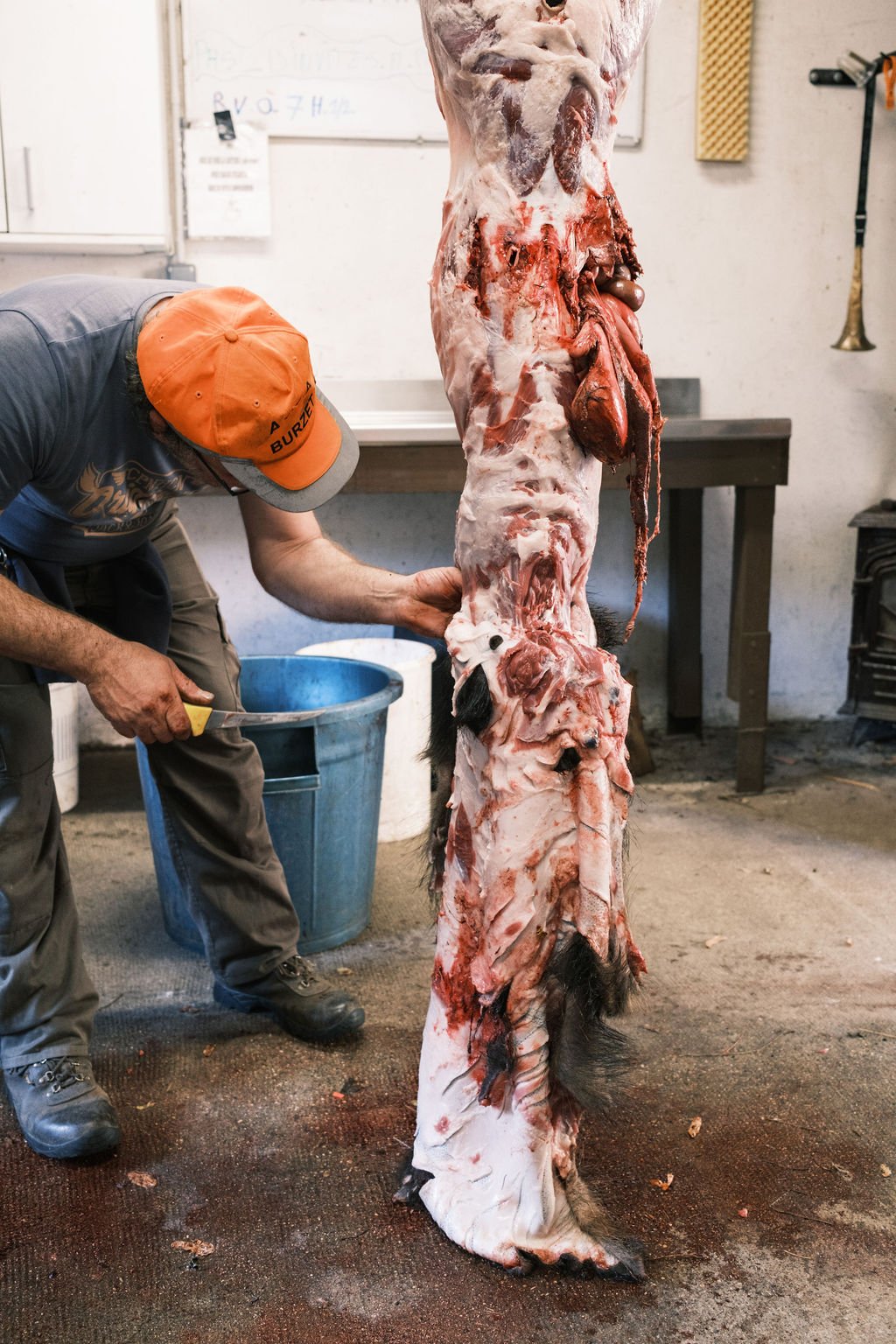
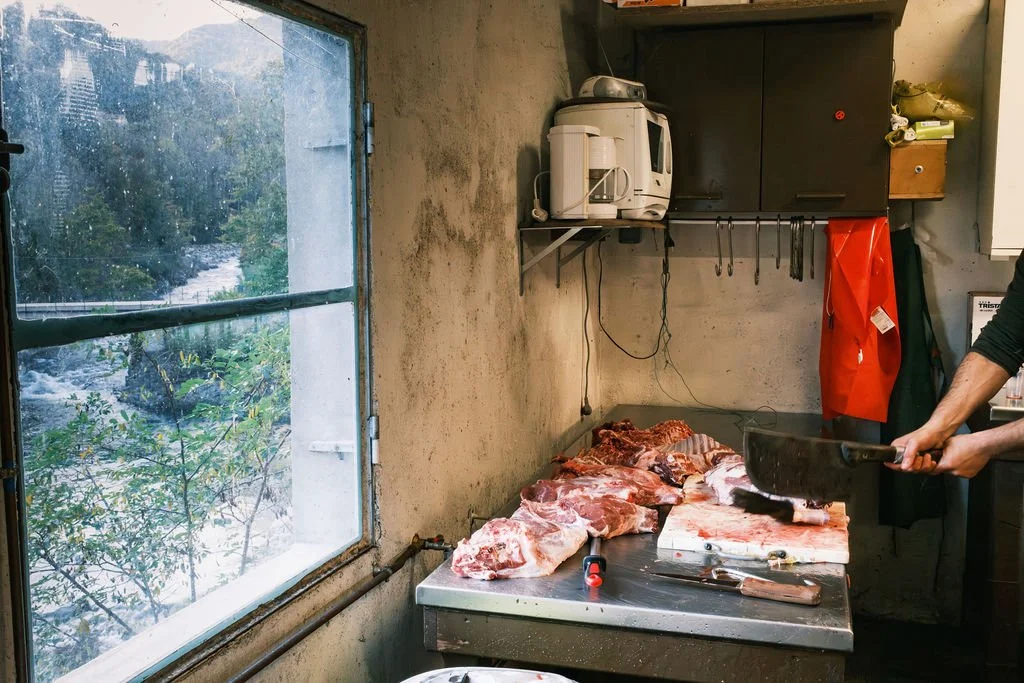
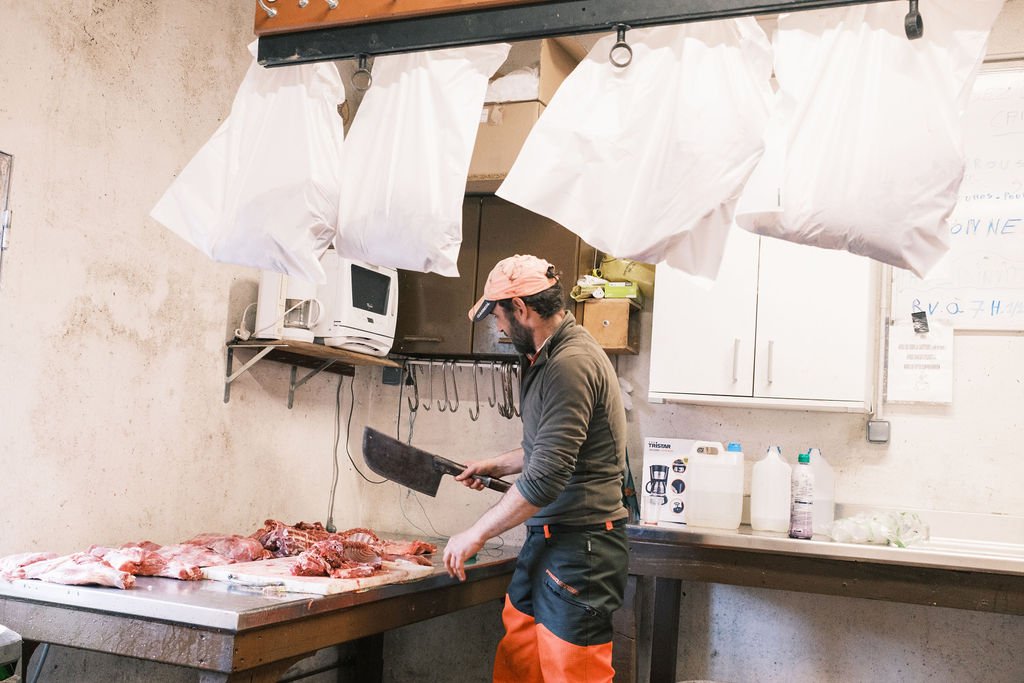
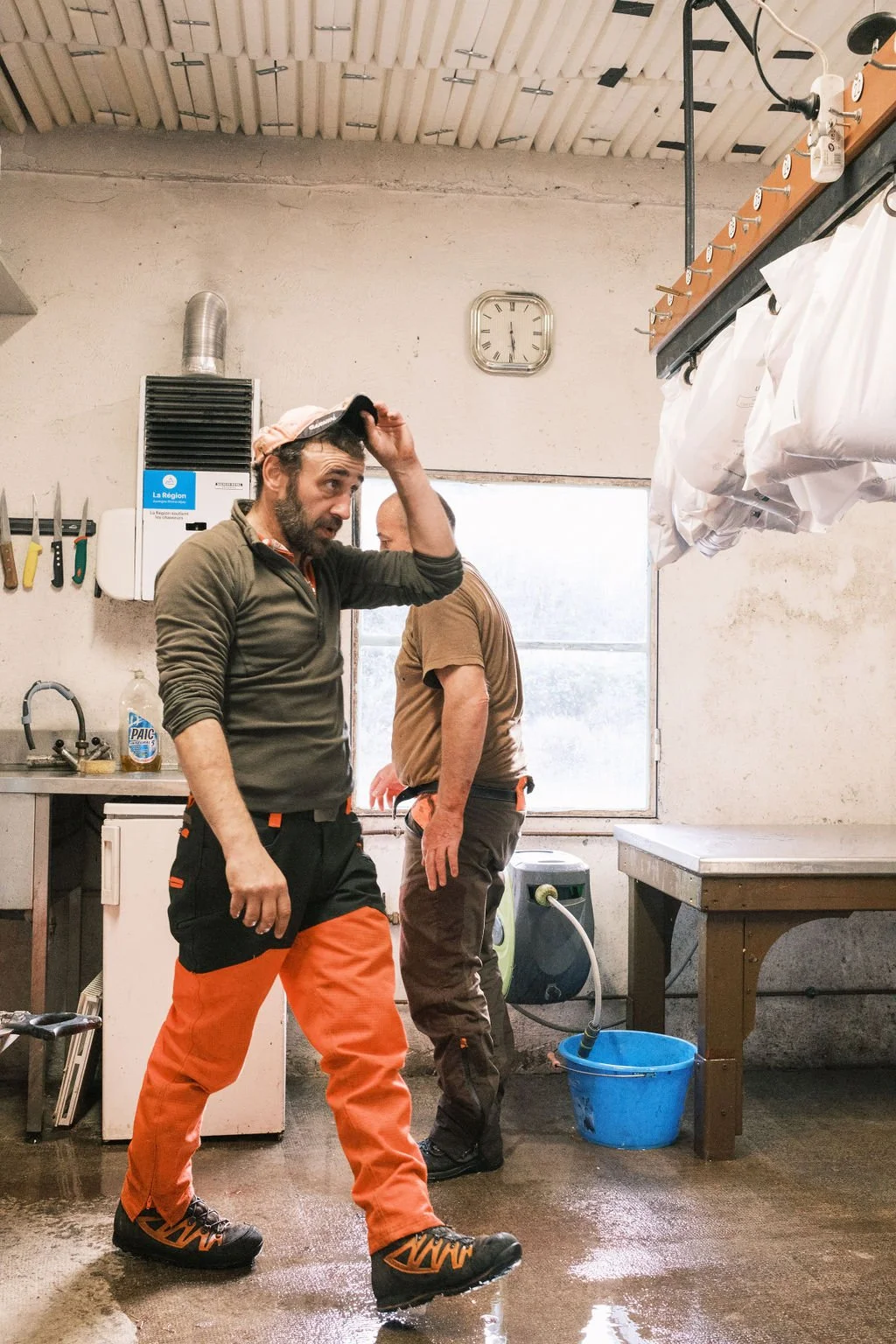
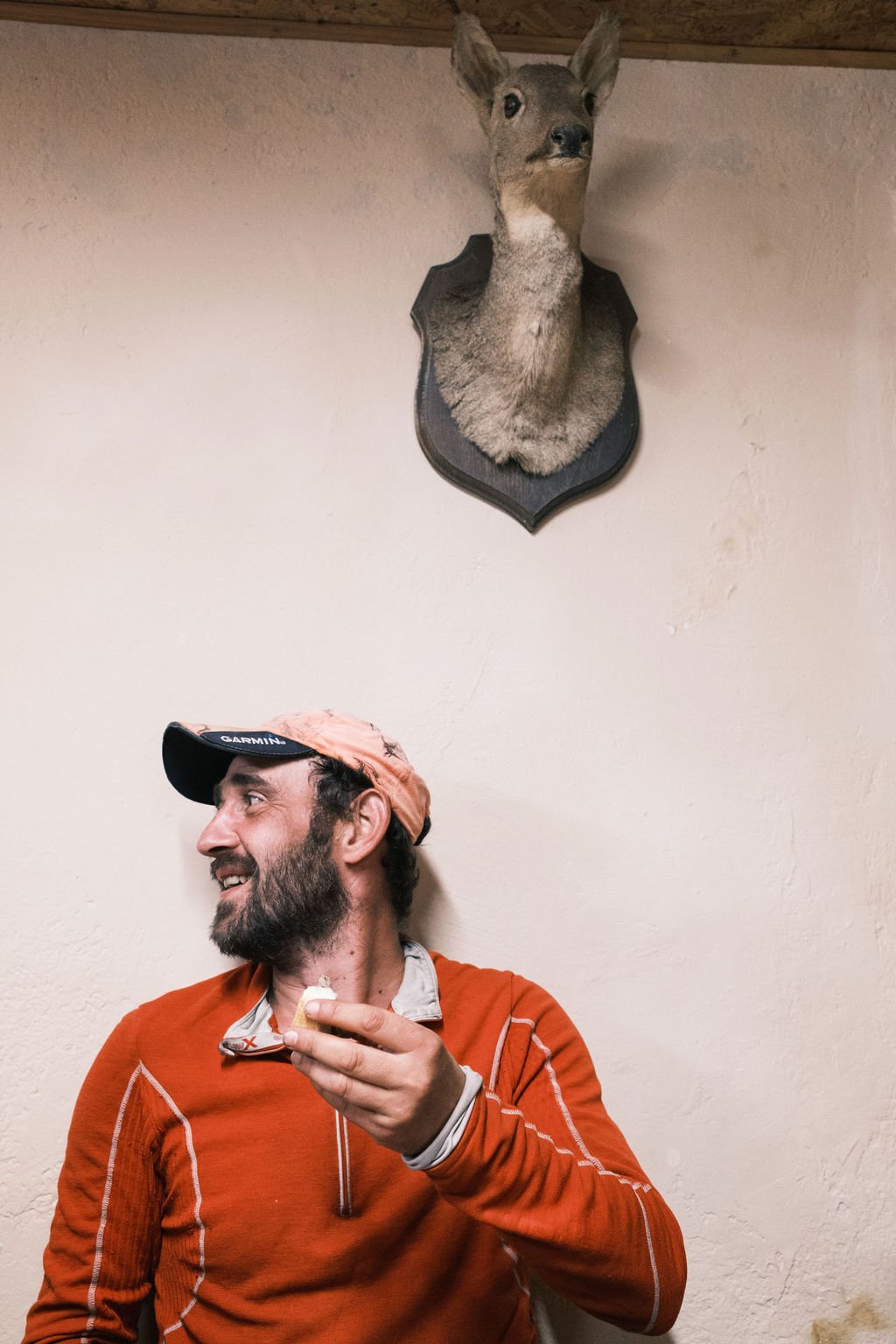
When we got to the cabin, Andre was getting the men to sign in to the log book. It documented who was going out on the hunt, and later on, would record the sex and weight of any boar that had been caught. The men stood around chatting and drinking black coffee out of plastic cups, some popping out for a cigarette. Knives hung on the wall around us, and we realised that this would be the same room where the boar would later be skinned and butchered.
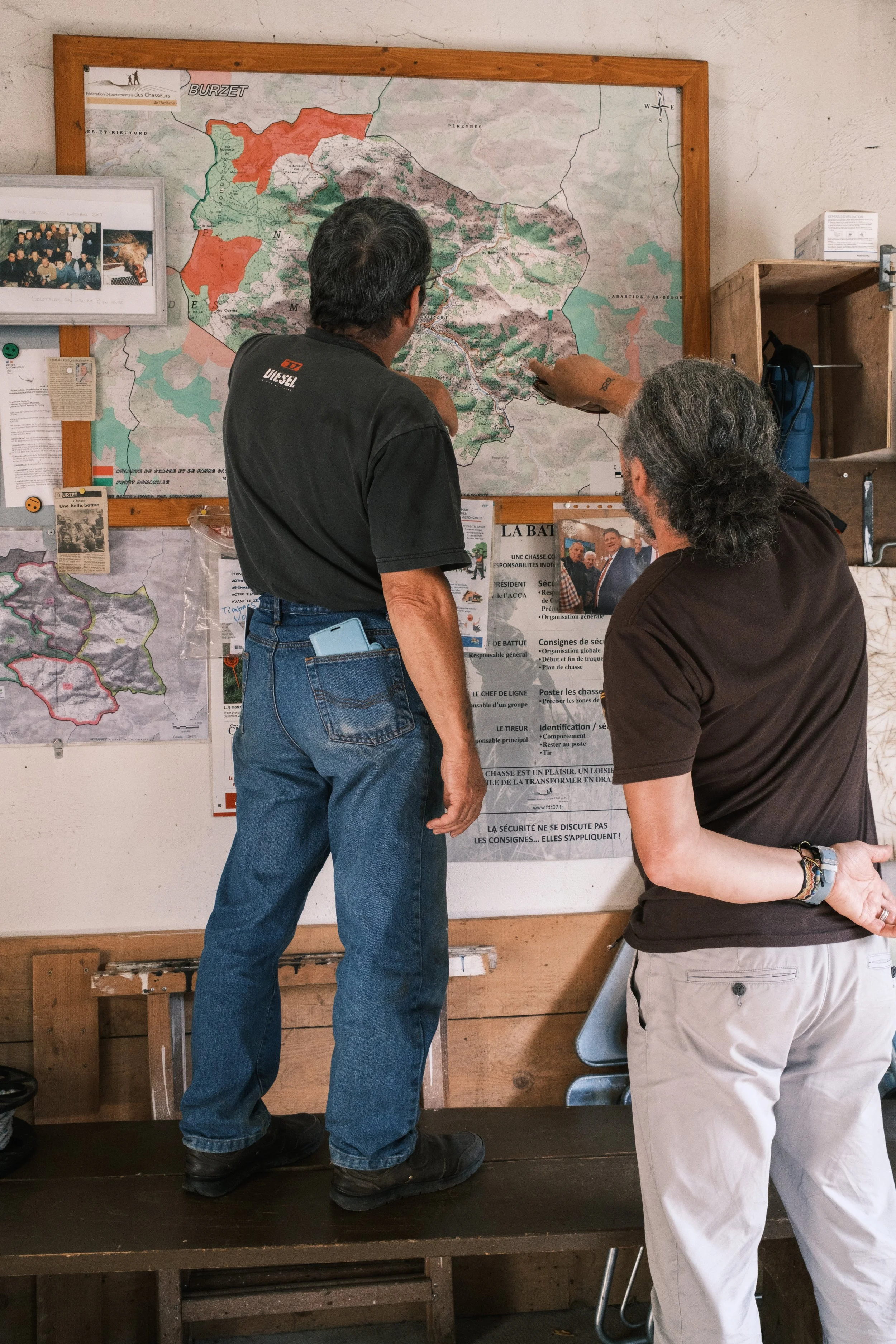
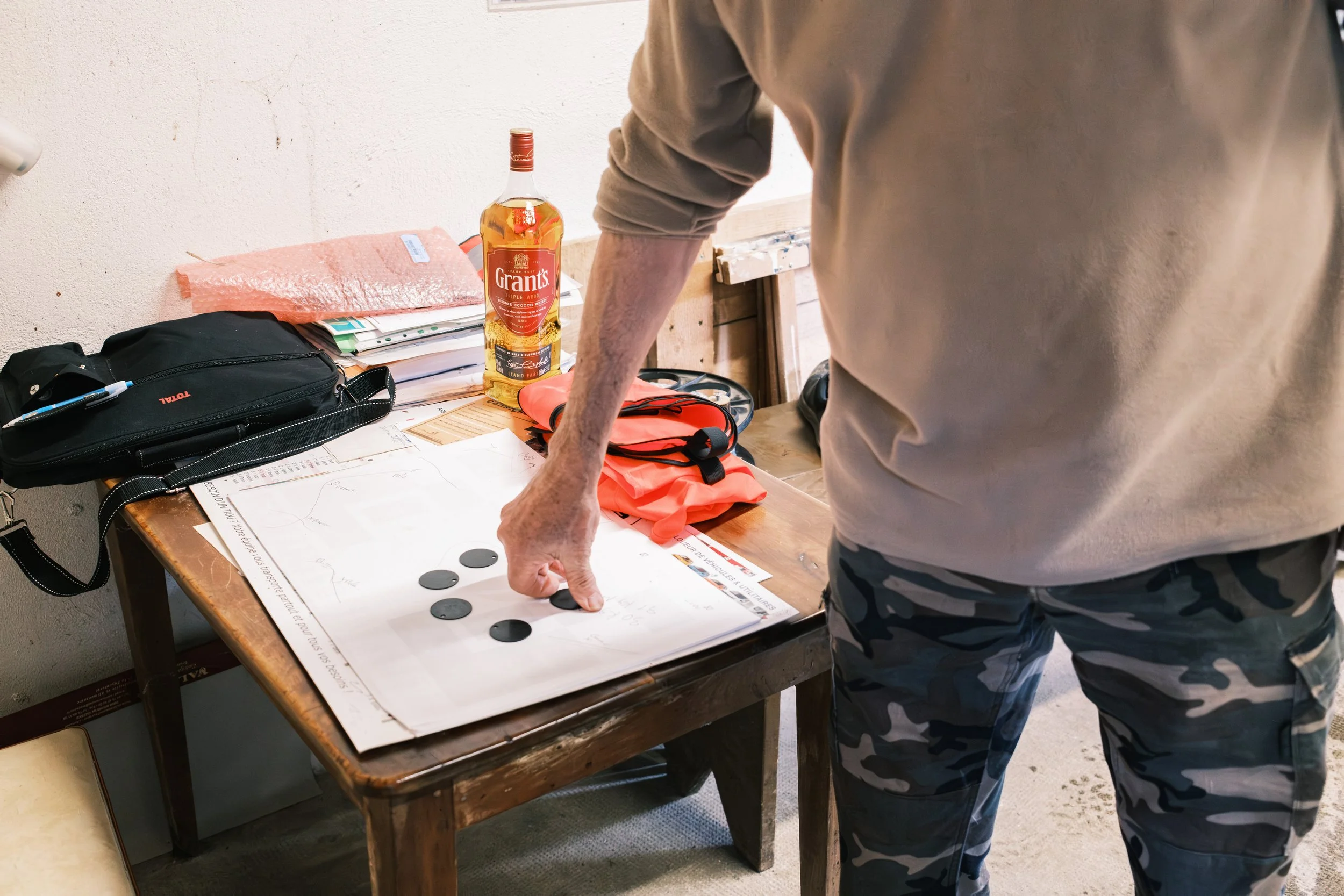
We watched as Andre drew a plan of where each person would be stationed.
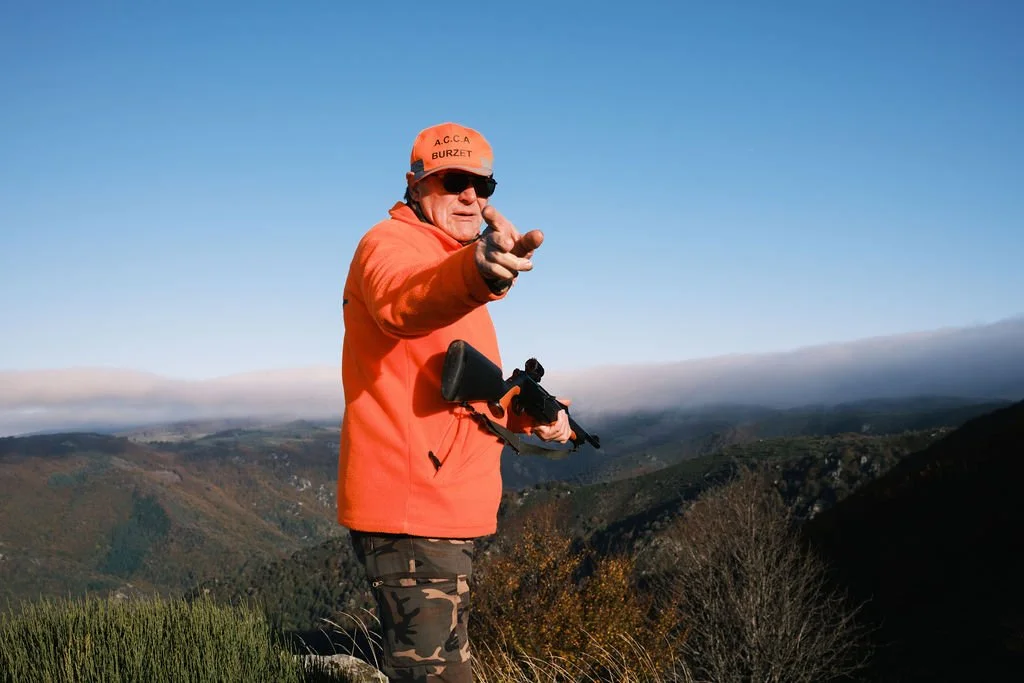
The gunmen (Posts) would be assigned to lookout points, and the Beater would work alongside the dogs to chase the wild boar up the hill towards the posts. I would be stationed with Andre, and Hanna would be with Belin, both Posts, which we were both extremely thankful for when we saw just how brutally physical the Beater’s job is.
The morning in the cabin also brought us our first encounter with one of the local women; Andre’s sister. Nicole turned up, phone in hand, greeting all the men with the traditional cheek kisses. We would be seeing her again when we returned from the hunt, as well as Andre’s daughter-in-law, Marilyn, as they would both be preparing a three course meal for us.
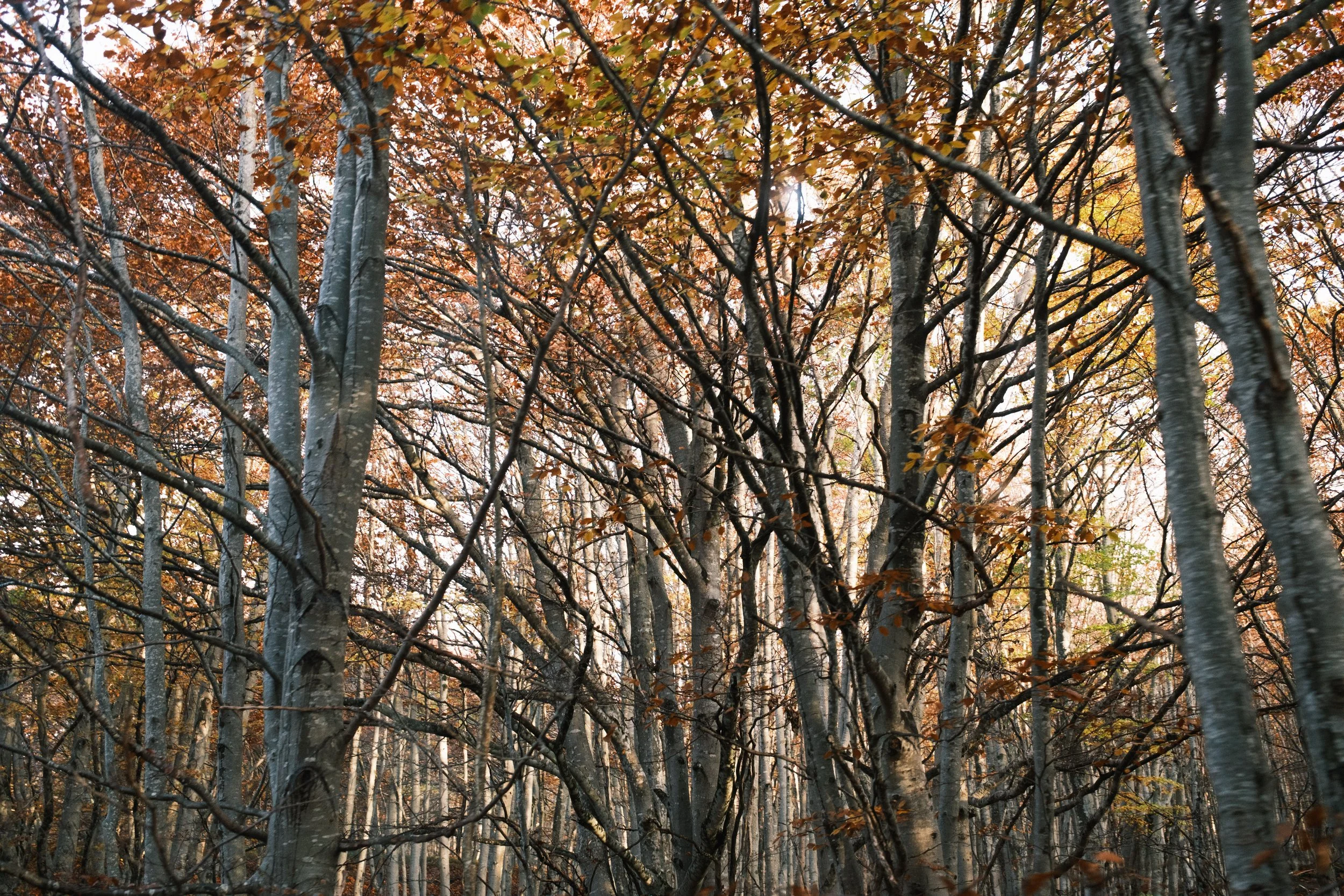
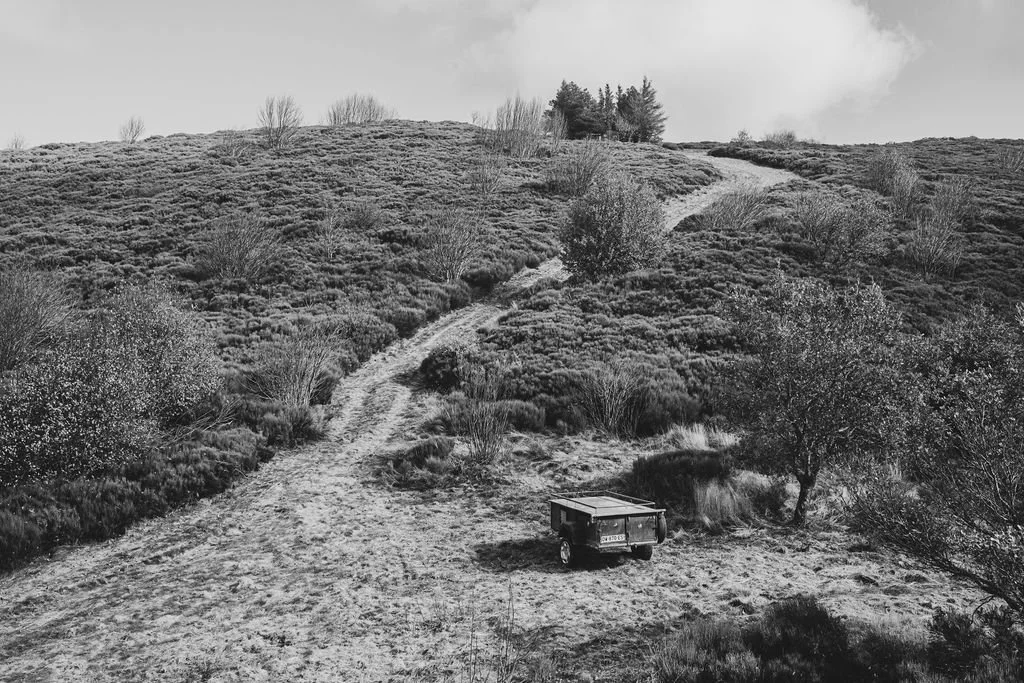
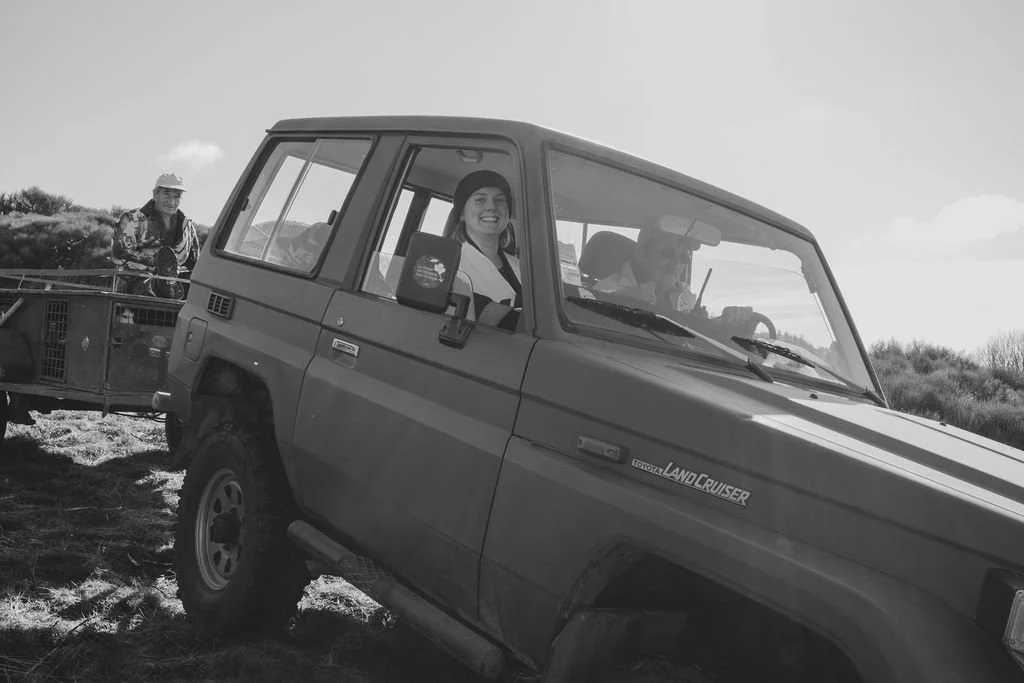
We set off at sunrise in a fleet of specialised off-roading vehicles, as well as a trailer with the dogs stored underneath, winding our way around the mountainous roads and through the forest of tall trees. Autumn leaves were shedding onto the road and forest floor as we climbed higher and higher into the mountains. It was an uncharacteristically sunny day after weeks of heavy rainfall, and my phone kept making terrifying noises as it received official alerts warning us of overflowing rivers and runoff; not ideal for our already fragile nerves.
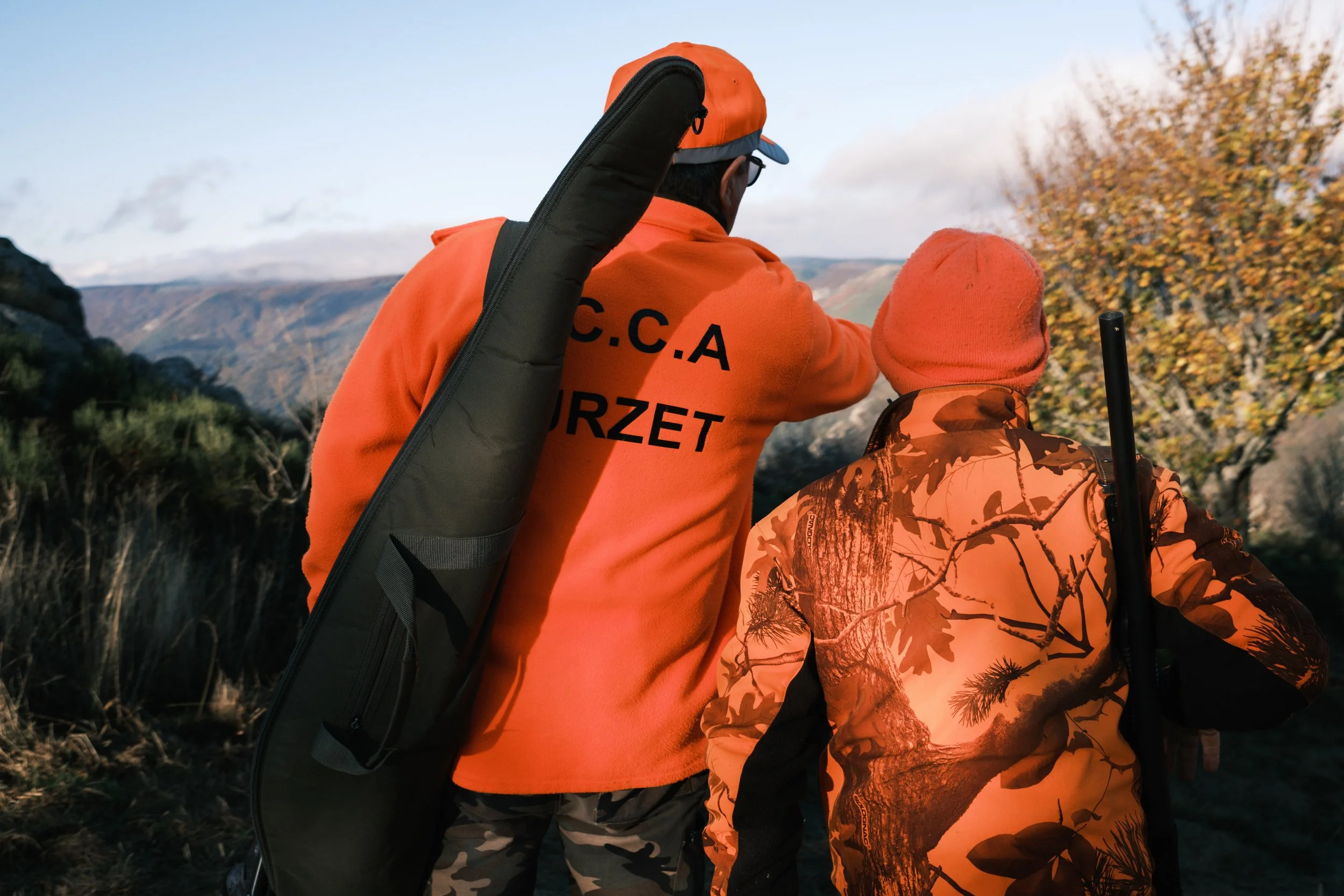
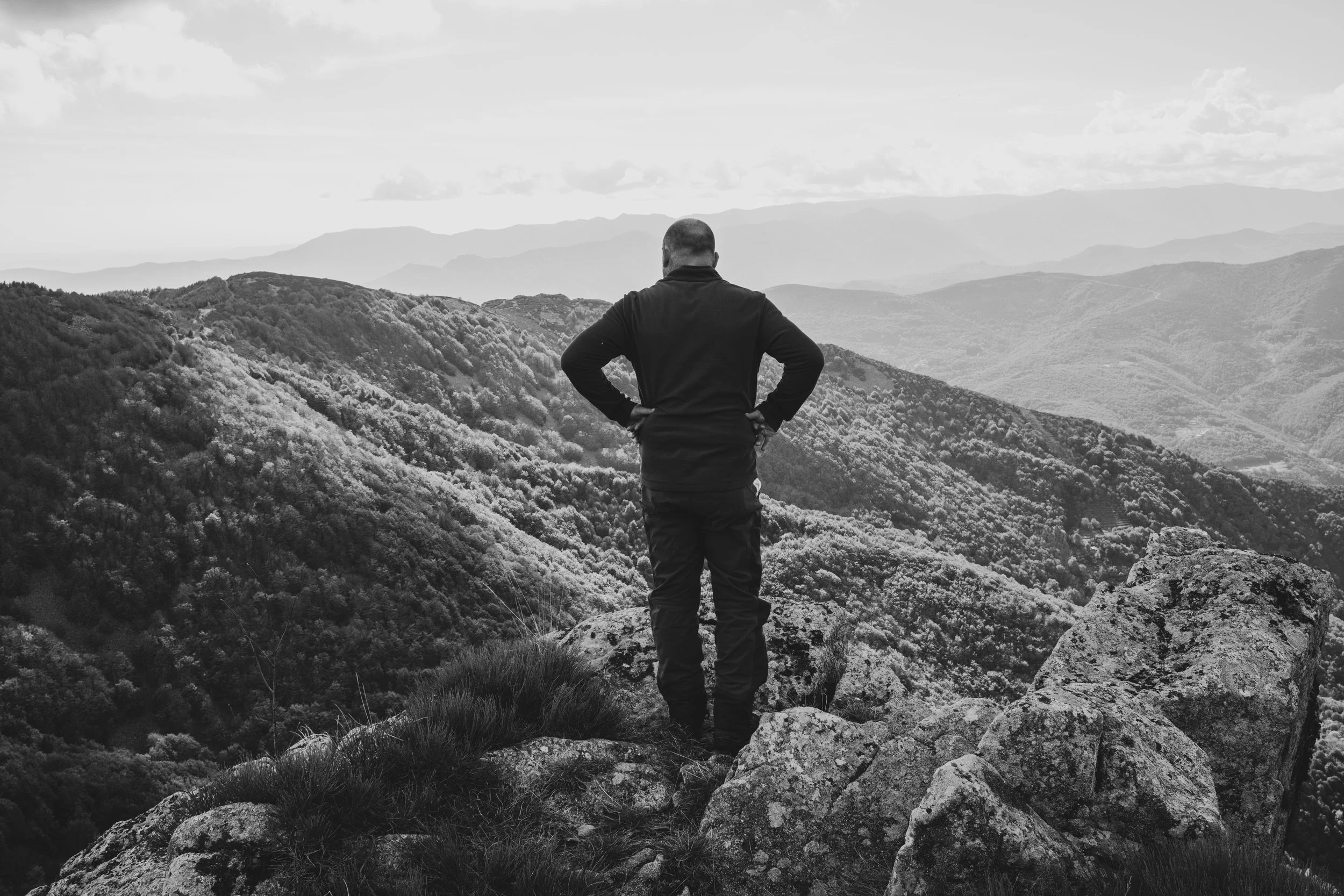
We turned off into the forest and into private land, which is common for this kind of hunt, as often it is the local farmers that call in the assistance of the hunters. It was an incredibly bumpy ride, and we kept climbing further up until we reached a plateau, with 360° views of the sun rising over the mountains.
I trekked downhill into the woodlands with Andre. He’s over double my age and moved with such grace and agility. I slipped over countless times on the wet leaves, moving hesitantly down the steep woodland. I vowed to myself to be more active when I returned home.
For a short time, I let myself forget the purpose of this trip into the forest, and reflected on how peaceful it was to be in silence with Andre. We were camped out next to a tree, and it didn’t matter that we didn’t speak the same language. I could see mushrooms, the moon, and the sun starting to cast its light onto the forest floor below us. My hands were freezing. For the first and certainly not the last time during the hunt, I thought about how I was not cut out for hunting, too hesitant with my footing, not observant enough, how I struggled to be able to stay still for a long period of time.
Whilst this was happening, Hanna was talking to Belin through Google Translate about how, perhaps similar to fishing, the waiting was peaceful, but he firmly told her no, he hunts because it’s social.
This is a way that retired men get to meet up three times a week. There might not be much talking involved during the hunt itself, but there’s an obvious camaraderie between them, and everybody seems to know their roles.
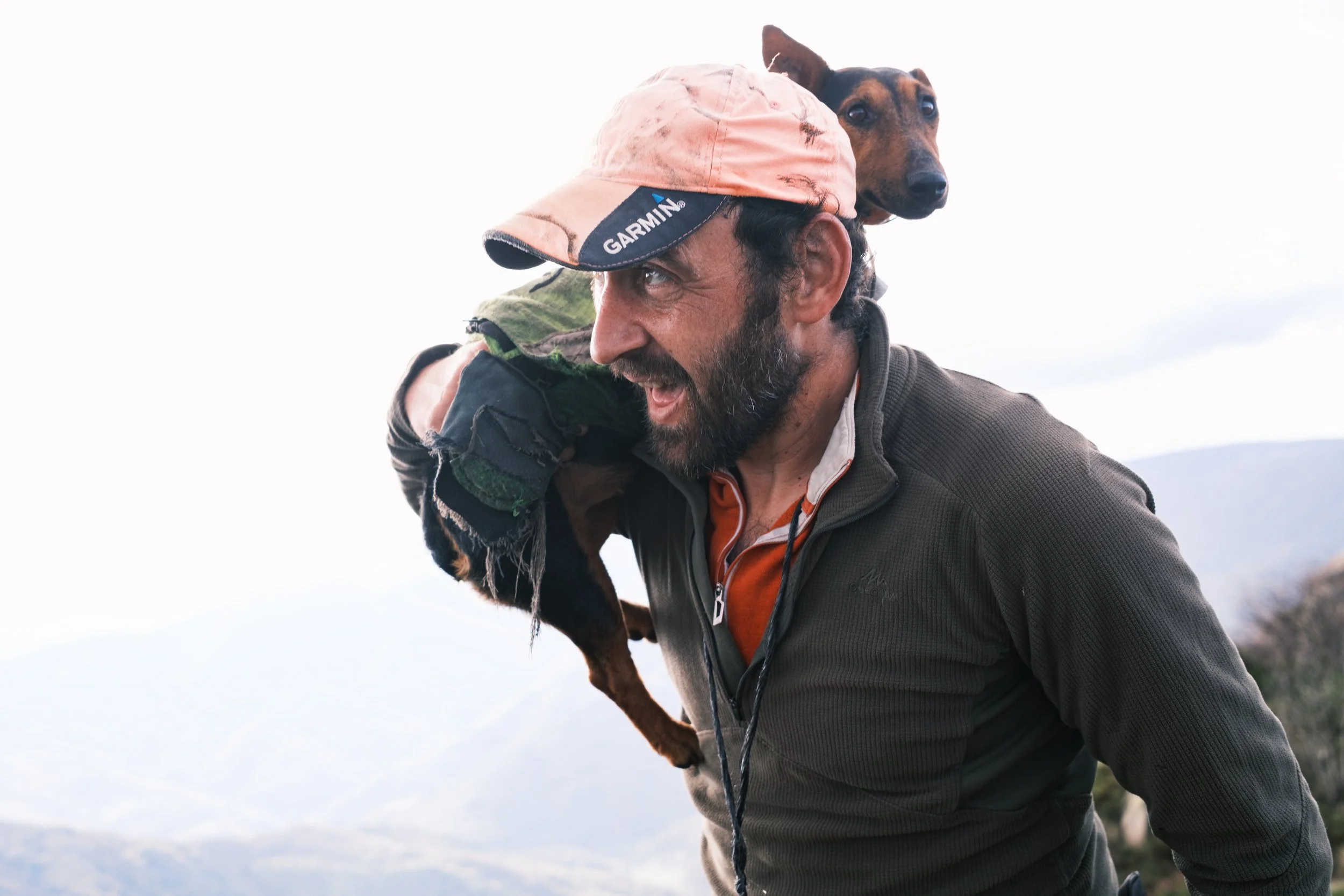
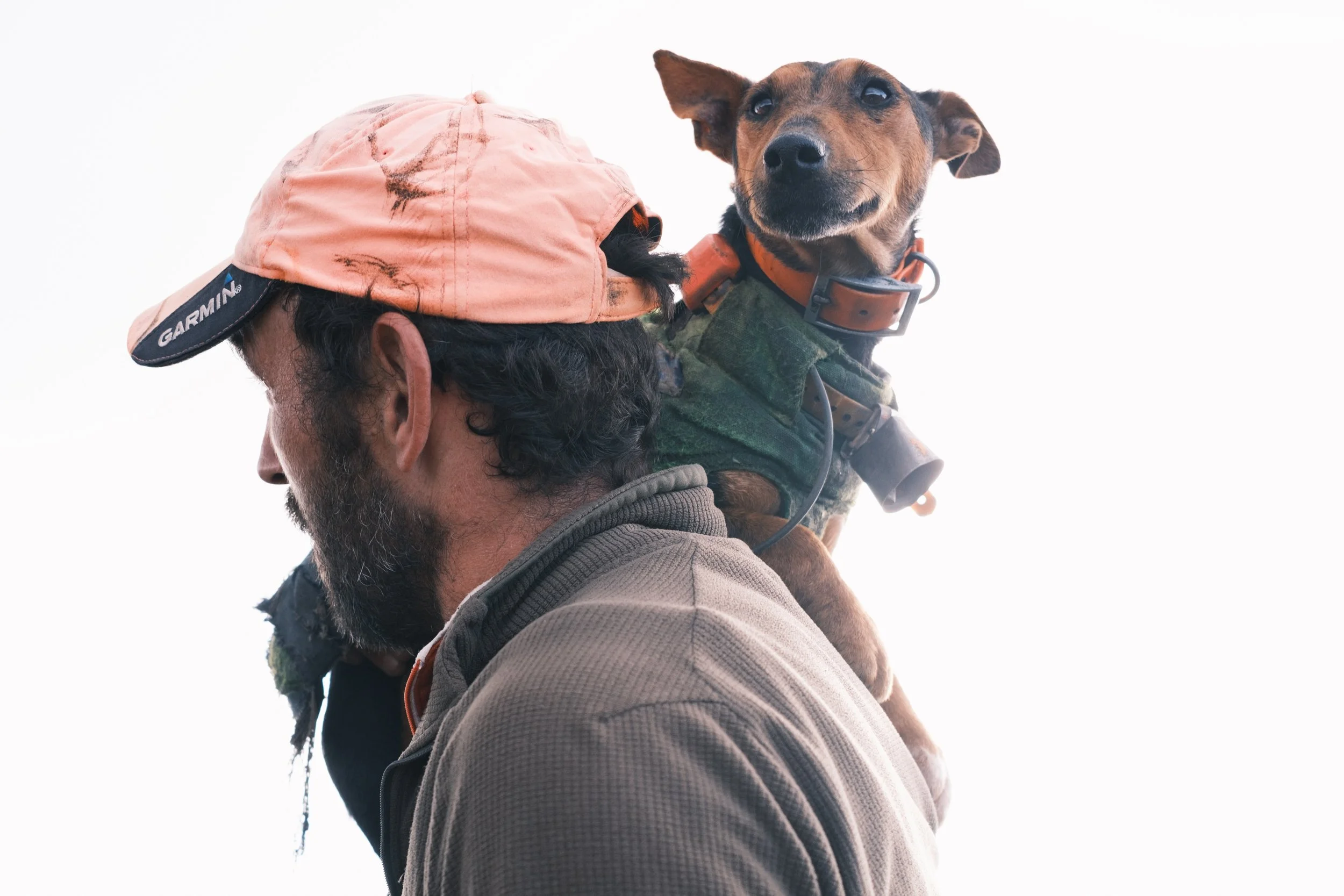
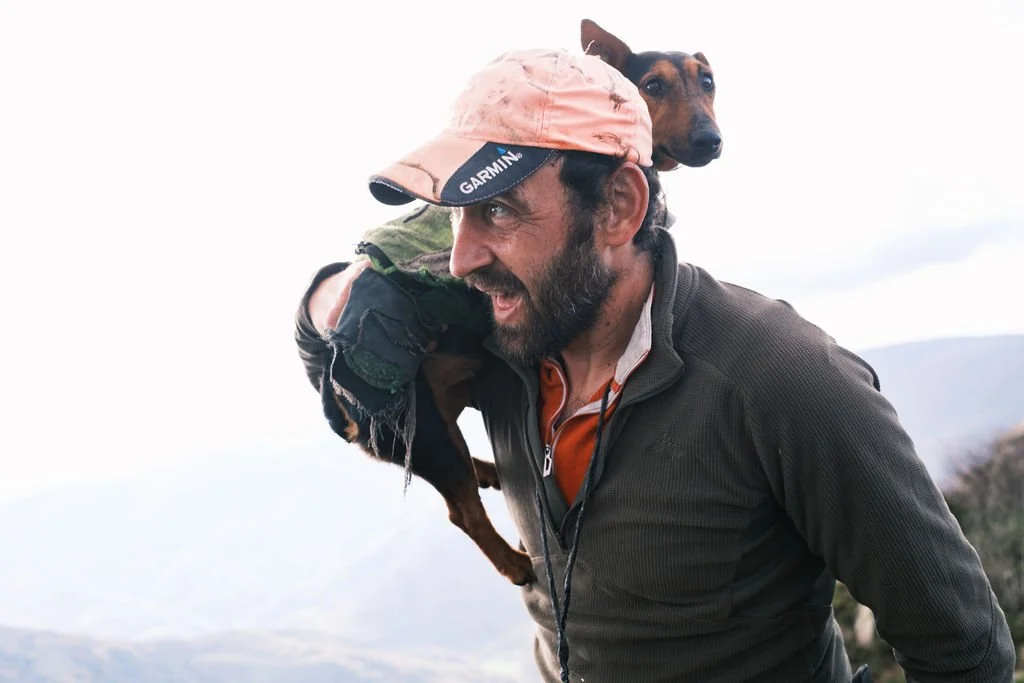
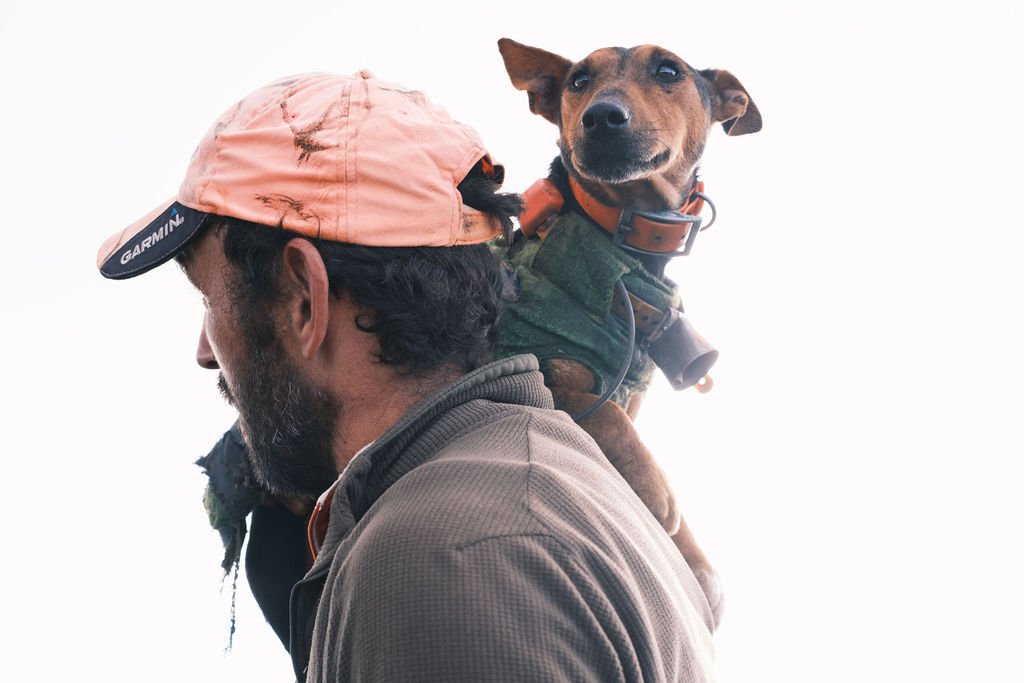
One of the dogs made its way over to Andre and I, and it brought me back to the present. There was some humour to be found in this dog, Polka, not quite understanding that she was ‘on shift’, and instead wanting to play with us. Andre was shooing her away.
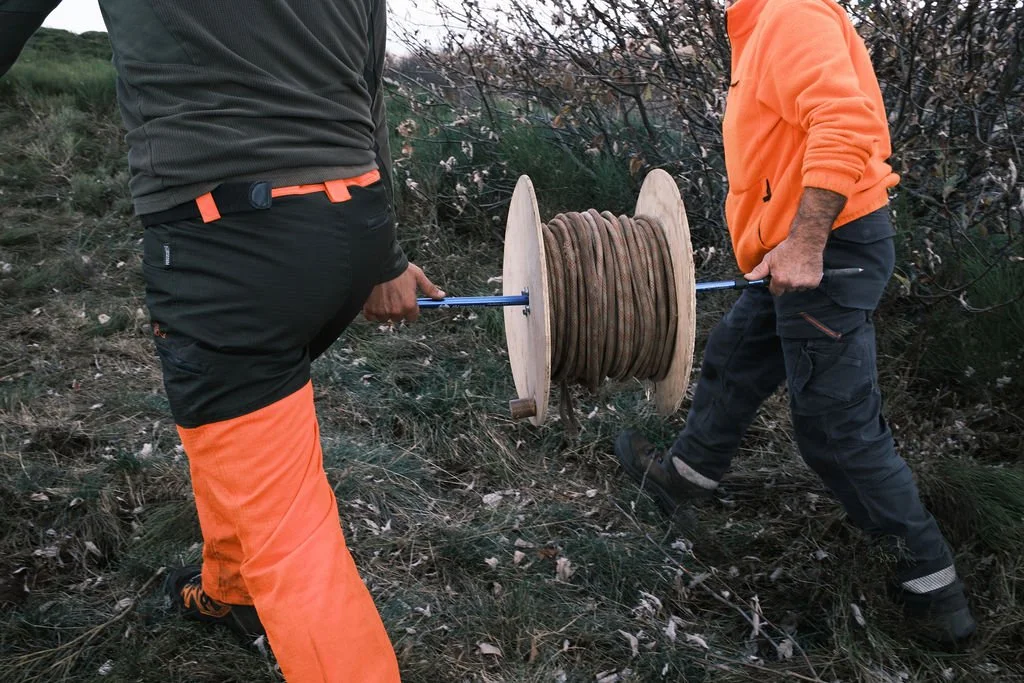
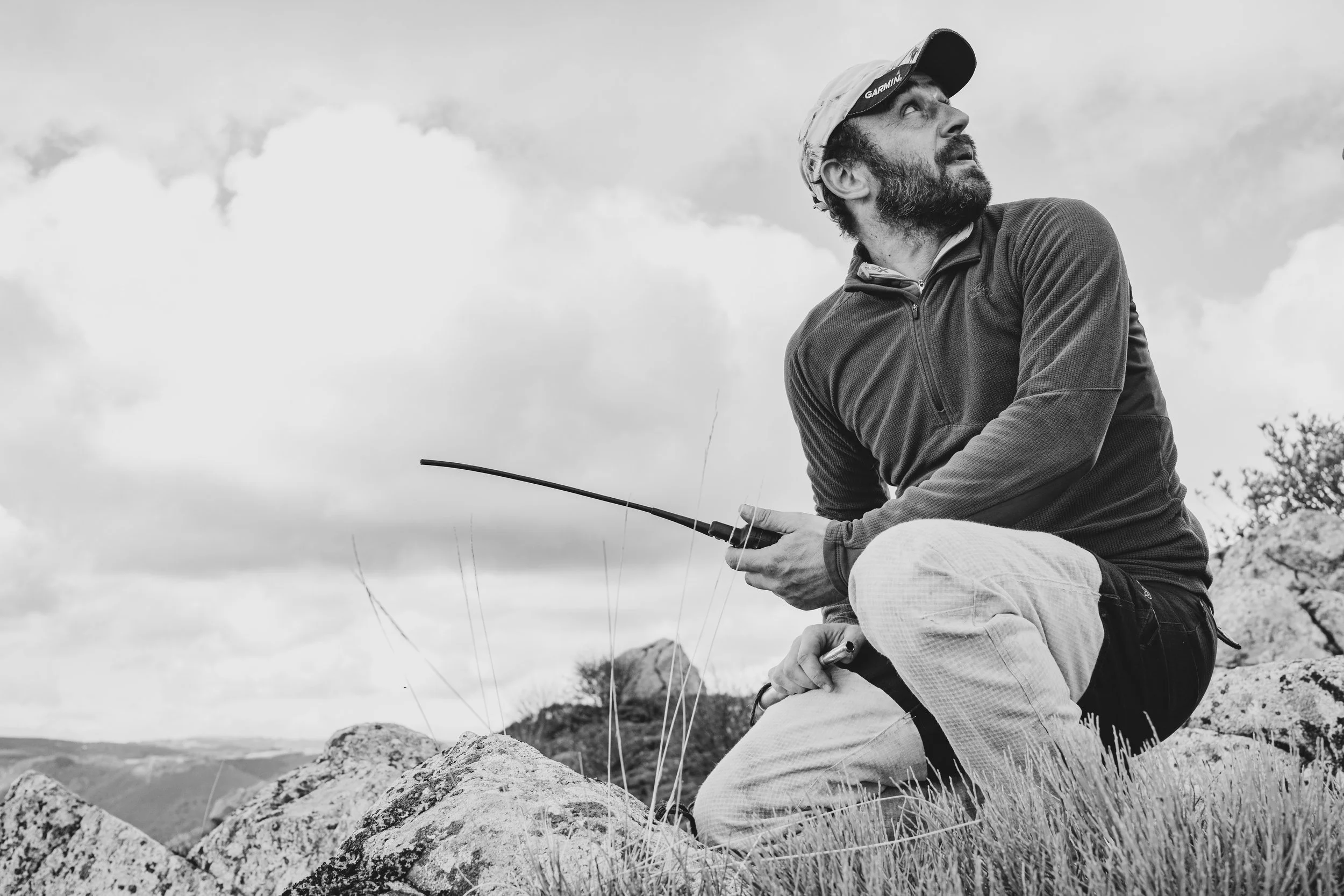
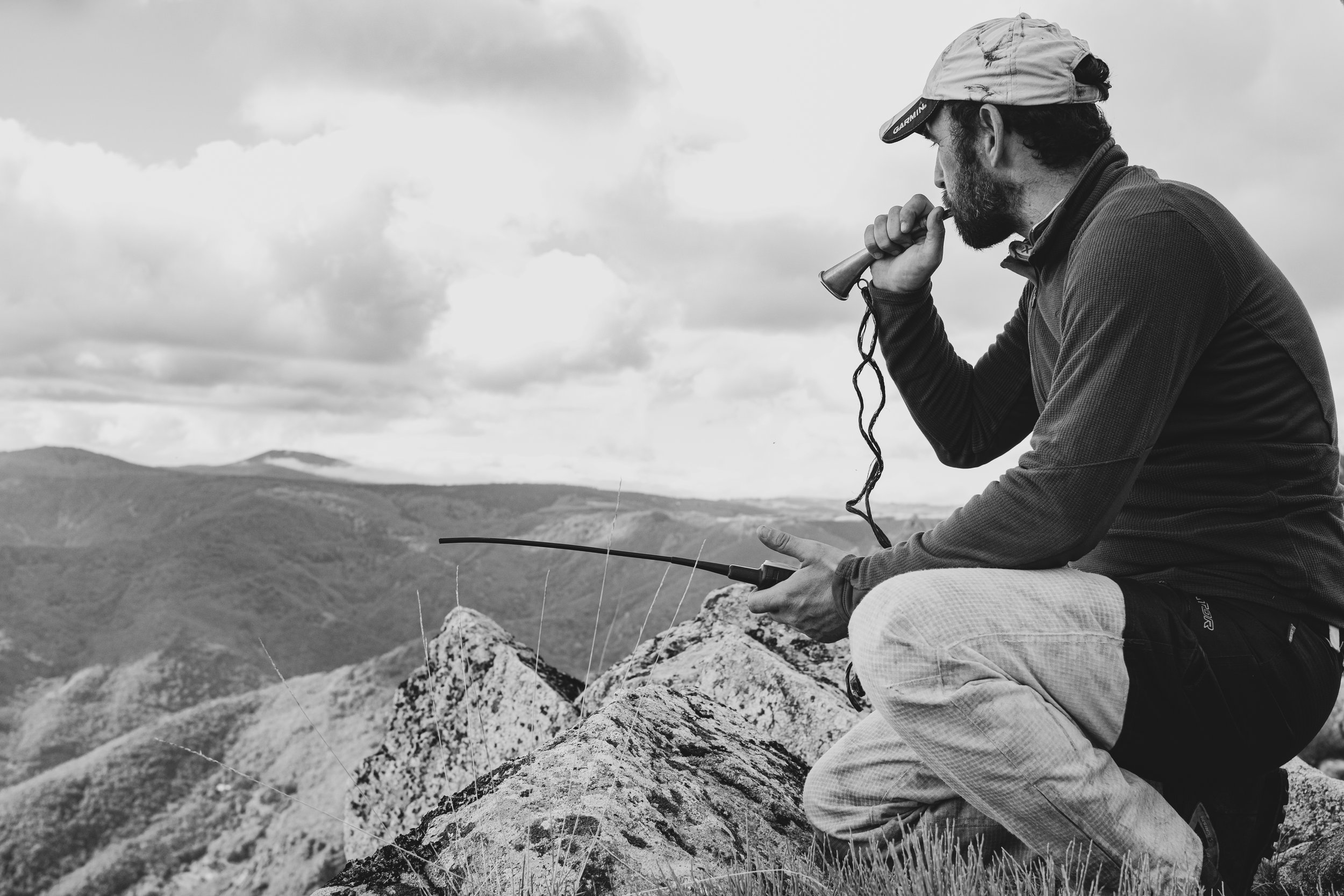
Whilst here, we heard five or so gunshots, but nothing was caught, so we headed back up to reconvene with the others. All of this was being communicated through walkie-talkies, which all the men had, as well as GPS trackers for the dogs.
The men discussed a new spot and new positions when we met up, and Hanna and I shielded each other so we could both have a wee behind a tree. I once again thought about how out of our depth we were.
I jumped in Andre’s 4X4 and we drove along on even more bumpy terrain. He stopped to show me one of the signs where the boundary for hunting is.
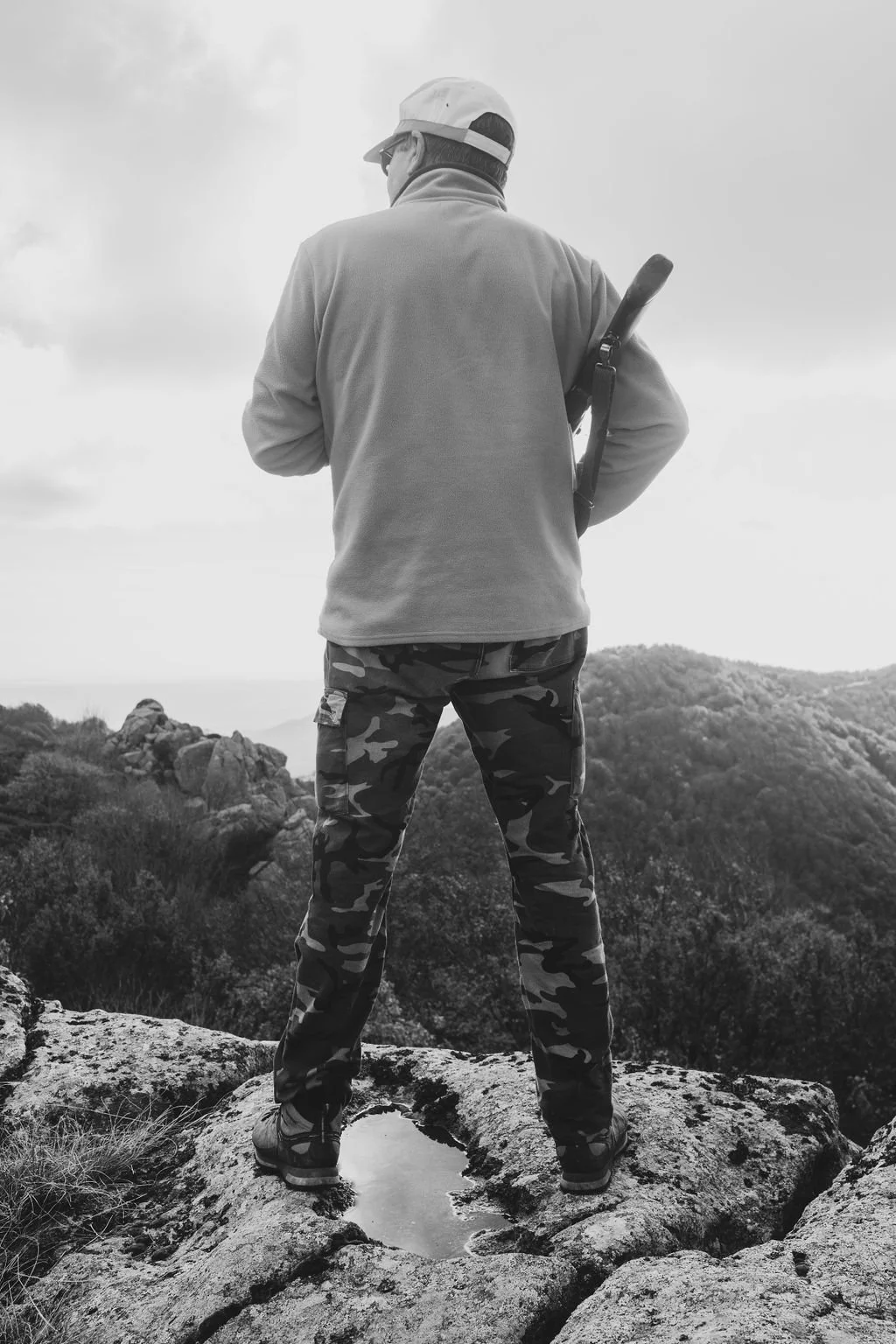
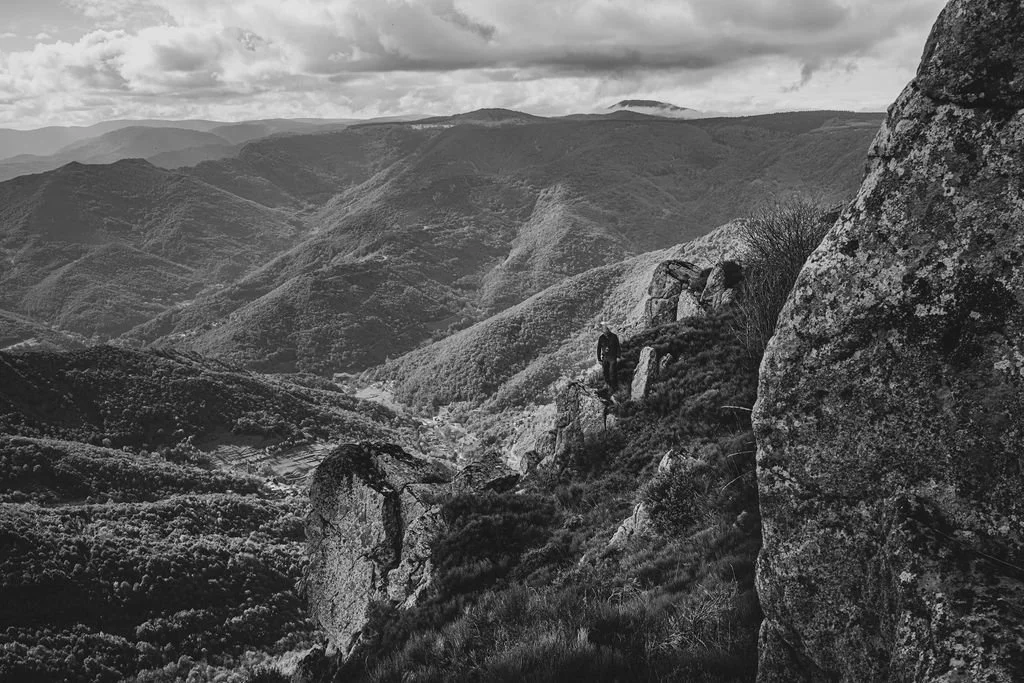
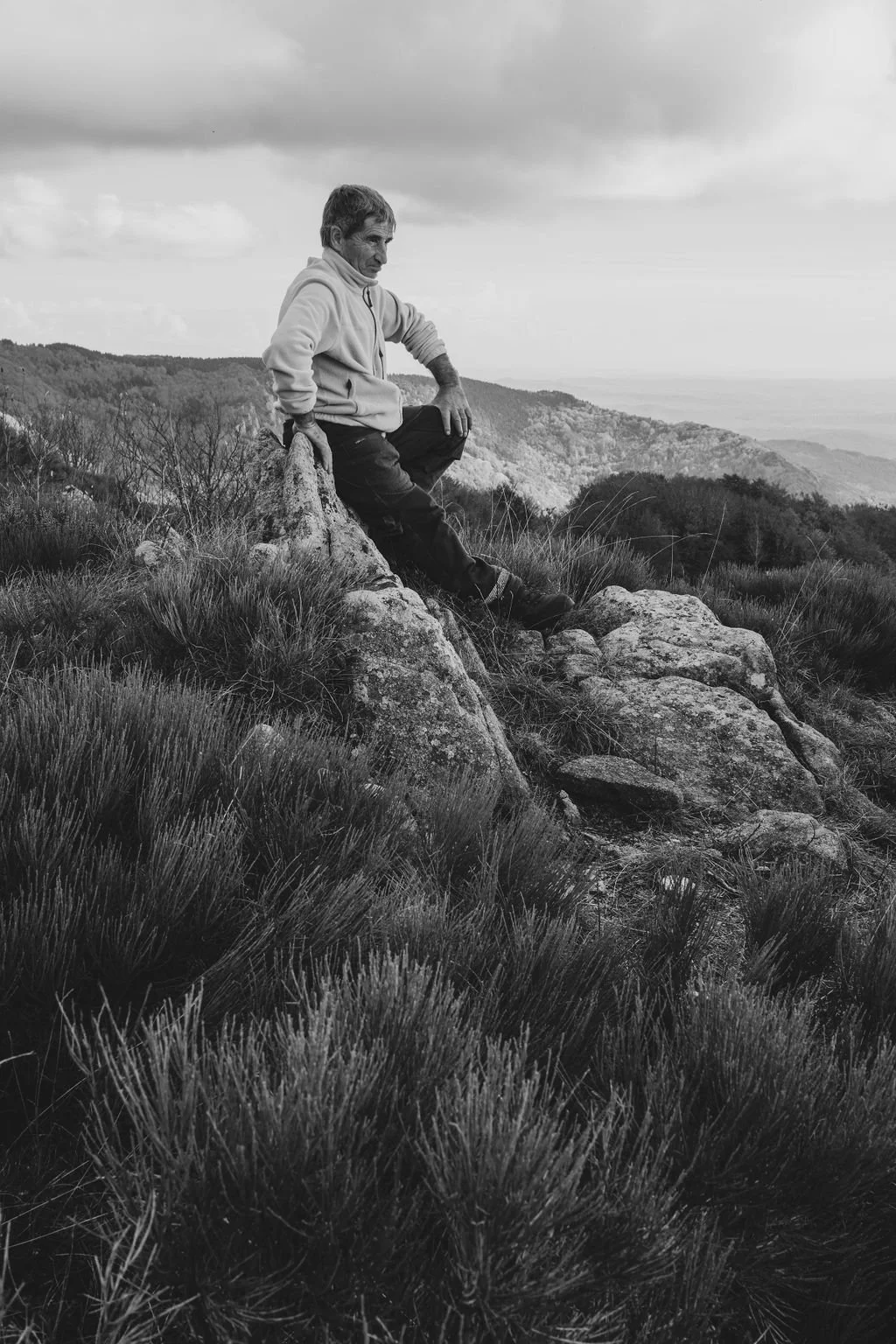
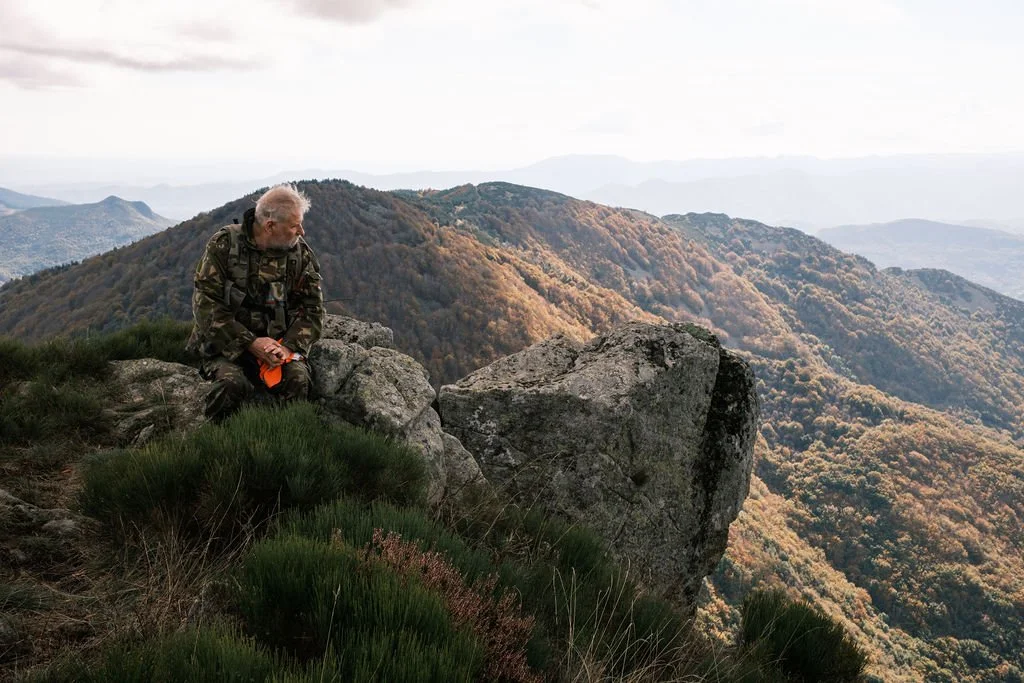
This time, we were positioned on the very steep side of a cliff. He showed me a rock I could sit on and stay quiet whilst he looked out over the valley. Although the rock wasn’t a particularly comfortable place to sit for two hours, every time I stood up I felt like I was going to fall off the edge, so I decided to stay where I was told. I thought about how we’d put our trust in these strangers, and how I was stationed alone with one of them (and his loaded rifle) on the side of a cliff - I counted my lucky stars that I felt very safe with Andre.
About an hour or so in to our time on the cliff, Ludo, Andre’s son, started speaking frantically through the walkie-talkie, and with no warning, Andre shot, swore in French (one of the French words that I do recognise), and shot again. He turned and gave me a thumbs up and a smile, which I translated as a successful shot.
We headed back up, and I was once again quite a distance behind Andre, fighting my way through the shrubs like a newborn giraffe getting to grips with their legs for the first time.
When we drove over to the other men, there were more gunshots and Andre jumped out of the car with his rifle to join the others. It was unclear what happened, as it was all so quick, but we were informed that a second boar was shot.
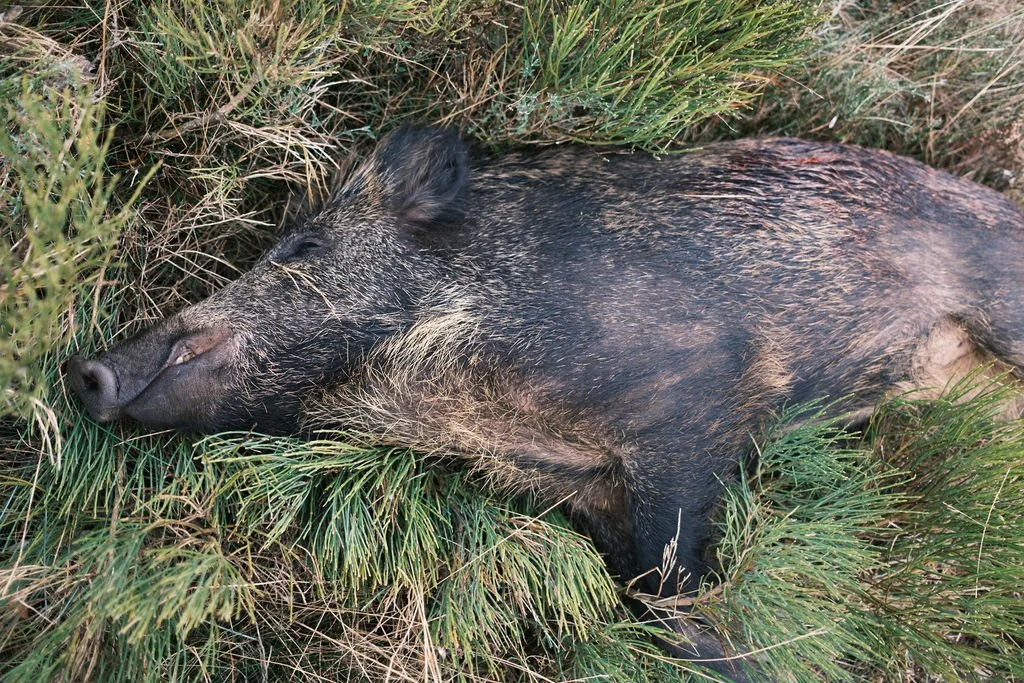
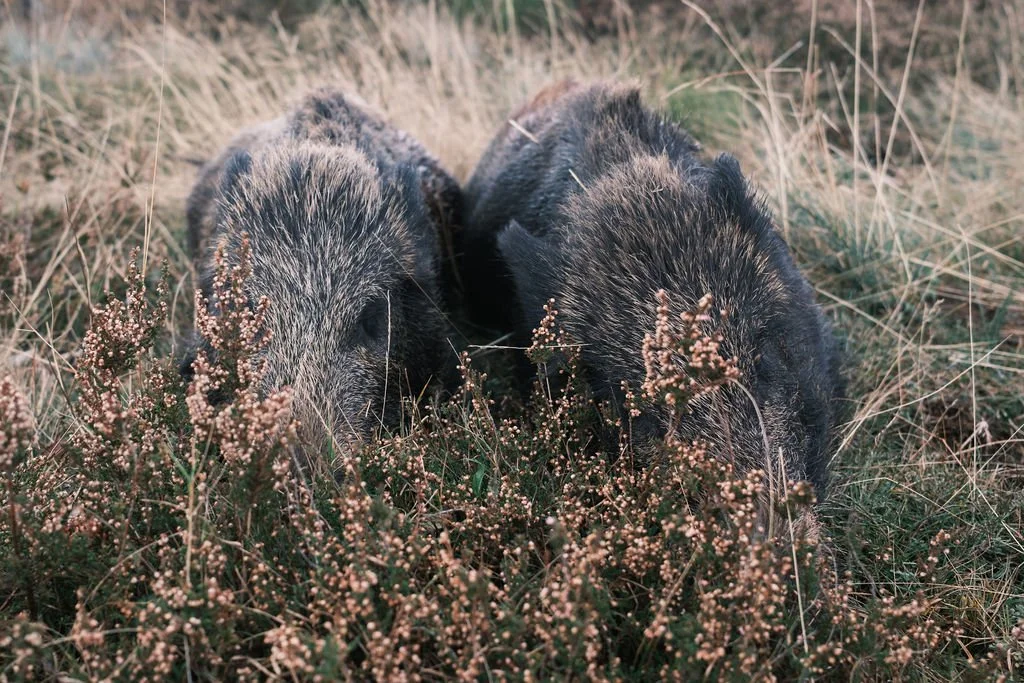
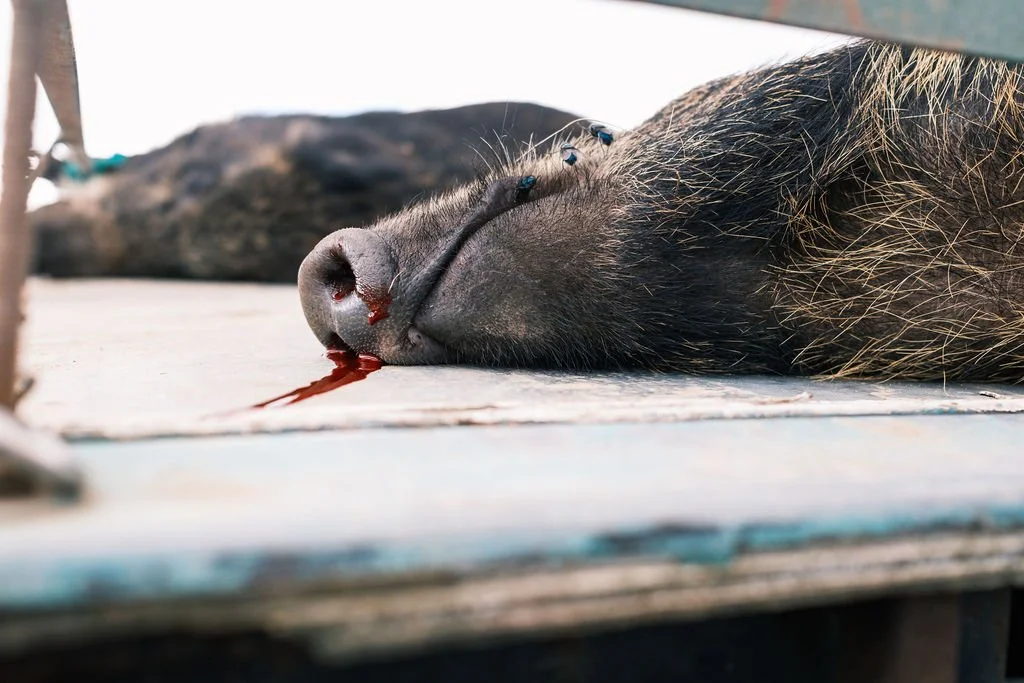
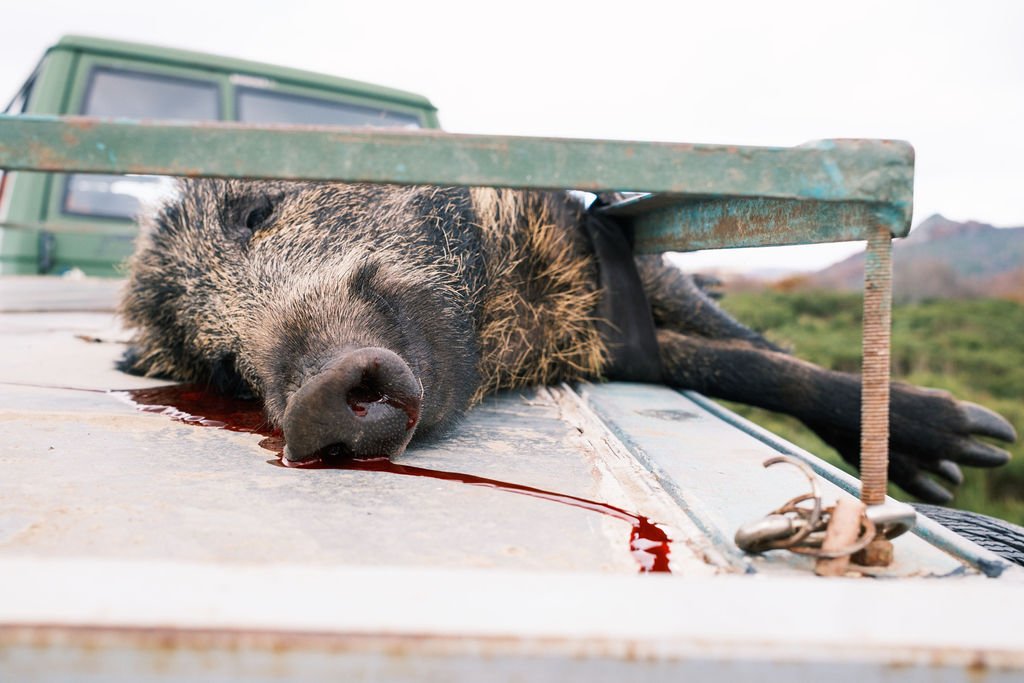
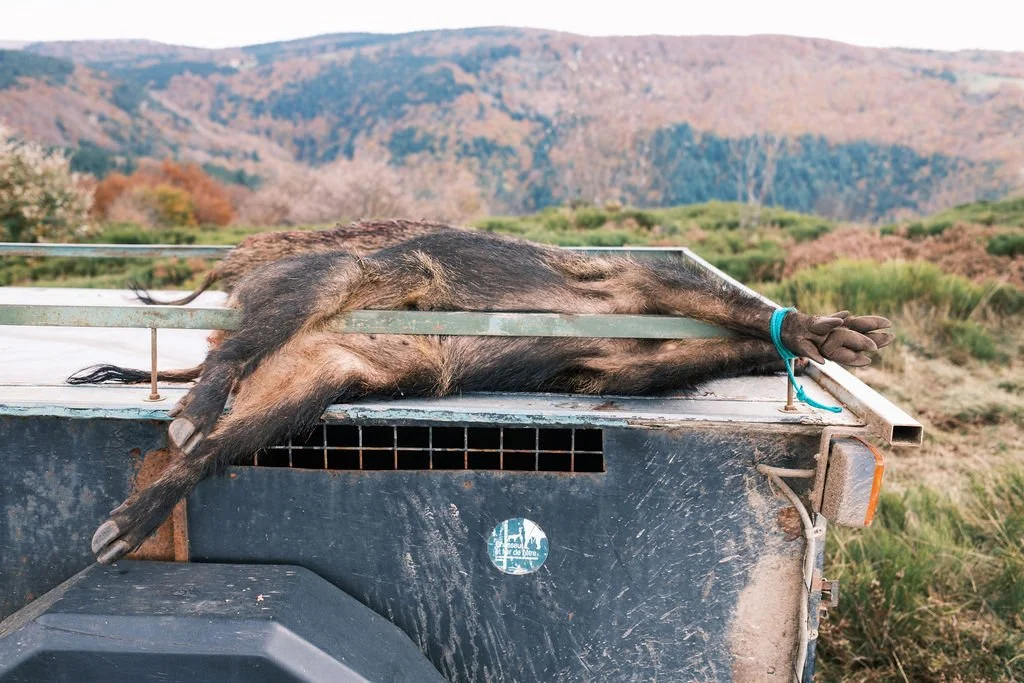
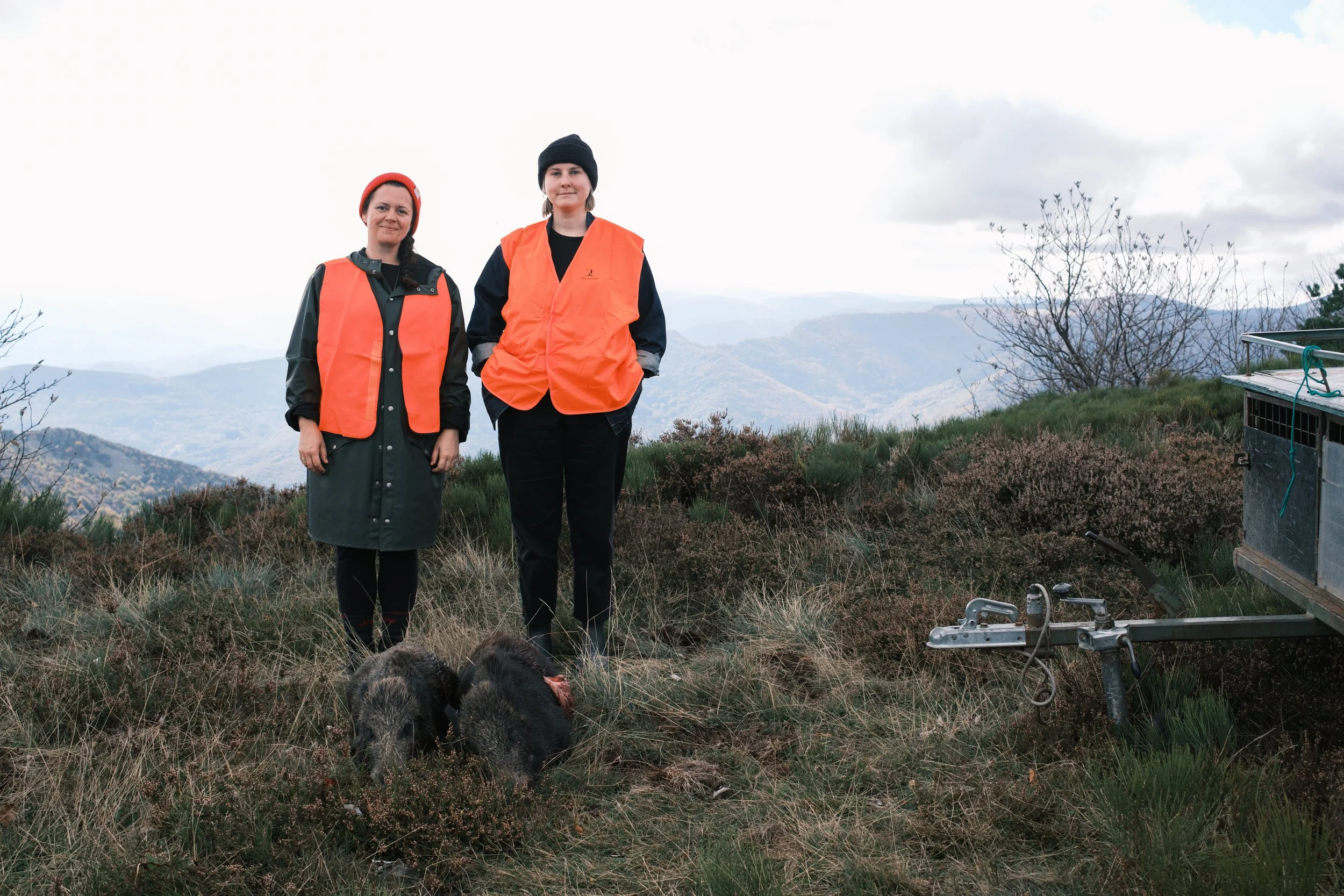
Ludo had already carried the first boar up the side of the cliff on his back, and its body lay amongst the heathers. It was much smaller than we’d imagined - the men told us that it was probably just over a year old.
The second boar was winched up by the men with the help of two cars, its entrails spilling out, most likely getting caught on the rough terrain on the way up. They laid it down next to the other boar - a male and a female, both reasonably young.
We both thought that this signalled the end of the hunt, and we’d be heading back, but two of the dogs hadn’t returned, and were shown on the GPS tracker to be somehow stuck or not moving.
As the men called for the dogs, we sat reunited on top of the mountain. In the stillness and warmth of the early evening light, Hanna and I spoke about our experiences of the day so far. The tension that the hunt brought with it was over, and we were sat next to the reality of the two dead wild boar. This brought with it feelings of doubt, and to allay this, we reviewed the positives of this approach to wildlife management. Neither of us are 100% pro-hunting, but after the day we’d spent with the hunters, we could see the benefits with a much more nuanced insight. We both experienced real clarity in that moment about how vital this tradition is for these men, providing them with a common purpose in responding to a crucial need within the community, as well as using their specialised skills, and connecting to their much-loved local landscape.
After almost an hour of the men looking for the dogs, eventually having to head back down the mountain to find them, two of the men carried them up, one dog asleep, and Polka, injured.
The men looked absolutely exhausted, but were showing such warmth and fondness to the dogs, something that had been evident to us throughout the day.
For me, this raised the issue of how human beings value the lives of one animal over another. Were these not the men who had just been celebrating the successful shootings of two wild boar?
We headed back to the cabin, winding our way back down into the golden evening light and lower into the valley.
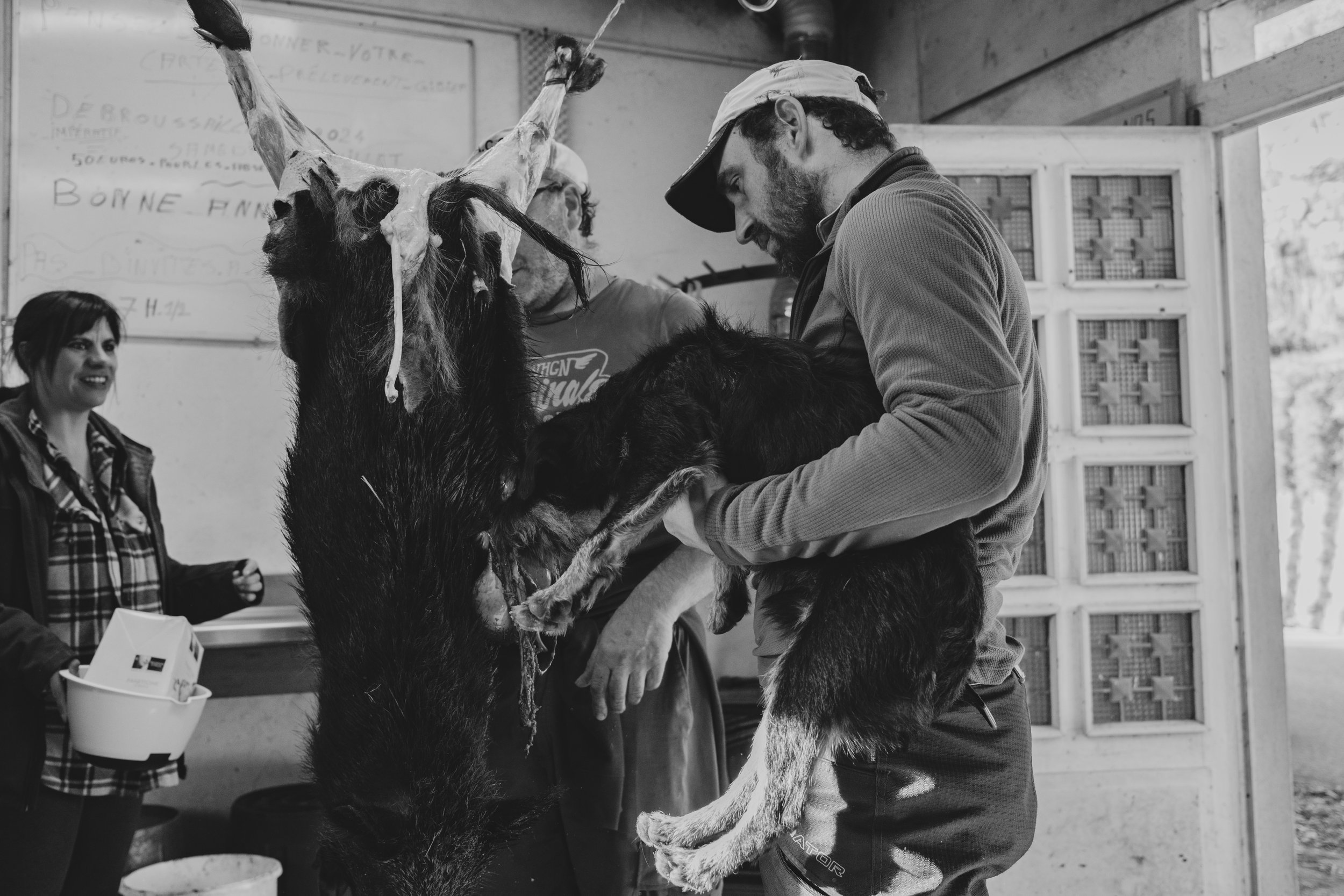
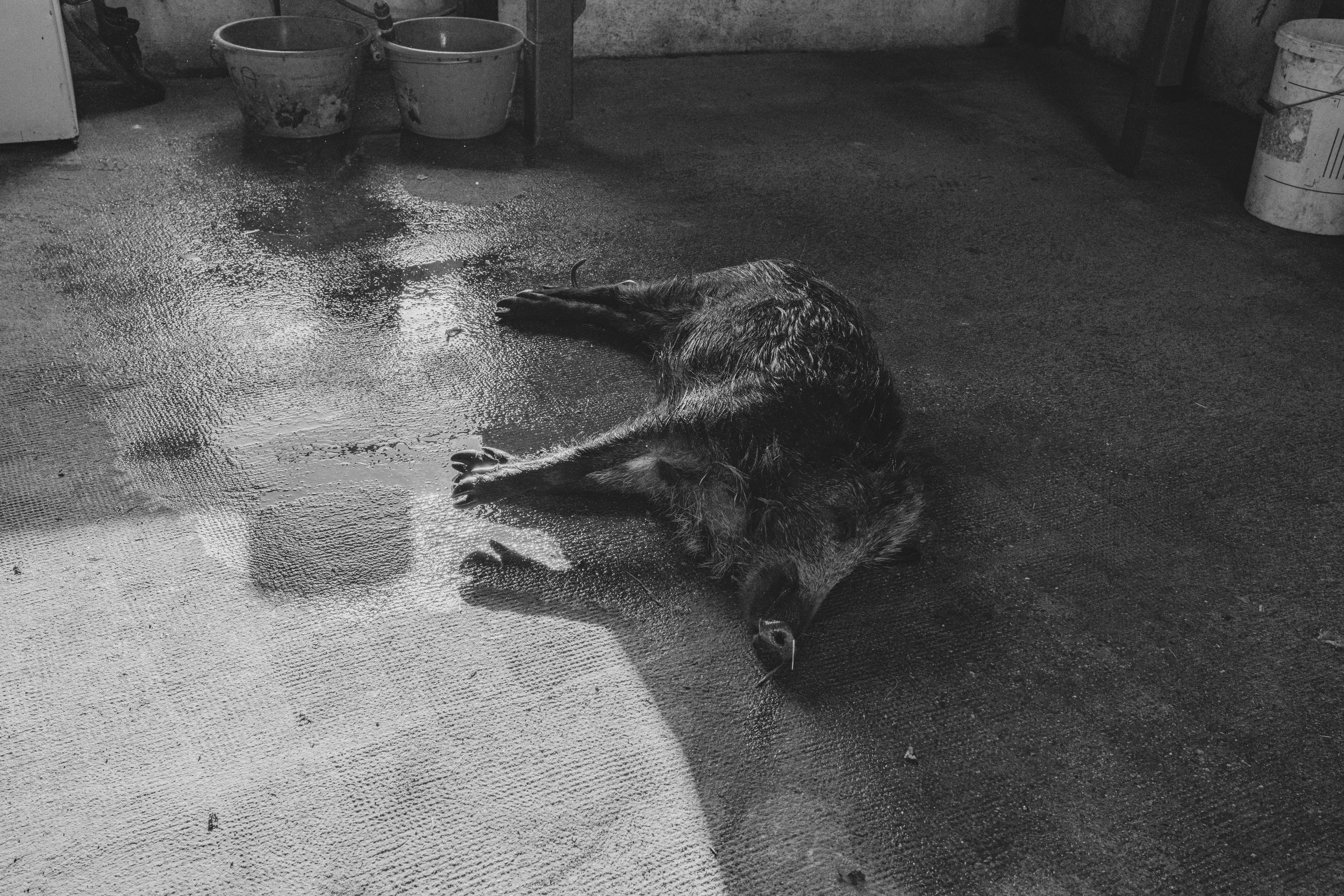
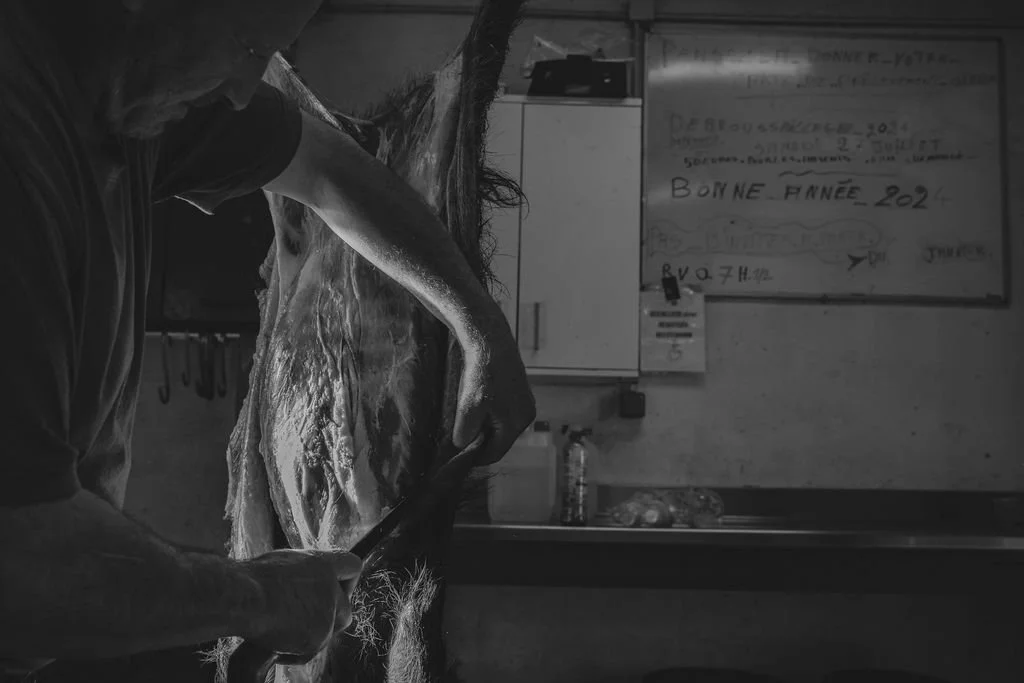
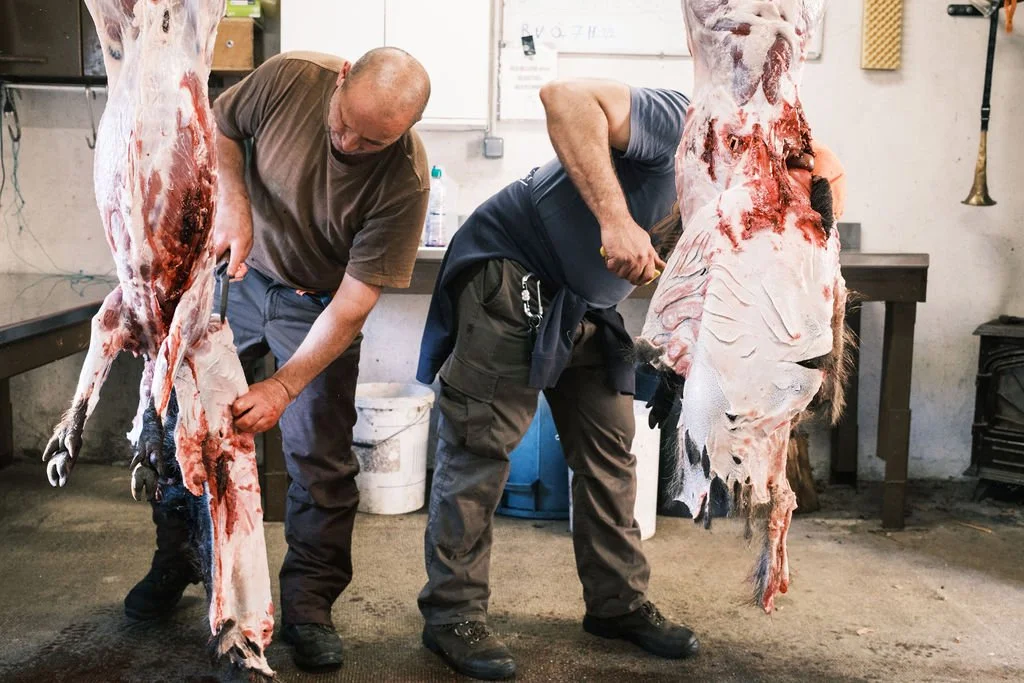
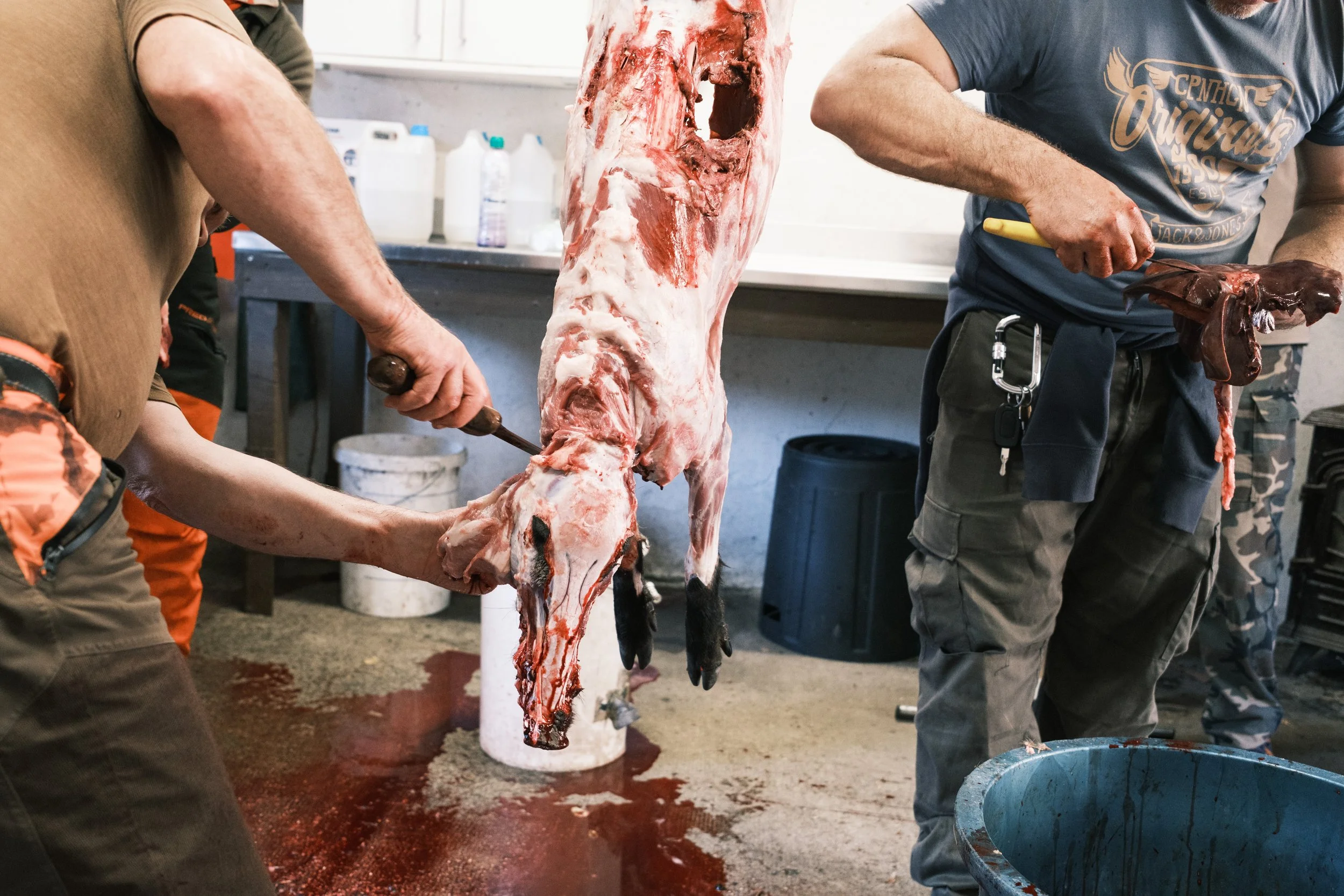
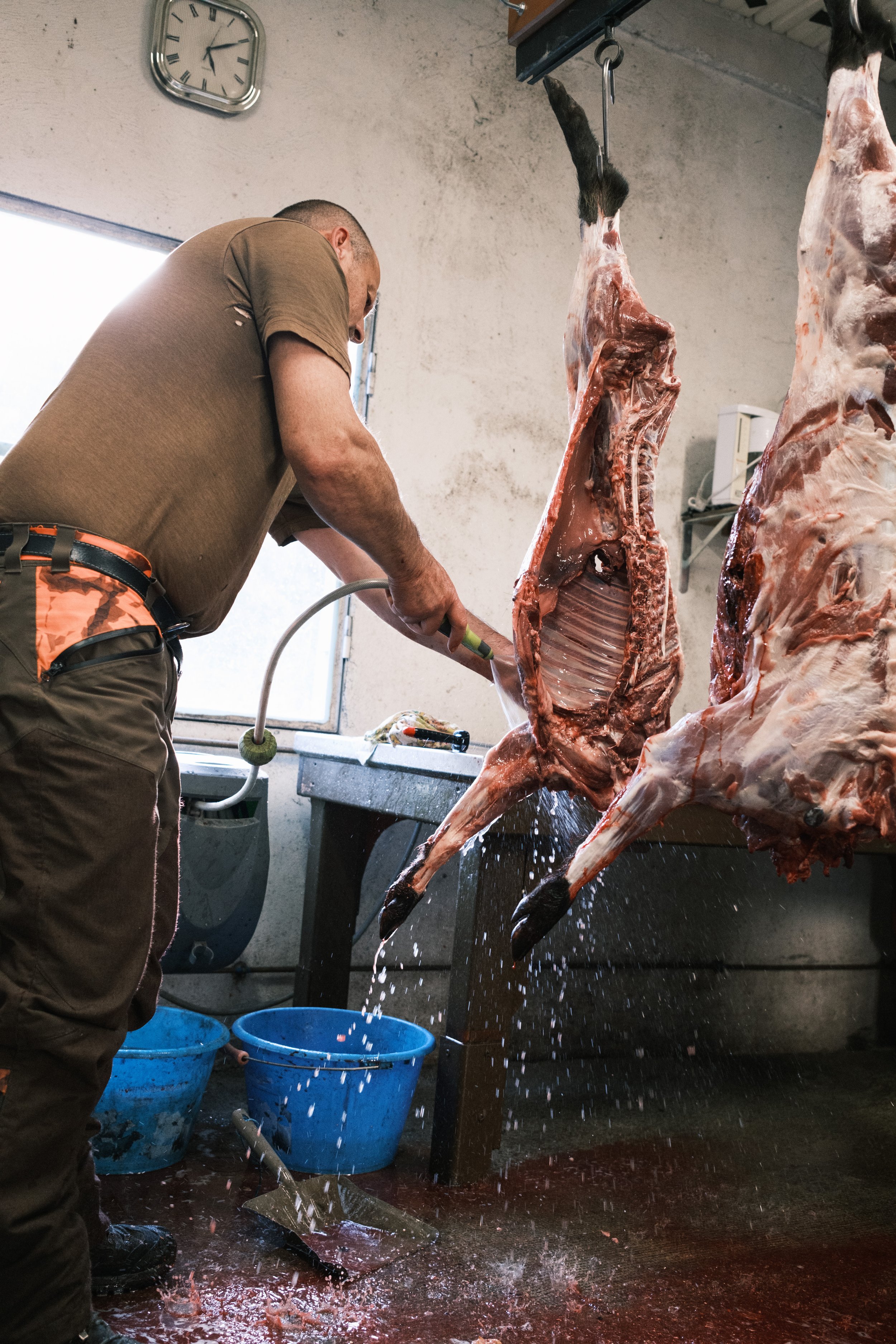
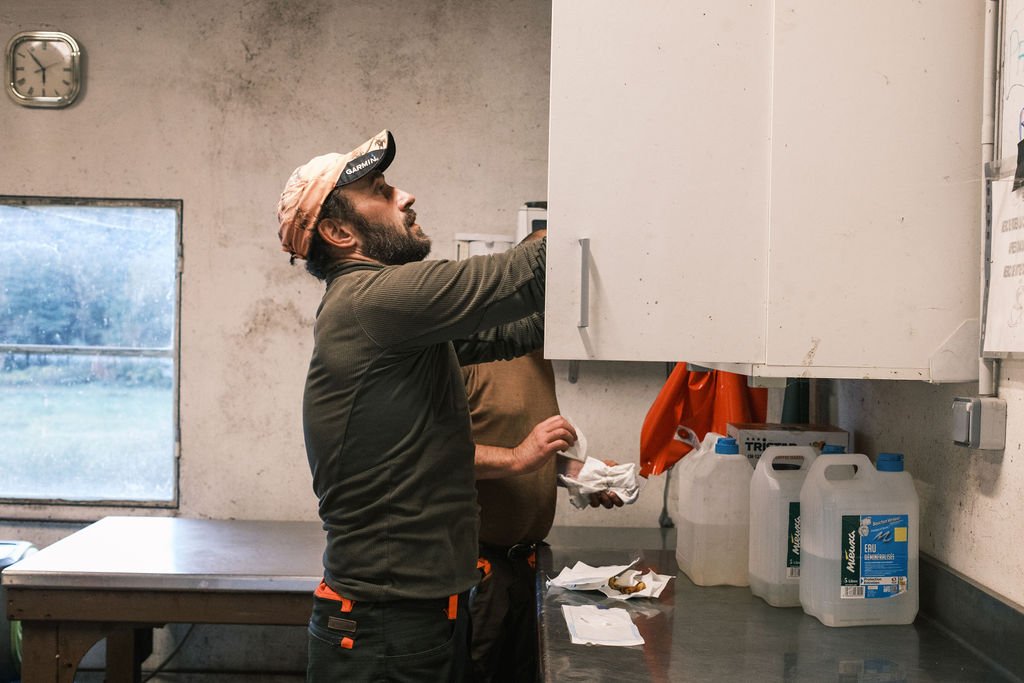
When we returned to the cabin, the men got straight to butchering the boar. I had expected this to be the part of the day I found most challenging, but it was surprisingly beautiful to watch. They moved with such grace and precision, and were hygienic and tidy, with Belin weaving between the others to mop the floor of blood. Marilyn had arrived now, and told us that her husband Ludo is a trained butcher, which was evident when watching him portion up the wild boar.
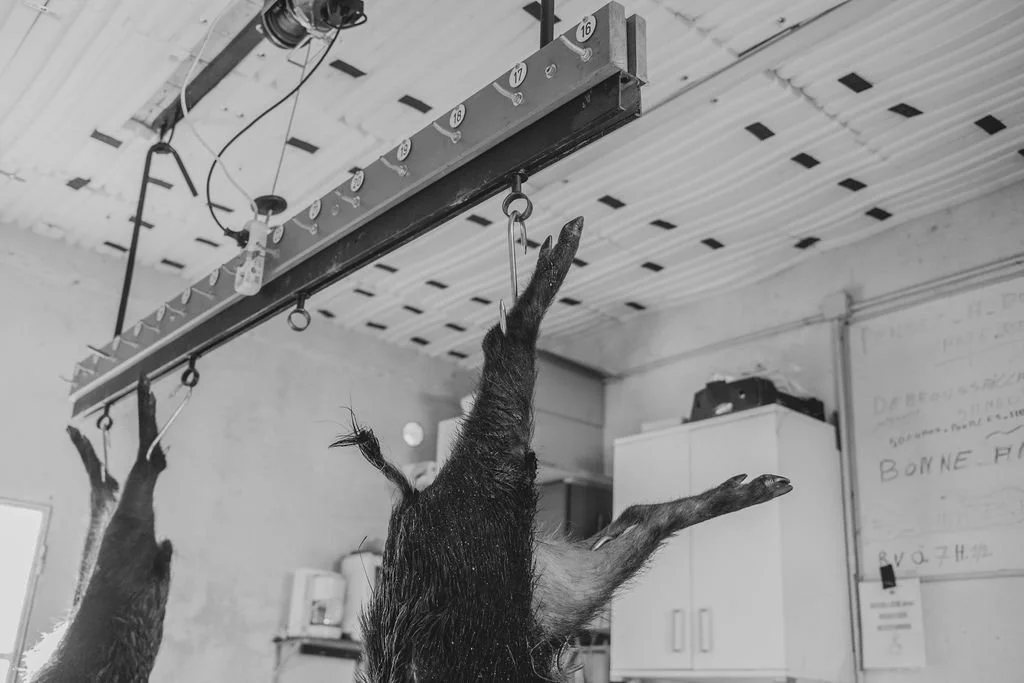
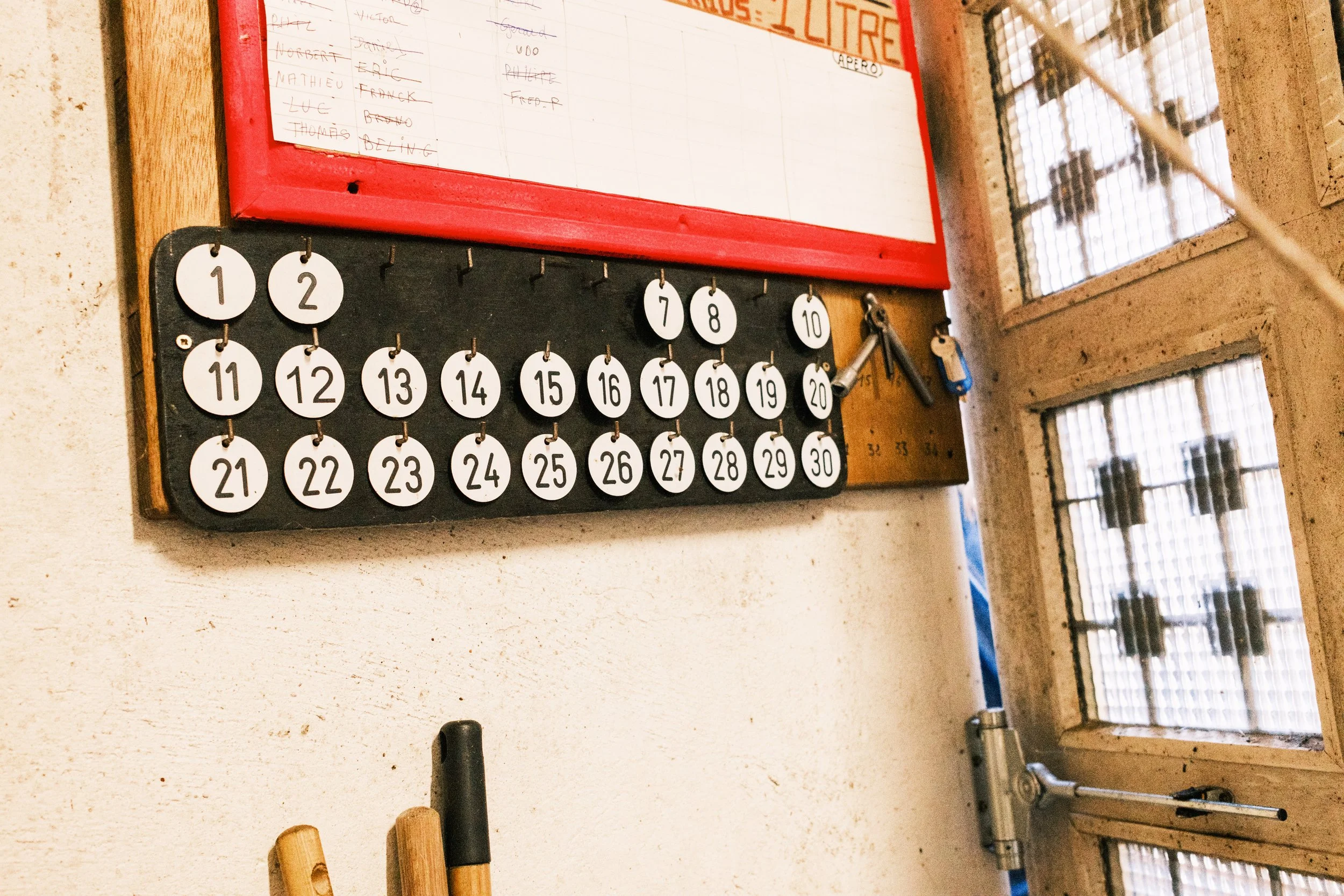
The meat was placed into seven carrier bags and hung up off numbered hooks. Each man, and for this hunt, Hanna and I, took a token and turned it over to reveal the numbered bag they’d get to take home with them. Hanna and I thought this was the end, but once again, the dogs became the main focus.
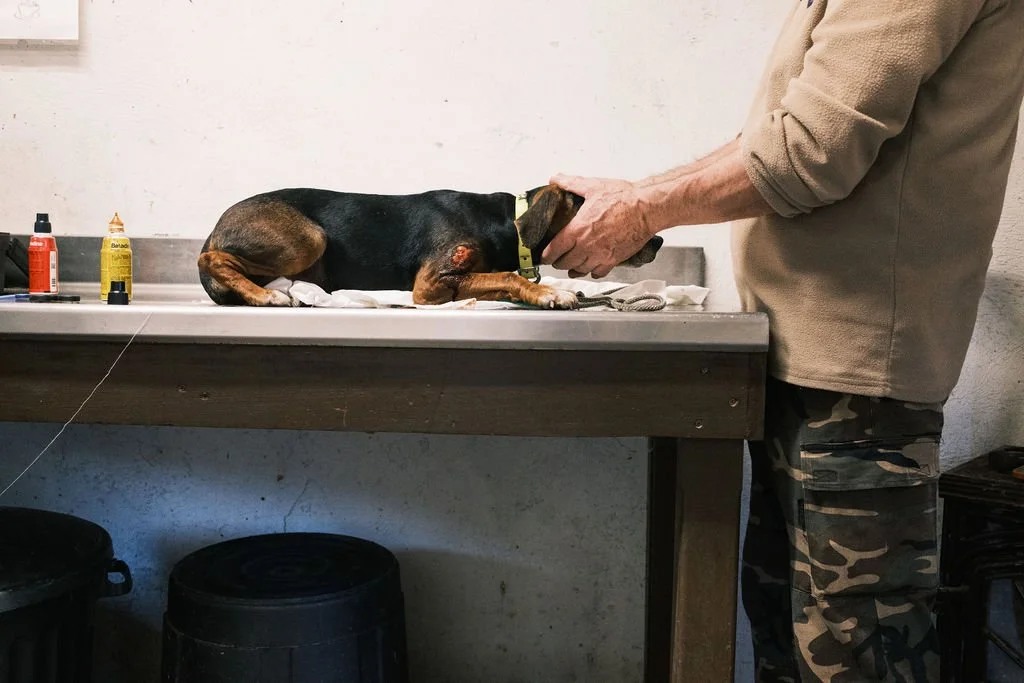
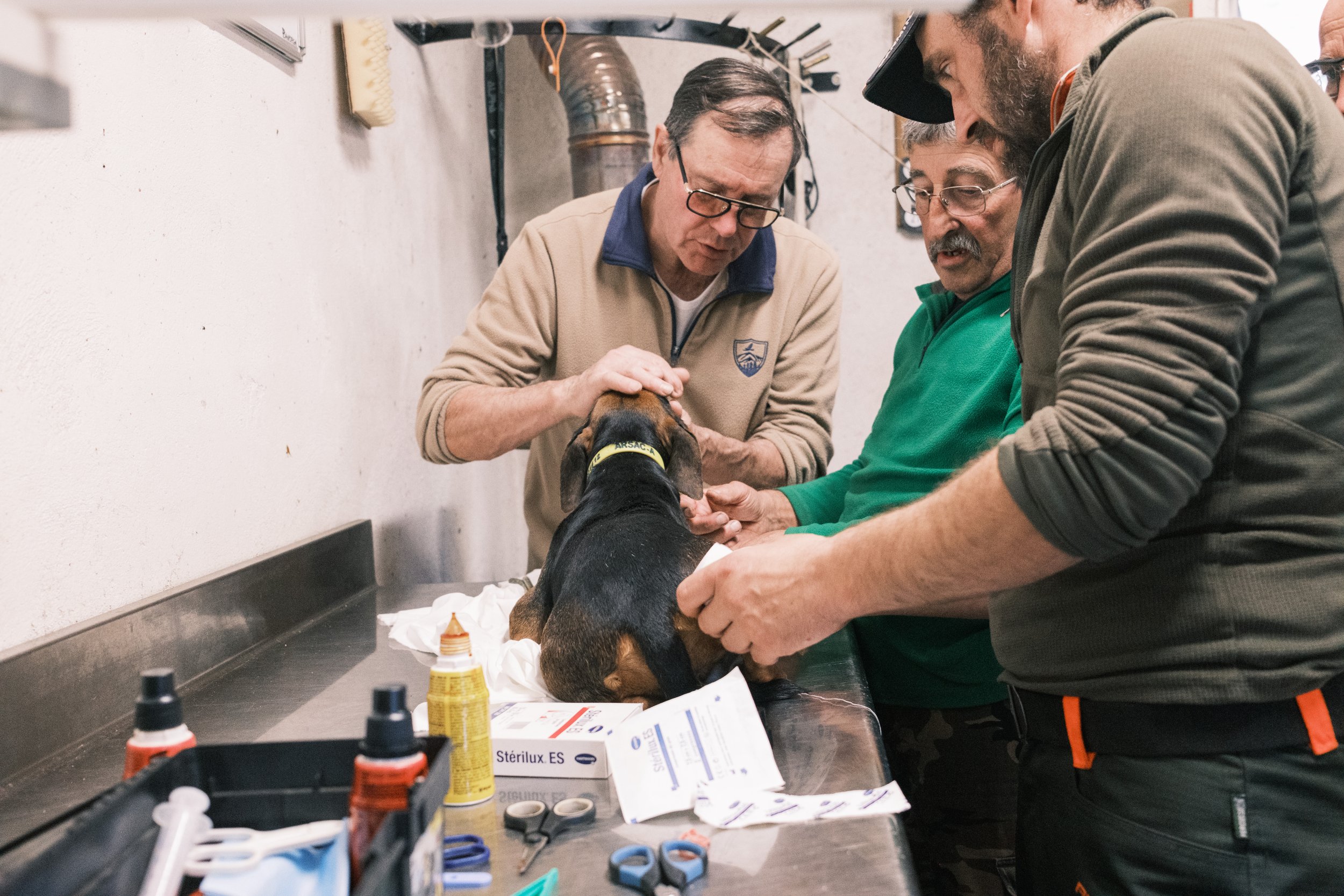
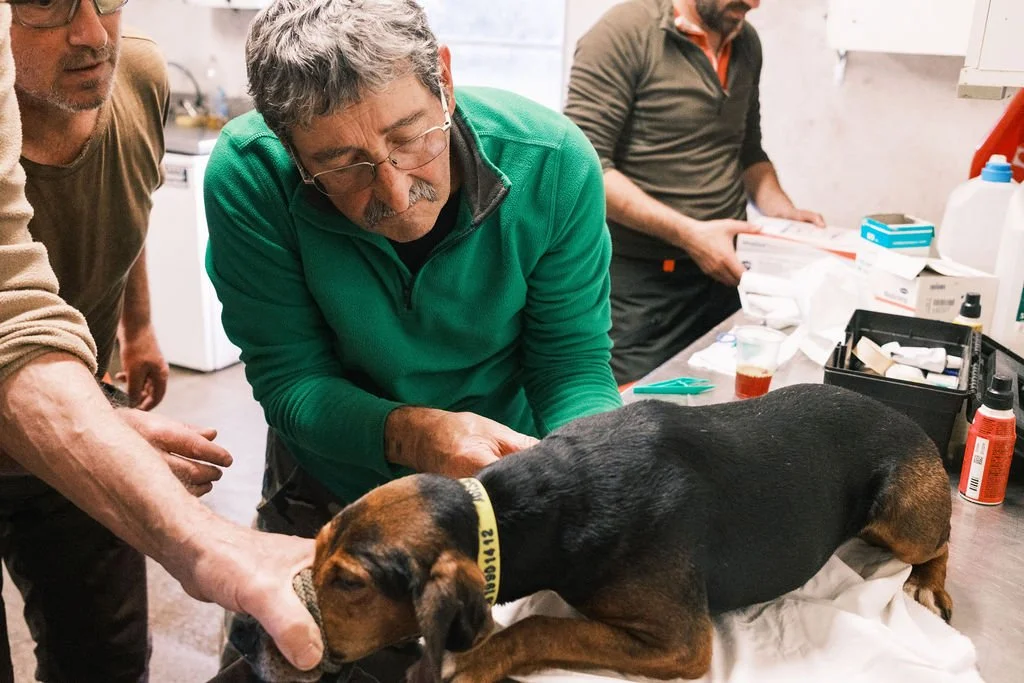
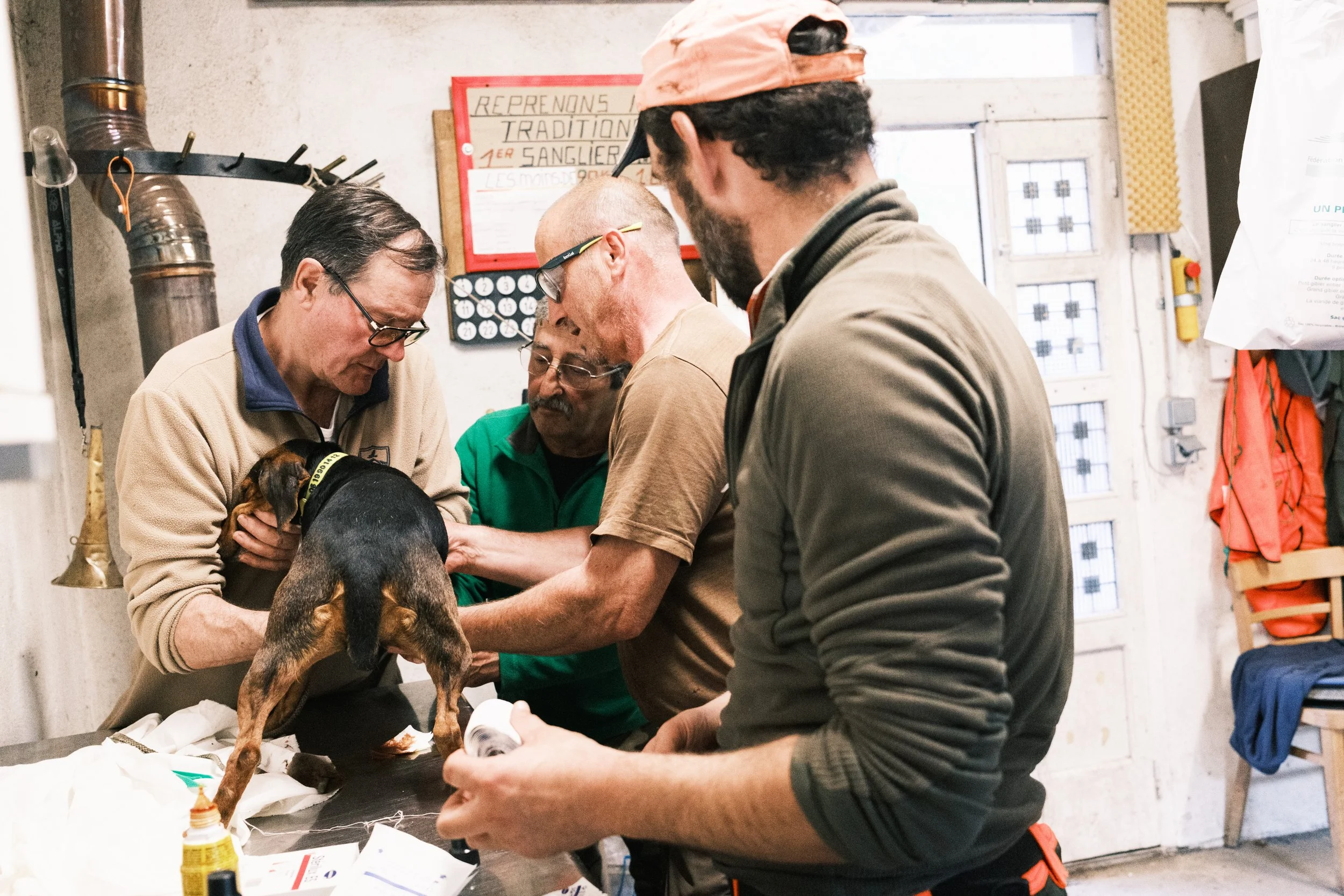
The men now laid out a cloth onto a sterilised surface, and carried Polka, with her injured leg, into the cabin.
They performed the surgery themselves, stitching her up and wrapping the wound in a bandage. One of them had to leave the room as he couldn’t watch. The other men looked visibly upset, and showed such an unexpected tenderness to Polka, particularly when she whimpered in pain.
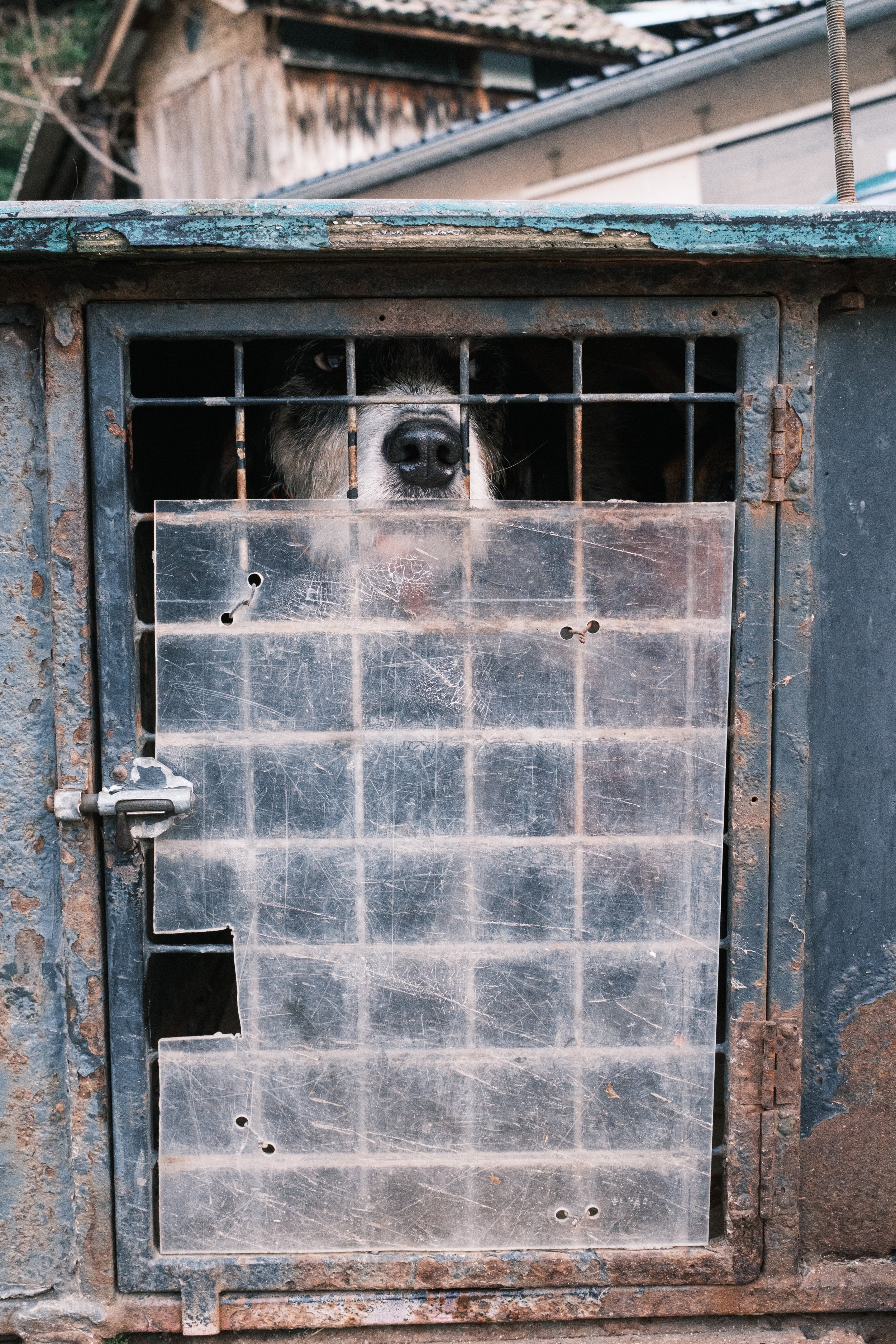
Once bandaged up, Polka limped off down the road with Andre back to her cage, and hopefully to make a full recovery.
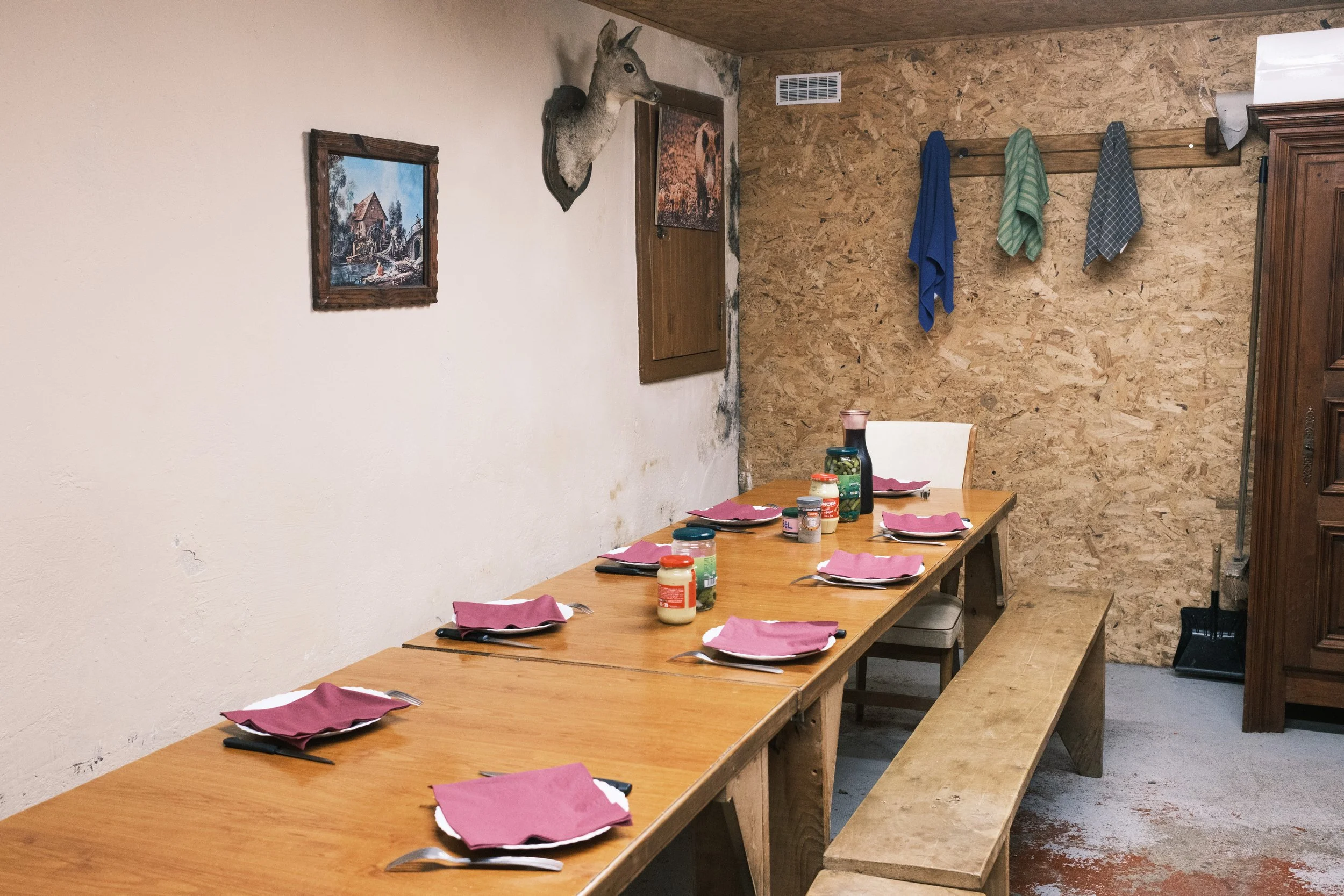
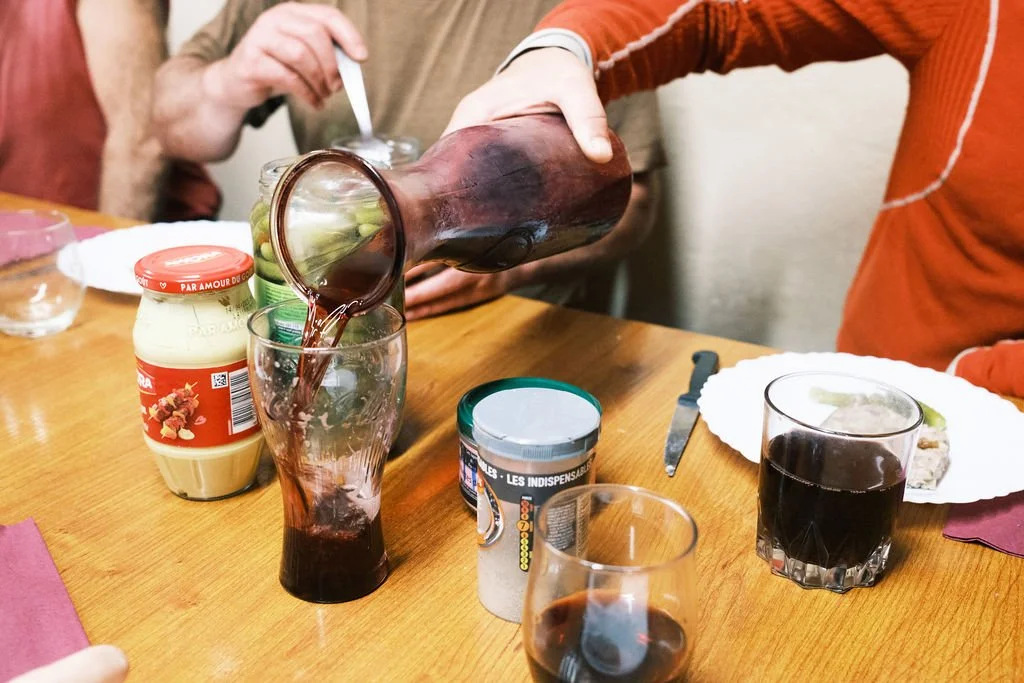
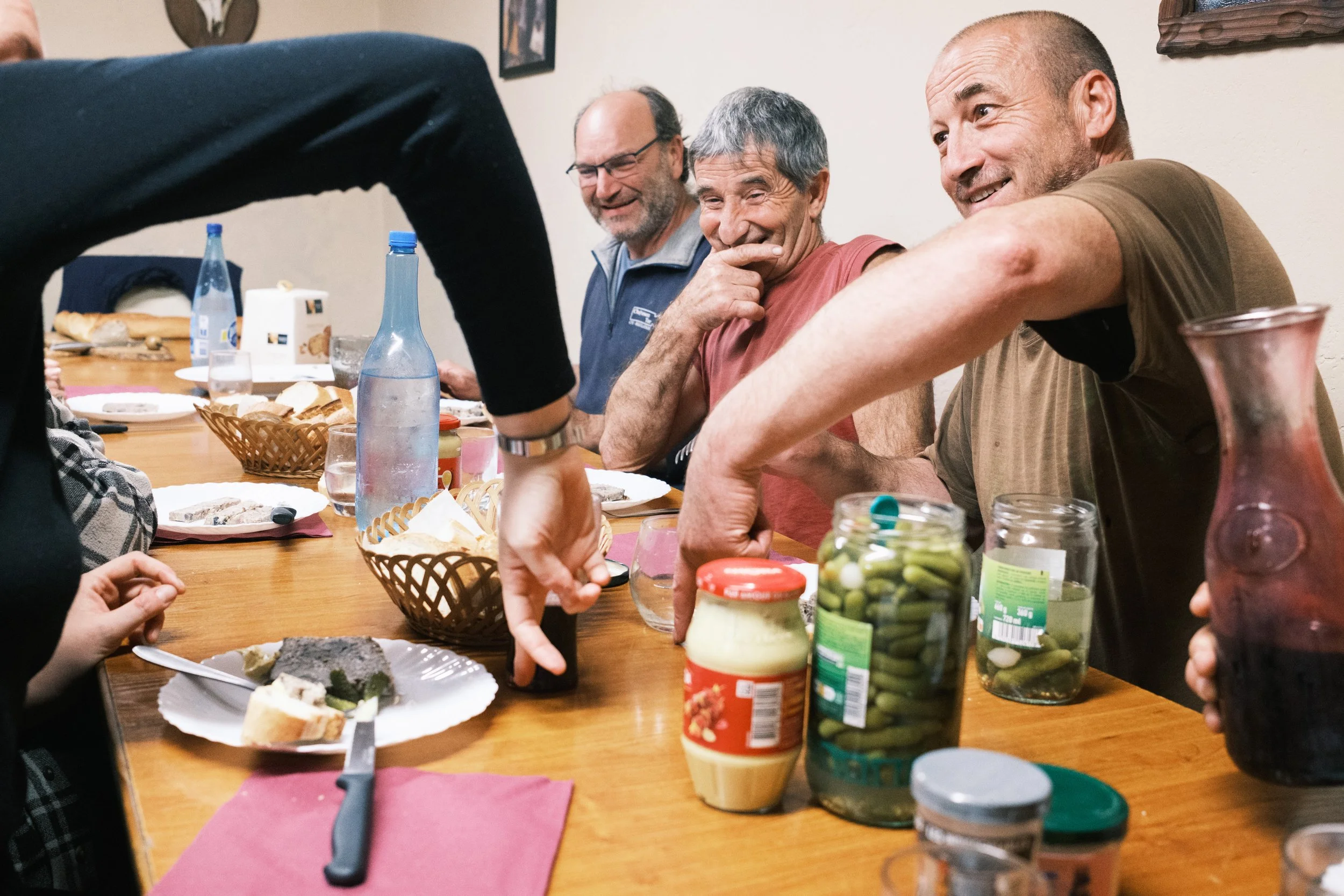
We were invited to the team for their communal dinner, which was hosted in the previous head hunter’s old house. When he died, he left the bottom floor to the hunters, giving them a space to come together, and to eat and drink.
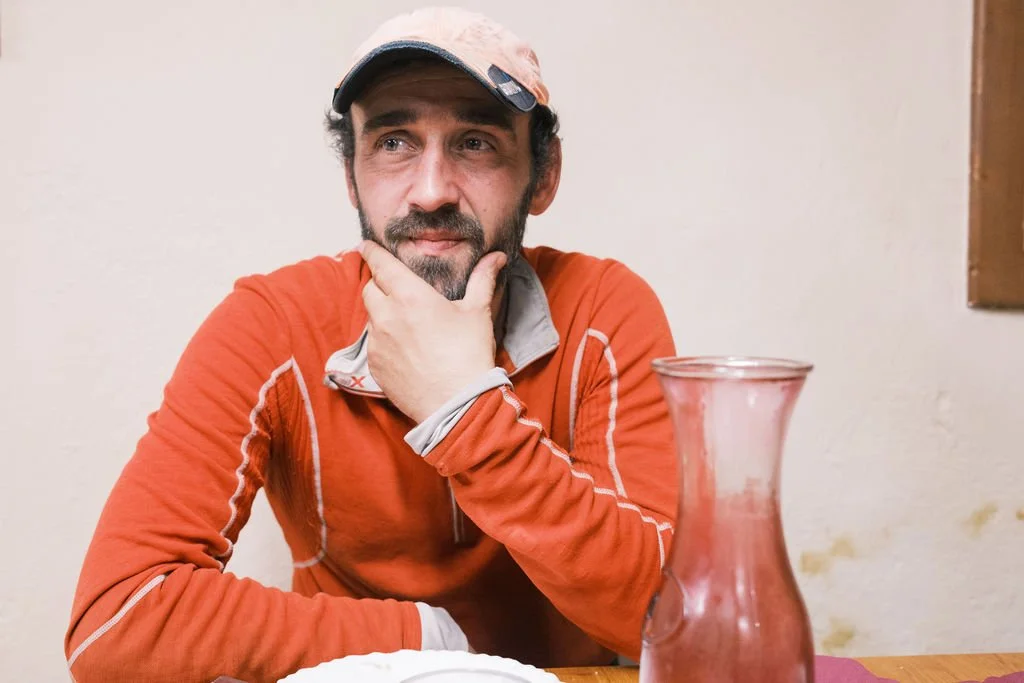
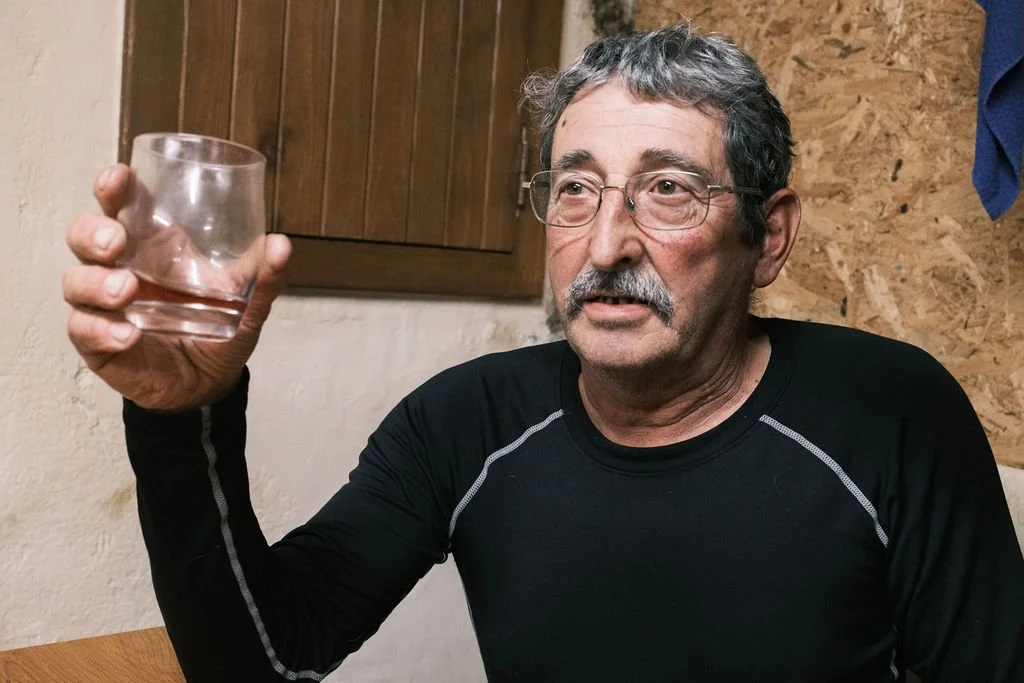
Over a bowl of crisps and whiskey and cokes, the men dissected the order of the day. Although they were speaking in French, we could tell from some standout words and over-exaggerated actions that they were discussing what happened in the final moments before the second boar was shot. They were all so animated and relaxed around one another, and we once again felt very privileged to be able to witness this.
We chatted more through Google Translate, including a conversation on my fitness levels. Andre asked what exercise I do at home, and I explained that I’m a keen walker and swimmer. Ludo told me that “swimming is no good on a mountain”, and Andre added “you are quiet, but you are very unsteady on your feet”.
During our time in Burzet, questions were raised both by us and some of the local villagers we met about the wellbeing of the dogs - not only had we witnessed one of the dogs getting injured on the hunt, and the men performing surgery on her, but others told us that the dogs live outside in cages 24/7, and aren’t fed very much.
Obviously we can’t know that for certain, having only spent a few days in Ardeche, but it does beg the question of whether or not this is the most ethical way to control the wild boar population - for both the boar and the dogs.
Hanna and I have spoken extensively about the hunting dogs, weighing up how working dogs are kept outside all over the world, whereas in more modern Western societies, dogs are more pampered and kept in the home. We know that we’re not the people to decide what’s better or worse for a dog, but what we do know is we witnessed an obvious affection towards the dogs, and a concern for their wellbeing. This might be because of the usefulness of the dogs for the hunt, or it might feed more into the idea of the symbiotic relationship between man and dog.
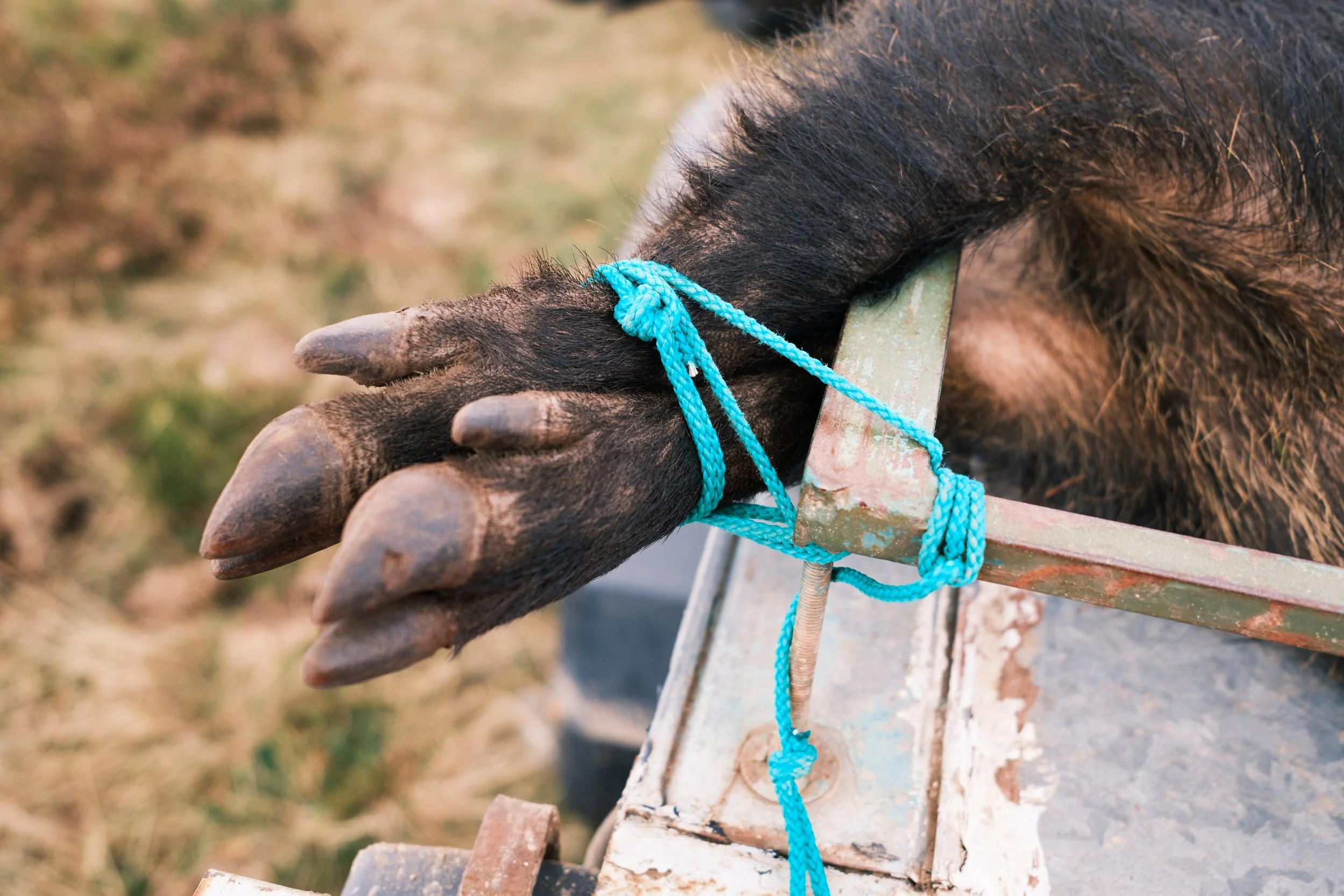
Although a cull had been issued, there are still ethics around the hunt. Mothers and small boar are not shot. We asked Andre about pregnant boar, and if they would be able to tell from looking. Andre tells us that when a boar is pregnant, their paws spread out and they leave a distinctive, wider set of tracks. It made me think of how when a human is pregnant, their feet swell and flatten. But how can they know for sure when out on the hunt and when faced with the immediacy of the situation of a wild boar running into their field of vision that they’re not killing a pregnant boar, or a baby boar?
Everytime a question was answered on whether or not this is the best way to control the population of boar, it felt like another five questions cropped up. Every argument appeared to have a counter-argument. The more I sat in silence on the hunt and thought about the act of killing wild animals, the stranger it made me feel.
We both thought that Andre operated in a very respectful and calm manner - perhaps this is not common amongst other groups, but we were both happy to have witnessed Andre’s professional leadership, and his relationship not only with the other local men who joined the hunt, but also with his son and brother, who both were vital members of the team.
The lasting impact left on Hanna and I was the feeling of community, the self-sufficiency within a team, and how they took care of each other and the dogs. They’re out on the mountains, they’re eating together, and they’re far more comfortable with the tough terrain than we are. Coming from our experience of the world, which is so much more fast-paced and heavily reliant on technology, it was so refreshing to see these men working together out in nature, providing a service for others.
In the Autumn of 2024 I drove to the Ardeche with writer Becky Hand to document Wild Boar Hunting. Here is Becky’s writing and my photographs: